IDE IA
Zcode lance discrètement un rival de Claude Code propulsé par GLM 5.2
La nouvelle version de Zcode cible directement Claude Code, propulsée par le modèle GLM 5.2 qui rivalise avec Claude 4.8. La mise à jour corrige également la génération de wikis, les tableaux Markdown et la fiabilité de l'espace de travail.
Emmanuel Fabrice Omgbwa Yasse Assisté par IA
2026-07-17 · 3 min de lecture
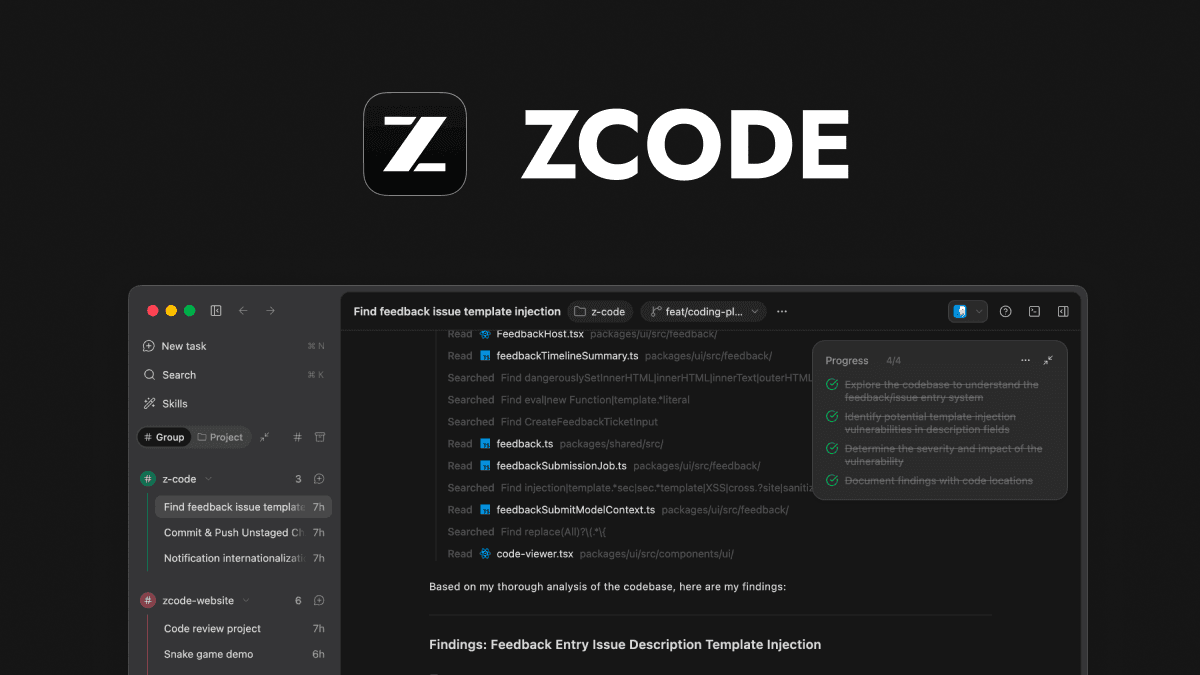
Zcode a publié une importante mise à jour de son assistant de codage alimenté par IA, en faisant un rival crédible pour Claude Code d'Anthropic. Le cœur de cette version est le modèle GLM 5.2 de Zhipu AI, que l'entreprise dit être à égalité avec Claude 4.8 pour la génération de code et à seulement un point de pourcentage derrière Fable 5 sur le benchmark HumanEval.
Confrontation de modèles
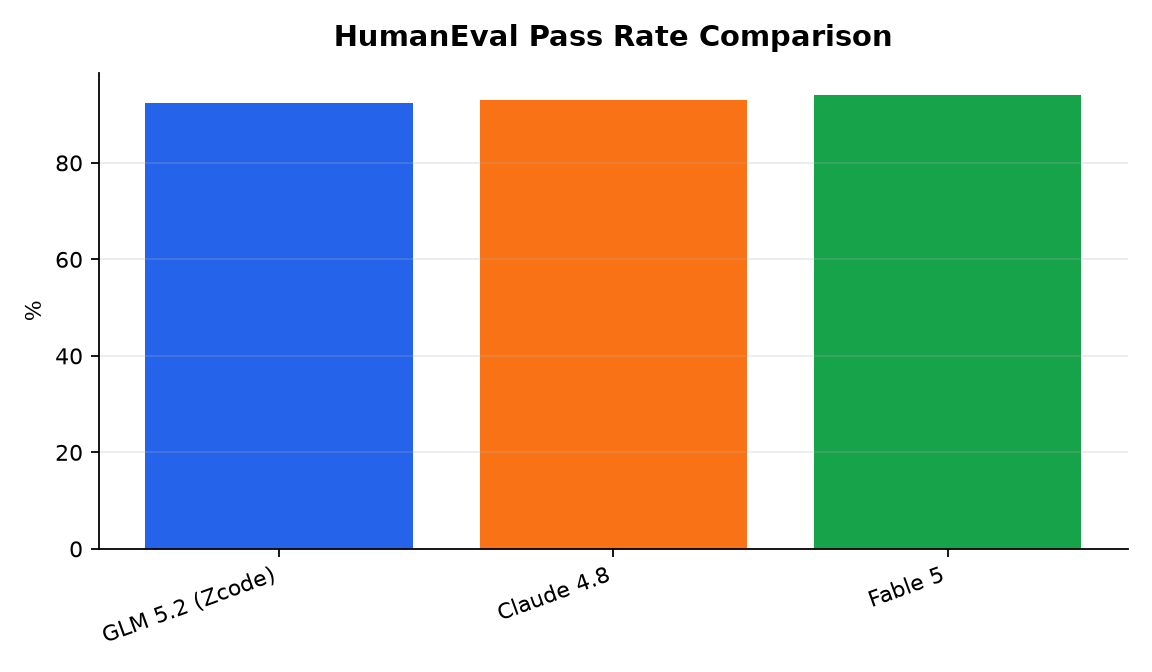
GLM 5.2 grimpe dans les classements de codage depuis le dernier trimestre. Des évaluations internes partagées avec seventnews montrent un taux de réussite de 92,4 % sur HumanEval, contre 93,1 % pour Claude 4.8 et 94,0 % pour Fable 5. Fable conserve la tête, mais l'écart avec Claude 4.8 est suffisamment faible pour que Zcode devienne une option sérieuse pour les équipes qui préfèrent un workflow intégré à un éditeur plutôt que l'outil terminal autonome d'Anthropic.
Améliorations clés
Au-delà du modèle, la mise à jour corrige plusieurs frustrations de longue date. La génération de wiki - une fonctionnalité sous-utilisée pour la documentation interne - prend désormais en charge plusieurs langues et affiche les tableaux Markdown avec un défilement horizontal approprié, résolvant le problème de colonnes trop serrées qui affectait les versions précédentes. Les plantages au démarrage lorsqu'un espace de travail est indisponible sont corrigés, et les indicateurs de messages non lus ne disparaissent plus après un redémarrage.
Les échecs d'installation de plugins qui laissaient l'interface dans un état semi-cassé se rétablissent désormais sans nécessiter une réinstallation complète. Les exceptions d'autorisation de connexion n'en nécessitent plus non plus. Les modèles personnalisés - pour les utilisateurs avancés qui apportent leurs propres points de terminaison - persistent après les redémarrages, corrigeant un bug qui les faisait disparaître sans avertissement.
Améliorations de la qualité de vie
La recherche dans le chat et la commutation d'historique, qui étaient anormalement lentes ou sans réponse, fonctionnent désormais à la vitesse attendue. L'arborescence des fichiers ne manque plus de s'actualiser ou n'affiche plus un statut incorrect après certaines opérations. Les problèmes de sens de défilement et de limites des tableaux Markdown sont résolus, et le minutage des tâches en arrière-plan ainsi que les boutons de contrôle - pause, annuler - sont de retour après un retrait accidentel.
Les utilisateurs Linux, qui ont historiquement reçu moins d'attention dans le domaine des IDE, verront des icônes et des barres de titre correctement rendues. Un potentiel plantage lors de l'aperçu des diffs SQL pendant les workflows de révision a disparu.
Le paysage concurrentiel
Cette mise à jour arrive alors que le marché des assistants de codage IA se resserre. Claude Code, GitHub Copilot et Fable se précipitent tous pour proposer des intégrations éditeur plus profondes. Zcode parie que le modèle GLM 5.2 - presque aussi performant que Claude 4.8 sur les métriques qui comptent pour les développeurs - associé à une expérience sans bugs, peut attirer les utilisateurs loin des grands noms. Que ce pari réussisse dépend de la rapidité avec laquelle l'écart restant avec Fable 5 se réduit, et de la capacité des développeurs à pardonner les premiers défauts.
L'essentiel de la tech en 3 minutes chaque matin
Un email, chaque jour ouvré, avec ce qui compte vraiment en IA et en tech.