Photo provenance: Apple's Reference Image on iPhone 18 Pro
Apple can sign every pixel its camera captures. Checking it is the hard part
iPhone 18 Pro's Reference Image signs camera pixels and files a second copy for comparison in Photos. Apple calls the result unalterable, but the release never explains how that guarantee survives export, re-compression, or a social upload.
Emmanuel Fabrice Omgbwa Yasse AI-assisted
2026-09-23 · 5 min read
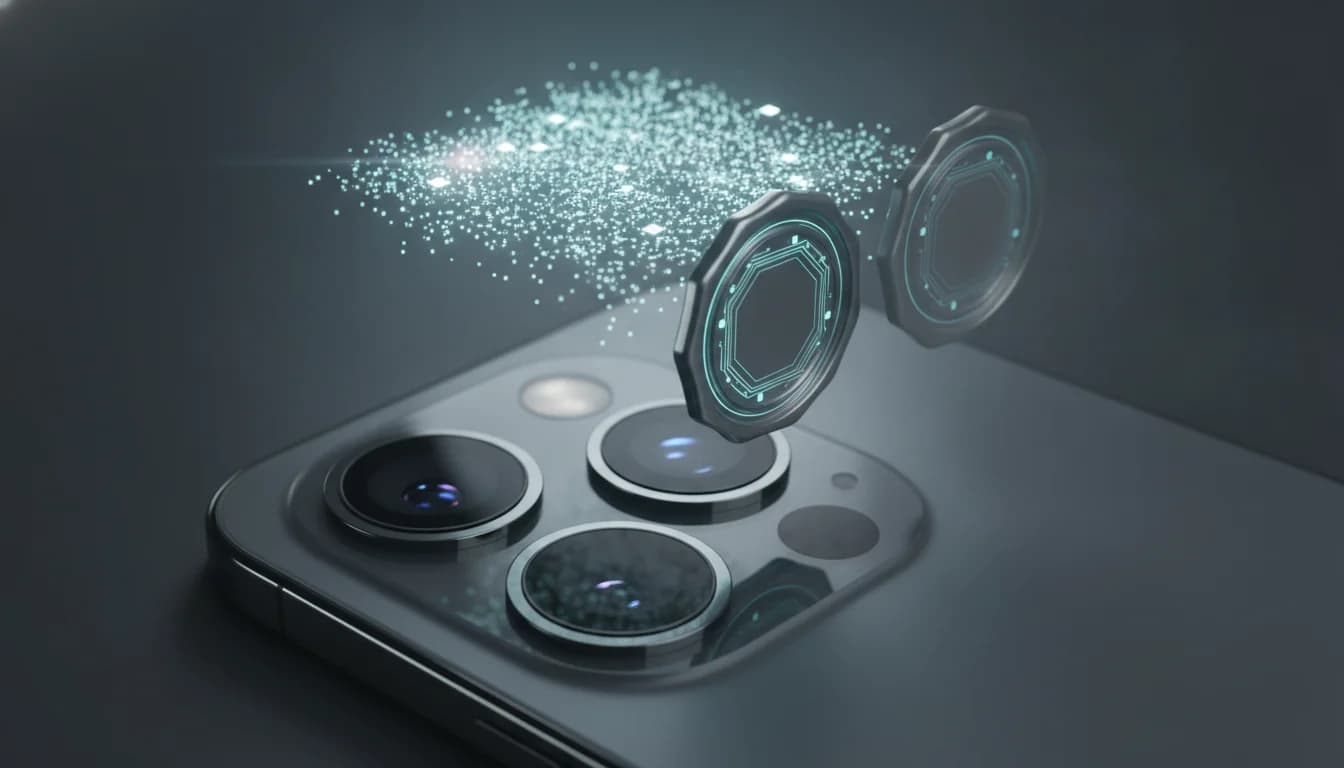
The iPhone 18 Pro's marquee feature is a camera with variable aperture, the first on an iPhone. The feature worth watching years from now is quieter: Apple Reference Image, which signs the pixels coming off the main sensor so that anyone looking at the photo later can check whether it was edited.
Apple's release is precise about capture. The new 48MP Fusion Main camera carries a sensor that, in Apple's phrasing, "can sign every pixel it sees." Shoot in Reference mode and the phone captures signed sensor data; Private Cloud Compute develops it into what Apple calls a reference image. Both files sit together in Photos, where a viewer can compare the two.
How Reference mode is supposed to work
The feature is opt-in. Capture is not available at launch in China, which Apple attributes to regulatory requirements, and it will not be available at launch in the European Union on iPhone 18 Pro models. Users in the EU with iOS 27, iPadOS 27, or macOS 27 will be able to develop and view reference images. Apple has opened viewing APIs to third-party apps across those three platforms, a familiar move for a company that just opened Xcode to rival AI models.
The word doing the heaviest lifting in the announcement is "unalterable." Apple describes Private Cloud Compute as developing signed sensor data into "an unalterable reference image." What backs that guarantee goes unexplained: nothing about where signing keys live, nothing about an outside audit of the cloud step, and nothing about what the camera does if signing fails partway through a capture.
The provenance field Apple is walking into
Camera metadata has shipped for years, and Apple is adding a second authenticity signal in a software update later this year: support for the SynthID standard, which the release says will be "included for most edited images, depending on the edits applied." It joins a watermarking push at Anthropic driven by the EU AI Act. Apple calls the combination "a multifaceted approach to image authenticity."
What is new is where the signature happens. Provenance schemes usually attach a claim to a file that already exists, which is why they tend to break at the first re-encode. Reference Image notarizes at the sensor, before an editing pipeline sees the frame. The release does not mention C2PA, the content-provenance standard already circulating in this space, and it does not say whether reference images interoperate with it. Nor does it engage with the question that dogs every such scheme: who gets to define AI-generated content in the first place.
| Feature | What Apple says | Availability per the release |
|---|---|---|
| Apple Reference Image | Sensor signs every pixel; Private Cloud Compute builds the reference | Capture on iPhone 18 Pro and Pro Max only; viewing APIs in iOS, iPadOS, macOS 27; no capture in China or the EU at launch |
| SynthID | Flags AI-generated or AI-edited images | Update later this year; most edited images, depending on the edits applied |
| Image metadata | Identifies AI-made or AI-edited images | Not detailed beyond that role |
| Siri AI | Personal context, onscreen awareness, Camera mode | Beta in English with iOS 27; not initially in the EU on iOS, iPadOS, watchOS |
Does the chain survive the trip to a publisher?
The release describes viewing reference images in Photos and through the new APIs in iOS, iPadOS, and macOS 27. It stops there. Nothing about export, re-compression, or screenshots, and nothing about what becomes of the companion file when a photo is uploaded to a social platform, a messaging app, or a newsroom CMS.
Because a reference image is a separate asset, both files have to travel together for the comparison to mean anything. Whether any platform outside Apple's own apps will carry it is left open, and no third-party commitments appear in the announcement.
Who this protects, and who it leaves out
Capture belongs to buyers of the iPhone 18 Pro and Pro Max. Anyone on an older iPhone, an Android device, or a desktop can view a reference image through the APIs, but cannot produce one. Two of the largest markets start without capture at all: China for regulatory reasons, the EU per Apple's own footnote.
That shape matters for the group Apple invokes by name: photojournalists. News photography runs through stringers and freelancers who shoot on whatever they own, and verification often happens on a desk machine in another country. What a picture desk does with a reference file it cannot open is not addressed.
Apple's AI editing tools sit in the same Camera app
iOS 27 ships the opposite capability on the same silicon. Spatial Reframing, Extend, and an upgraded Clean Up let users reshape a photo after the shutter closes, and Image Playground now produces photorealistic imagery. Those server-side features carry daily usage limits, and Apple says expanded access will be "available for a fee in the future," a metered model now standard for AI generation: Alibaba sells video generation by the second.
Apple is not claiming it can stop those edits. It is claiming they can be detected: reference images cover capture, SynthID covers most edits, metadata covers the rest. That arrangement depends on someone opening the second file. Apple's own qualifier, that SynthID applies "depending on the edits applied," leaves the coverage short of complete.
What Apple has not said
The release leaves open the questions that decide whether Reference Image changes anything:
- Whether anyone outside Apple audits the signing and cloud development steps.
- What happens to the photo if reference capture fails partway through.
- Whether "unalterable" means cryptographically verifiable or simply not editable inside Photos.
- Whether a reference image can be stripped, and what a viewer sees when it is.
- What incentive a platform has to preserve or display a companion file.
Apple's stated position is that metadata and upcoming SynthID support "can also help users identify images generated or edited with AI." Everything between the sensor and the person looking at the photo remains undefined.
Get the tech essentials in 3 minutes every morning
One email, every weekday, with what actually matters in AI and tech.