Open medical AI
Google just opened its medical AI models. The winners tackled West Africa's outbreaks with an app.
Google announces winners of the MedGemma Impact Challenge, run with Kaggle. EpiCast takes first place for disease surveillance in West Africa using on-device AI running on open medical models. Second and third place go to skin cancer self-exam and TB screening tools.
Emmanuel Fabrice Omgbwa Yasse AI-assisted
2026-07-18 · Last updated: 2026-07-19 · 2 min read
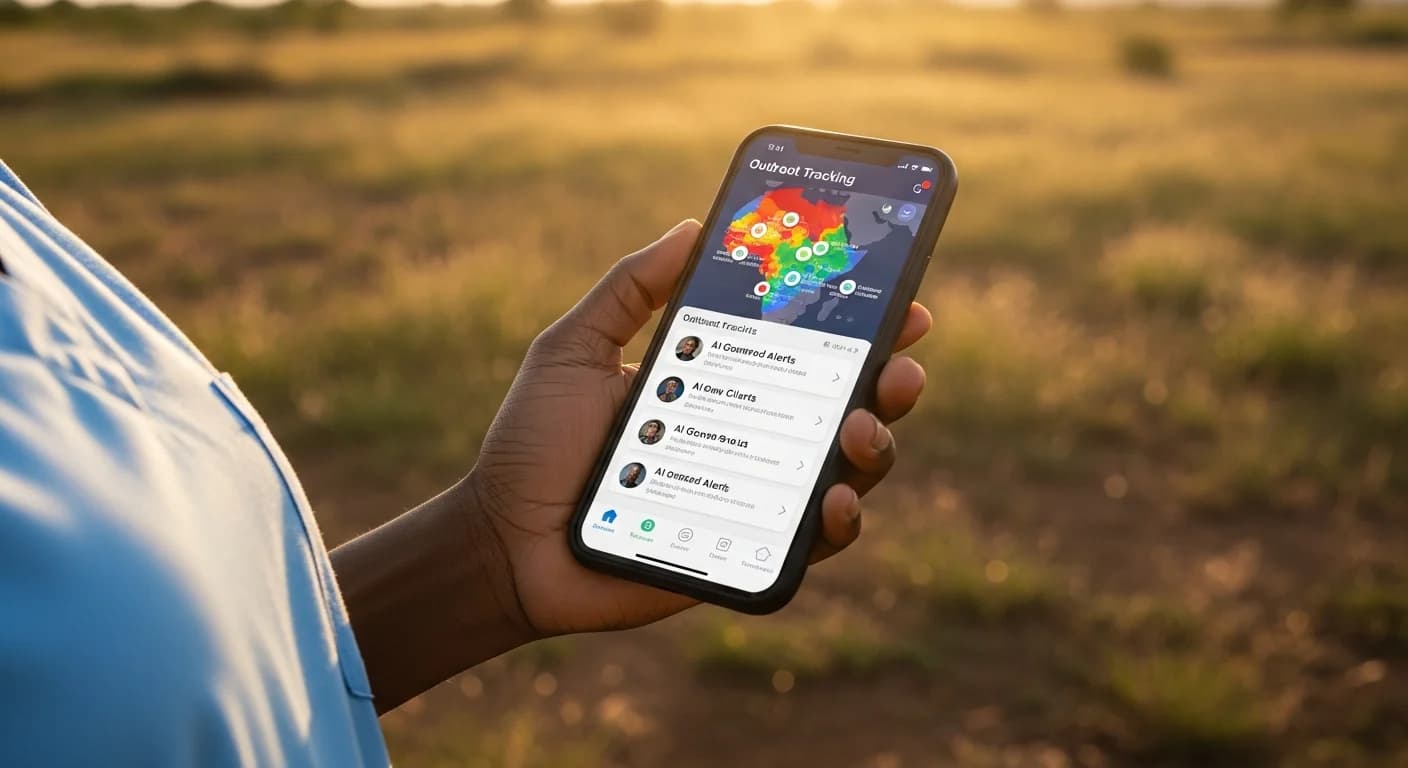
Google Research has named the winners of the MedGemma Impact Challenge, a competition that opened the company's medical AI models to developers worldwide. More than 850 teams submitted prototypes, and nine were recognized. The first-place project, EpiCast, is a mobile-first system built for the Economic Community of West African States. It uses fine-tuned MedGemma, MedSigLIP, and HeAR models to transform unstructured clinical observations in local languages into structured WHO disease surveillance signals, aiming to catch outbreaks earlier, according to New York's own AI regulation review.
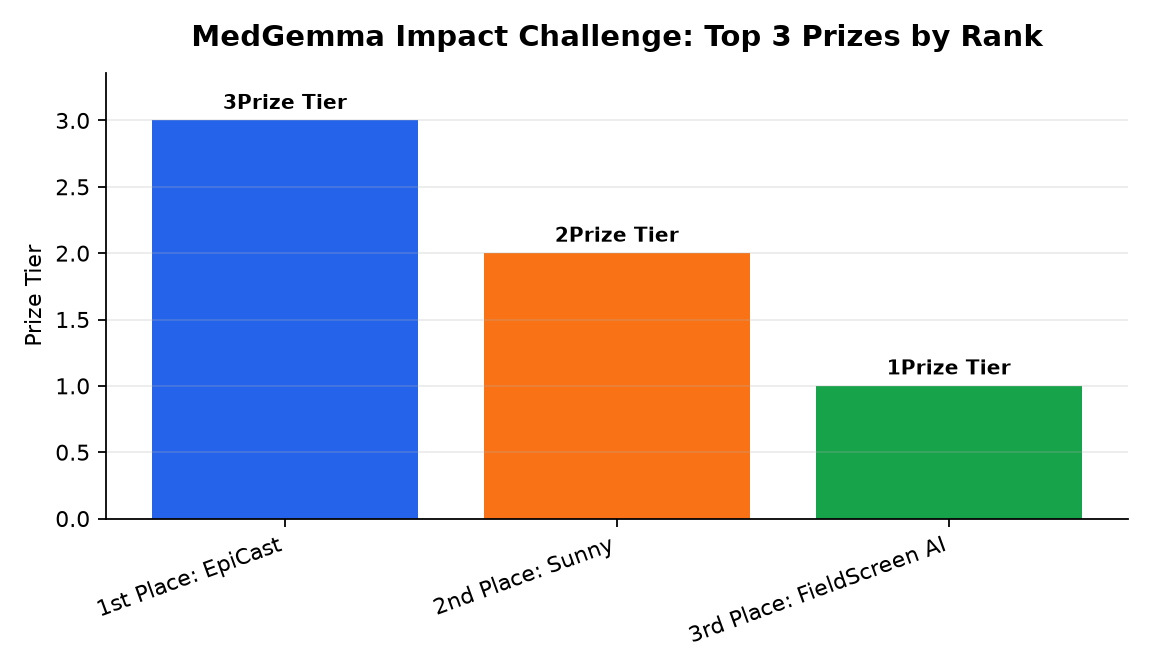
Second place went to Sunny, a mobile app that lets users photograph skin changes and get structured reports for potential signs of cancer. Third place went to FieldScreen AI, which targets tuberculosis screening in resource-limited settings by analyzing chest X-rays with MedGemma and cough audio with a HeAR-based classifier, all running on-device and outputting results in local languages. Fourth place, Tracer, extracts diagnostic hypotheses from physician notes and reconciles them against incoming test results, flagging discrepancies for human review.
Separate technology prizes went to five other projects. ClinicDx brings diagnostic support offline to sub-Saharan Africa via OpenMRS. UniRad3s combines MedGemma with MedSAM2 for radiology, spotting anomalies, segmenting 3D lesions, and generating patient-friendly reports. BridgeDx is an offline decision-support tool inspired by the 2015 Nepal earthquake, rooted in WHO and MSF guidelines. CaseTwin matches acute chest X-rays with historical cases to speed up rural hospital referrals. BigTB6 handles voice-driven TB and anemia screening through cough analysis, X-rays, and physical pallor assessment.
Honorable mentions included tools for intensive care workflows, veteran mental health monitoring, pathology assistance, and community-acquired pneumonia management.
The challenge was run in collaboration with Kaggle and builds on Google's Health AI Developer Foundations program, which released MedGemma in late 2024 and MedGemma 1.5 in January 2026. Google has not said whether any of the winning prototypes will become commercial products, but the event signals that the company sees open-weight medical models as a distribution strategy, similar to how Ollama's 85% Fortune 500 stat is interpreted. Get the tools into developer hands, and let use cases emerge from the field. It is the same logic that powers initiatives like Sarvam Samvaad's voice AI for 11 Indian languages, where access drives adoption.
Get the tech essentials in 3 minutes every morning
One email, every weekday, with what actually matters in AI and tech.