Galaxy Unpacked July 2026
Samsung's health ai assistant launches in beta with big promises and few specifics
Samsung's Health Assistant Beta is part of a broader connected care strategy, but with scant feature information and no privacy specifics, the gamble is on ecosystem lock-in rather than immediate capability.
Emmanuel Fabrice Omgbwa Yasse AI-assisted
2026-08-06 · 3 min read
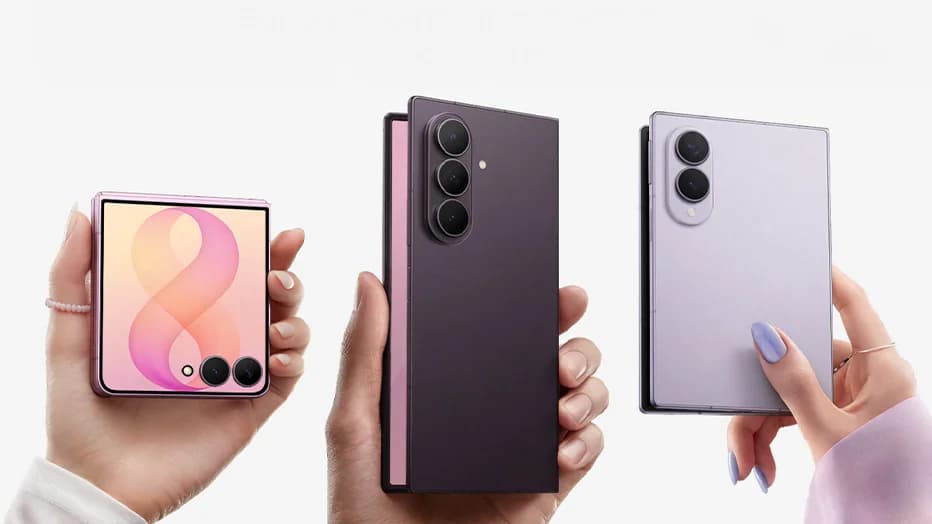
At its July 2026 Galaxy Unpacked event, Samsung announced a Health Assistant Beta, calling it the company's "first fully integrated AI-powered personal health assistant." It landed in a flood of hardware: the Galaxy Z Fold8 Ultra, the Galaxy Watch9, and the Galaxy Card. What the assistant actually does is mostly unexplained. The official press page goes one sentence deep: "Samsung Launches Health Assistant Beta, First Fully Integrated AI-Powered Personal Health Assistant." There is no feature breakdown, no list of supported sensors, and no release date beyond the beta tag.
The assistant is part of a broader play. Samsung is weaving health AI through its wearable lineup. The Galaxy Watch Ultra2 and Watch9, unveiled the same day, are pitched as "your health companion on the wrist," per a separate press release. A third announcement teased a connected care future with unnamed partners. The picture is an ecosystem, not a standalone app. Add the Galaxy Card, a credit card announced just before, and Samsung is betting the health assistant will sit inside a larger financial and lifestyle platform. Control of that stack, not the assistant's raw capabilities, is the wager. It mirrors the broader fight over who controls AI infrastructure.
But the beta is short on substance. A product preview from July 14 promised "a new AI-powered health companion on your wrist" without saying what data it aggregates, what actions it can take, or which Samsung Health features it enhances. That vagueness matters because rivals are further along. Google's health AI push emphasizes real-world reach: Med-Gemini for clinical reasoning, AMIE for diagnostic conversations, and partnerships for millions of free screenings in India. Apple previewed health intelligence at WWDC in June 2026, though the exact scope remains unpublished. Both companies are building on installed bases of billions of devices with mature health platforms.
Samsung's bet is that hardware integration gives it an edge. The Watch9 and Watch Ultra2 carry new sensors and more processing power. Coupled with an assistant that lives on the wrist, that could mean real-time coaching and alerts without a phone nearby. But the ecosystem is only as strong as the assistant's intelligence, and without published benchmarks or a feature list, there is nothing to compare. Where benchmarks do exist, they do not always predict real-world performance, as SWE-bench evaluations show.
Privacy and regulation add another layer. Health data is among the most sensitive personal information, yet Samsung has not said how the assistant handles data on-device or in the cloud. The Galaxy Watch press release mentions security in passing; for a product that ingests biometrics around the clock, users and regulators will want specifics. The EU's AI Act classifies health-related AI systems as high-risk when they influence medical decisions, so the assistant could fall under it if Samsung positions it for diagnostic use. Researchers are still working out what compliance should look like, with some pushing for risk calibration and governance metrics, per a framework that defines trust by the numbers. Calling the launch a beta buys time. Early adopters will exercise the features, and Samsung can iterate. But Apple and Google have years of health AI development and regulatory experience; Samsung needs more than a beta label to close the gap.
For now, the Health Assistant Beta is a promise on paper. Unpacked showed the hardware and the partners; the software still has to prove itself.
- Source : Samsung's health ai assistant launches in beta with big promises and few specifics — 2026-04-07
Get the tech essentials in 3 minutes every morning
One email, every weekday, with what actually matters in AI and tech.