Wearables and health tracking
Apple Watch Ultra 4 ships with a $119 lab-test pitch attached
Apple's Watch Ultra 4 claims the most accurate heart rate sensing in a wearable, backed by an Apple-run study of 1,000-plus people. The redesigned Health app goes further, adding a longevity score and $119 lab panels at roughly 2,000 Quest Diagnostics locations.
Emmanuel Fabrice Omgbwa Yasse AI-assisted
2026-09-23 · 5 min read
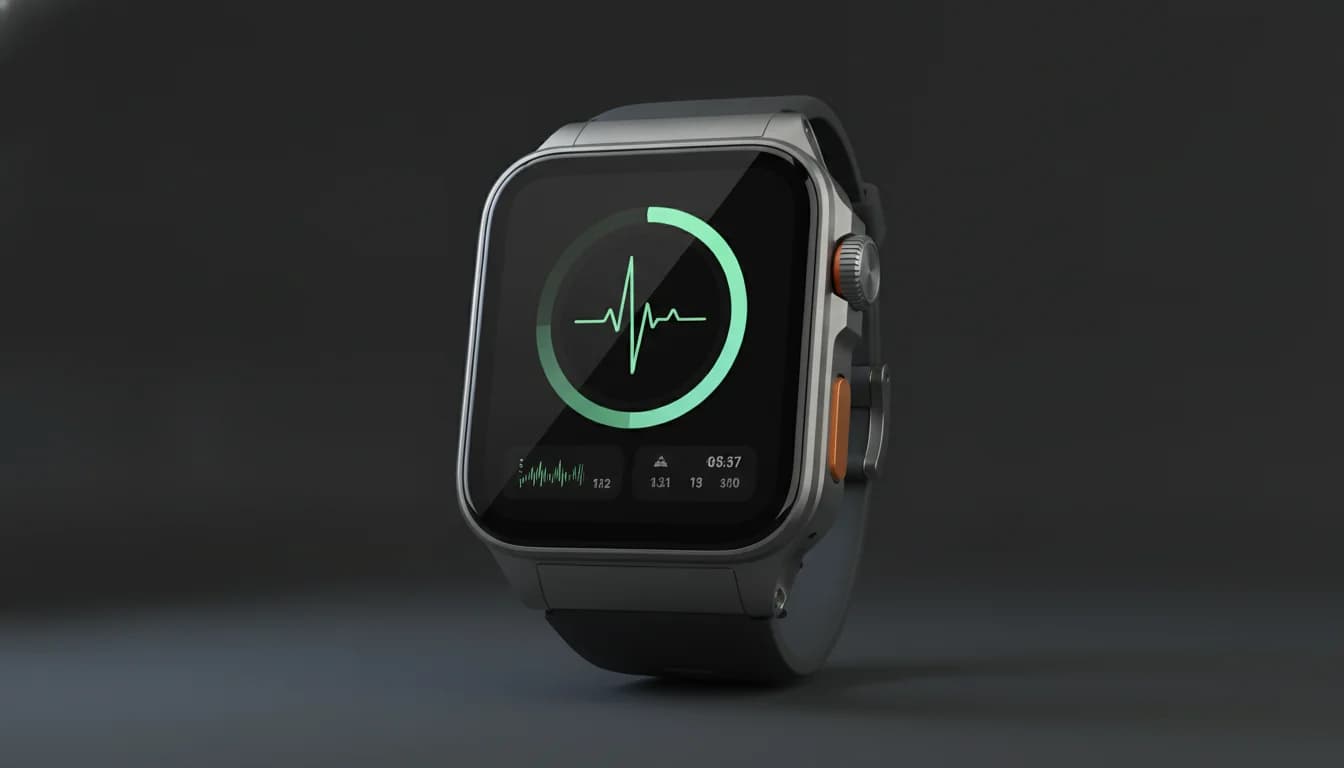
Apple Watch Ultra 4, announced September 9, leads with heart rate accuracy and, a few screens later, offers a $119 lab panel. The wrist hardware is an iteration. The storefront inside the Health app is what changes the business.
Three specifications in the release carry the word "most," and each rests on testing Apple describes as its own.
| Claim | Evidence cited in the release |
|---|---|
| Most accurate heart rate sensing in a wearable | Apple-conducted study, July and August 2026, more than 1,000 participants, against unnamed best-selling wearables available as of June 2026 |
| Most accurate step tracking of any smartwatch | Apple's 1,000-step test, validated with video step counting, against industry-leading smartwatches available as of July 2026 |
| Most accurate on-device GPS in a sports watch | Route map accuracy in challenging urban environments, processed on device, against dual-frequency GPS sports watches available in August 2026 |
What backs the heart rate accuracy claim
Apple says the Health Sensing System, built around new optical and electrical heart sensors and the S11 chip, delivers "the most accurate heart rate sensing in a wearable." The footnote cites an Apple-conducted study from July and August 2026 with more than 1,000 participants, comparing the watch against "leading wearables" the release never names. Rivals keep shipping, from Samsung's AI eyewear to Viture's $299.99 AR glasses, which makes an unnamed comparison harder to audit, not easier.
Nothing in the published material points to outside replication. The comparison rests on Apple's data. The sensor changes, at least, are concrete: larger green LEDs let the optical sensor take a reading every five seconds, all day, and HRV is measured up to 24 times more often, split into Recovery HRV for daily stress and overall HRV for cardiovascular insight.
Readiness arrives without an external check
Readiness is the headline new metric: a daily score from 0 to 10 attached to one of four recommendations, Recover, Pace Yourself, Ready, or Go For It, drawn from recent activity, training load, vitals, and sleep score, and updated as new data arrives.
Apple says it developed the algorithm with data from the Apple Heart and Movement Study and with its own exercise scientists and physicians. The release compares it against no competing recovery score and offers no validation against injury or overtraining.
Health Age and the $119 lab test
The redesigned Health app, due later this year starting in U.S. English, adds an Insights tab and a Longevity tab carrying Health Age, which shows how a user's metrics track against their actual age. Movement evaluations use vision-based models on the iPhone plus heart rate data from the watch.
The commercial piece is the lab work: panels of more than 50 biomarkers for $119, scheduled and purchased through the Health app at approximately 2,000 Quest Diagnostics locations in the U.S., according to the release. The release does not say whether a clinician reviews results, how samples and data are handled afterward, or how the arrangement sits under U.S. health privacy law. Those gaps will decide whether buyers see a convenience or a diagnostics business built on a watch. Apple has run the platform-as-storefront play before, and Apple Arcade's $6.99 tier is one version of it.
Audio Intelligence and the always-listening problem
Sound Recognition alerts users who are deaf or hard of hearing to sirens, alarms, or a baby crying, running on device even when the iPhone is elsewhere. Live Rewind turns the previous 15 seconds of a conversation into text after a double press of the Digital Crown, and Siri Recap builds a title and key points in the new Siri app.
Apple's privacy case rests on Secure Exclave, a hardware-isolated compartment in the S11 chip that processes audio in isolation and deletes it immediately. Apple says the features store no recordings and that raw audio is inaccessible to the operating system, apps, the user, and Apple. Live Rewind plays a chime even when the watch is silent and shows a microphone indicator; Siri Recap produces summaries, not transcripts, and is designed to exclude financial information and government identifiers.
Both features arrive in beta late this year, need an Apple Intelligence-enabled iPhone 16 or later (excluding the 16e), start in English, and will not initially be available in the EU. Features that rely on server-side models are subject to daily usage limits, and the footnotes say expanded access to such features will be available for a fee in the future. No independent security review of Secure Exclave appears in the published material.
45 hours and the 100-mile question
Apple claims up to 50 hours of everyday use, 84 hours in Low Power Mode, and 15 minutes of charging for up to 18 more hours. Extended Workout mode runs up to 25 hours with full GPS and heart rate, and Max Extended Workout mode runs up to 45 hours with a GPS reading every second, which Apple describes as typically enough to finish a 100-mile race.
The trade-offs are Apple's own: Extended Workout switches on Low Power Mode and drops running form metrics, while Max Extended Workout turns off alerts and splits as well. Those figures come from testing in July and August 2026 on preproduction watches running prerelease software.
Kaiann Drance, Apple's vice president of Worldwide Apple Watch Product Marketing, said the new system and chip deliver "longer battery life, faster charging, and the most accurate heart rate sensing in a wearable." watchOS 27 arrives September 14 for Apple Watch Series 9 or later, Apple Watch SE 3, and Apple Watch Ultra 2 or later, bringing Siri AI in beta in English first. The Ultra 4 starts at $799, and Apple points readers to apple.com/hraccuracy for the heart rate study. Whether anyone outside Apple can reproduce that comparison is the part still open.
Get the tech essentials in 3 minutes every morning
One email, every weekday, with what actually matters in AI and tech.