Galaxy Unpacked July 2026
Samsung steps into the AI glasses race Alibaba says is already tipping
Samsung's intelligent eyewear, unveiled at Galaxy Unpacked July 2026, bets that comfort and a nine-hour battery will win the AI glasses race. It arrives as Alibaba claims the category is already approaching its tipping point.
Emmanuel Fabrice Omgbwa Yasse AI-assisted
2026-08-11 · 4 min read
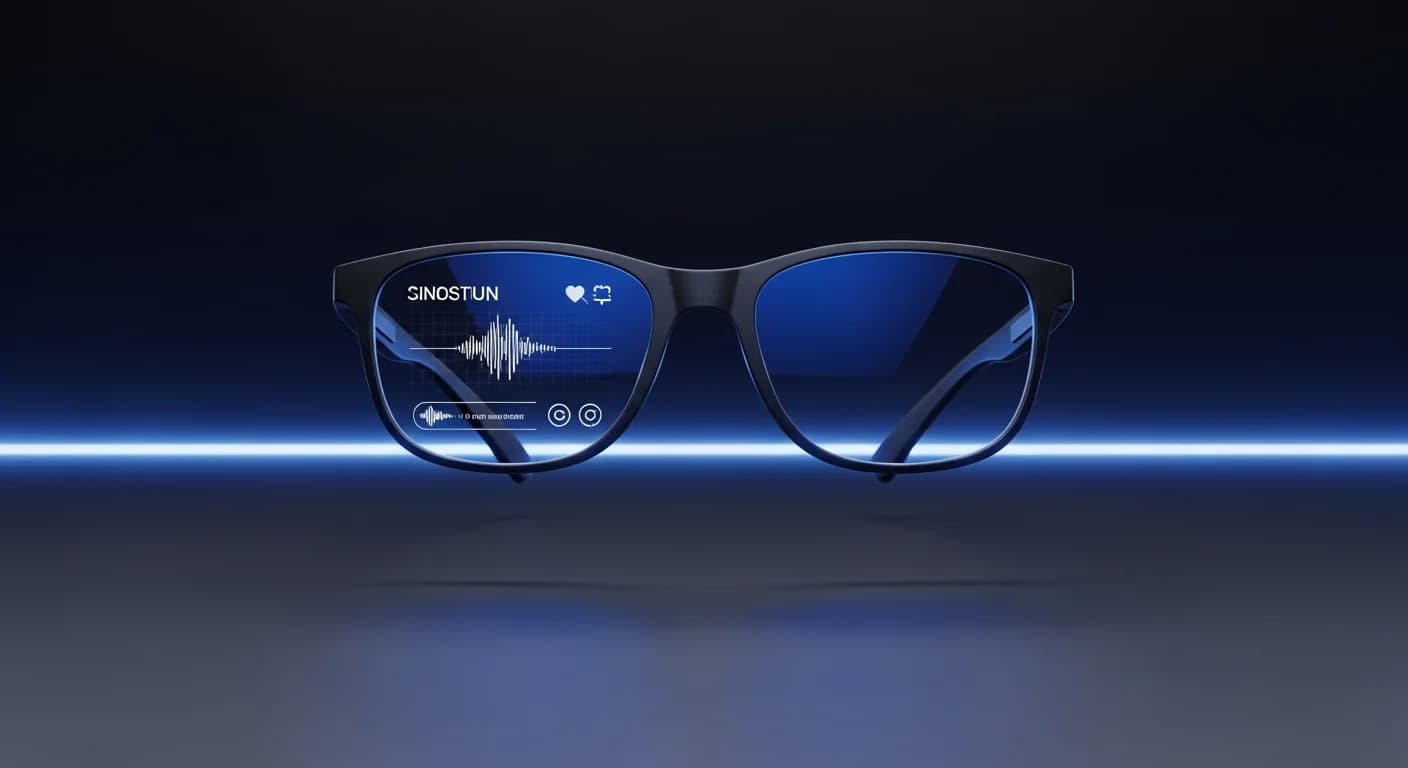
At Galaxy Unpacked on July 22, Samsung Electronics introduced intelligent eyewear, its first-generation AI glasses and, in the company's words, the first step toward making AI glasses the next interface for mobile AI. On its face this is a product launch. Read as a market move, it is a deliberate entry into a race Alibaba has already described as nearing its tipping point.
On Alibaba Cloud's blog, Wu Jianjun, the head of Qwen AI hardware products, argued that AI glasses sit at the same kind of convergence that produced the smartphone in 2007. The numbers behind the argument are hard to dismiss: ABI Research projects the category above $30 billion by the end of the decade, and shipments grew more than 100% year on year in the first half of 2025. Samsung answers with a different thesis, laid out by James Choi, Executive Vice President and head of the XR R&D team in Samsung's MX business, in an interview published by Samsung Newsroom: the category will be won on wearability, not on raw AI capability alone. Alibaba is pushing the other side of that equation with open-source models like Qwen2.5-Omni, which outscored Gemini 1.5 Pro on OmniBench.
Comfort as an engineering problem
"AI glasses will only become mainstream if people genuinely want to wear them every day," Choi said. The line sounds like common sense, but it carries a pointed jab at the category's history. The earlier wave of smart eyewear, Google Glass most notoriously, failed because the devices were conspicuous, uncomfortable and priced for early adopters. Samsung's answer is to treat fit as a hard engineering constraint.
Choi says even a tenth of a millimeter matters in eyewear. That shows up in the detail sheet: patented slim hinges, advanced thin-wall molding and lightweight materials, plus a graphite thermal layer on the left side that stops processor heat from reaching the wearer's face. The hinge structure resists corrosion, Samsung says. The company has filed around 200 patent applications in the category, and Choi credits Galaxy XR, Samsung's earlier XR effort, for teaching the team how to design technology people will wear on their faces. The testing program goes beyond phone standards, covering heat, humidity, sunscreen, cosmetics, sweat, folding and hinge expansion tests.
Nine hours of battery, seven more in the case
For a device worn on the face, the spec that matters is battery life. The glasses run up to nine hours of active use on a single charge, even during demanding experiences like Gemini and video recording, and the charging case holds more than seven full recharges. That is roughly the difference between a daily accessory and a gadget that dies mid-evening.
| Spec | Detail |
|---|---|
| Battery life | Up to 9 hours of active use per charge |
| Charging case | More than 7 full recharges |
| Patent applications | Around 200 filed in the category |
| Heat management | Graphite thermal layer on the left side |
| Recording indicators | Bystander-facing and inner LED |
| Durability testing | Heat, humidity, sunscreen, cosmetics, sweat, folding |
The glasses work as a companion to the Galaxy ecosystem, not a phone replacement. Split computing distributes processing between the eyewear and a connected Galaxy phone. Users can start recording hands-free, preview what was captured on the Now Bar and pull the full clip into Galaxy Gallery. Galaxy Watch and Galaxy Buds integrate too, with gestures available through the Galaxy Watch9.
The privacy test
The most revealing part of the interview covers privacy, for an obvious reason: a camera worn on the face asks everyone around the wearer to trust the product. Samsung built a bystander-facing LED and an inner LED that show when recording is active. Wear detection disables recording when the glasses come off, and a thwart detection feature stops recording if the external LED indicator is blocked. Audio, video and screen-sharing data are not used to train AI models, Samsung says, and it plans to keep adding privacy controls in future generations. Those are self-reported promises so far, and they will land in a regulatory climate moving from guidance to enforcement, per the CNIL's blueprint for AI data protection.
Two bets on the same interface
Choi calls intelligent eyewear "still only the beginning." Alibaba's Wu frames the moment differently: three conditions must converge for the tipping point, capability, user readiness and viable economics, and he suggests they are close. Alibaba is already charging for AI by usage, with Wan3.0-Video billing per second, $6 for a 30-second clip. Samsung's entry reads as a wager that the conditions still need better hardware, and that a comfortable pair of glasses is what unlocks them.
Both camps are betting the same future at different speeds. The smartphone has held the default mobile interface slot for the better part of two decades, and every earlier attempt to dislodge it failed. What changed is the arithmetic: a category projected above $30 billion, shipments growing more than 100% year on year, and now two of the largest device and AI companies treating eyewear as the next frontier. If Samsung's thesis holds, the interface battle will be fought over millimeters and grams as much as tokens and benchmarks.
- Source : Samsung steps into the AI glasses race Alibaba says is already tipping — 2026-07-31
Get the tech essentials in 3 minutes every morning
One email, every weekday, with what actually matters in AI and tech.