Hardware Inflation
The memory shortage is making your next gadget more expensive
Qualcomm and Roku lead a wave of hardware price hikes as a memory shortage, fueled by AI demand, is expected to last through 2027. The increases ripple across smartphones, streaming devices, and other electronics, with no relief in sight.
Emmanuel Fabrice Omgbwa Yasse AI-assisted
2026-07-26 · 4 min read

If you have been shopping for electronics lately, the sticker shock is undeniable. Over the past few weeks, two major players in the hardware supply chain have announced price increases that will hit everything from smartphones to streaming sticks. Qualcomm sent a letter to customers warning of double-digit price hikes starting in September. Roku raised prices across its streaming lineup by as much as $50. And both point to the same culprit: component shortages that show no sign of easing, driven by sustained demand from AI companies whose appetite for infrastructure keeps growing.
Qualcomm's double-digit blow
Qualcomm sent a letter to customers on Friday warning of plans to increase its prices by "a percentage in the double digits," as reported by Bloomberg. The price hikes will go into effect starting with products shipped after September 1st. Qualcomm claims it has "exhausted its ability to absorb higher costs from suppliers," as ongoing component shortages continue to drive up prices. The company also said it attempted to source components from alternate suppliers prior to announcing the price hikes.
The ripple effect touches multiple device categories. Qualcomm's chips power everything from Samsung's new foldables to upcoming smartglasses. Earlier this year, Qualcomm even promised one of its new chip platforms would deliver $300 Windows PCs. Those price points are now under threat. Device manufacturers will likely pass the increase onto consumers, making smartphones, laptops, and wearables more expensive.
Roku's $50 increases
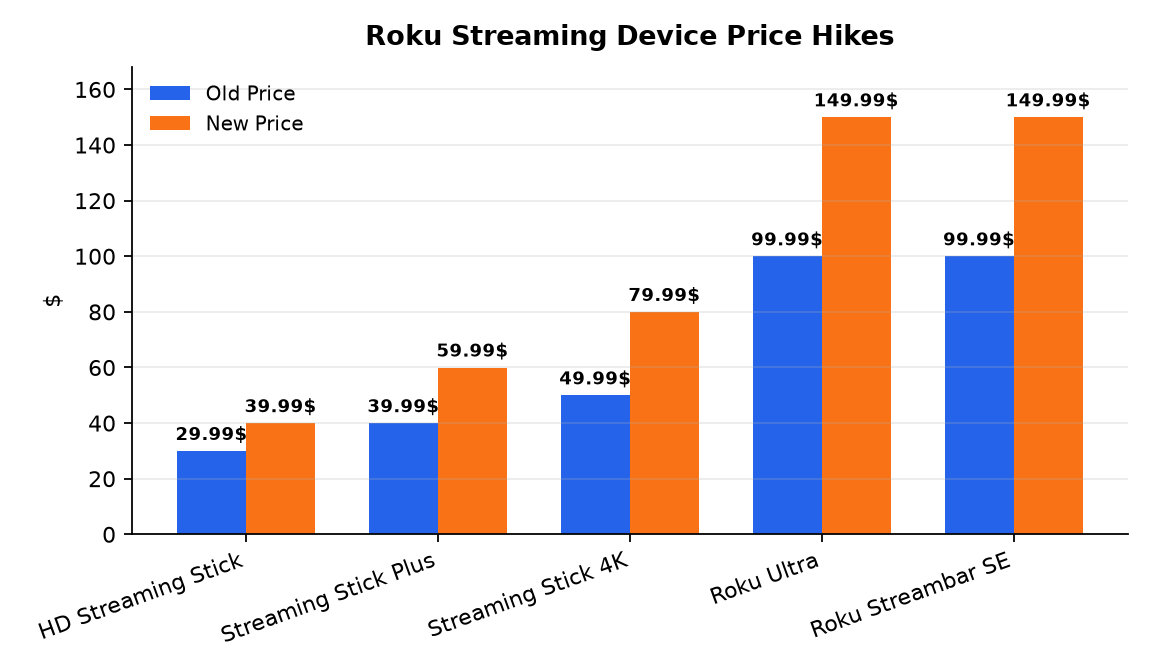
Roku raised prices across its streaming hardware lineup, with the cheapest HD Streaming Stick now priced at $39.99 instead of $29.99, as first reported by The Desk. The changes are steep across the board: the Streaming Stick Plus went from $39.99 to $59.99, the Streaming Stick 4K from $49.99 to $79.99, the Roku Ultra from $99.99 to $149.99, and the Roku Streambar SE from $99.99 to $149.99.
A Roku executive told The Desk that the ongoing memory shortage is the reason for the price changes. The shortage is expected to last through 2027 and beyond, and comes as memory makers prioritize demand from AI companies. Apple similarly raised prices across its devices, including its Apple TV set-top box, in June. The pattern is clear: when memory becomes scarce, every connected device pays the price.
A sector-wide squeeze
Qualcomm and Roku are not alone. Bloomberg notes that Qualcomm's price increases will ripple across the industry, particularly into smartphones. But the component shortage is hitting across the board. Xbox consoles, Raspberry Pi boards, most Apple devices, and Samsung and Google's smartphones have all seen price increases or spec downgrades. Some devices are even getting canceled or delayed.
Leaked European pricing for Google's Pixel 11 points to a €100 increase, while Xiaomi's upcoming 18 Pro series is expected to cost more due to rising storage and wafer costs. The broader infrastructure constraints that extend beyond just memory are reshaping the entire device landscape. Apple recently announced a new six-year commitment with Broadcom to design and produce custom silicon, a move that may help insulate it from future shortages but does nothing for current prices. The message is consistent: hardware is getting more expensive, and the reasons are structural, not seasonal.
The new normal
The memory shortage is the thread connecting all of these increases. Memory makers are prioritizing high-margin AI chips over consumer components: AMD's new Ryzen AI Halo, for example, targets local AI development with 128 GB of unified memory meaning the PC itself becomes a competitor for DRAM supply. This priority shift creates a supply crunch expected to last through 2027 and beyond.
As long as AI companies continue to scale their model training and inference, demand for memory will remain elevated. For consumers, this means the era of cheap electronics is likely over for now. Upgrade cycles will slow as prices climb. Even budget devices are feeling the pressure: the Raspberry Pi, once a $35 staple, now costs more. And while companies like Nvidia continue to post massive revenues from AI hardware, the consumer market is left to absorb the cost of the components that the AI boom is consuming.
There is no easy fix. Chip companies are building new fabs, but they take years to come online. Until then, the memory shortage will keep prices high, and every new gadget will carry a little extra cost, a quiet tax from the AI revolution.
Get the tech essentials in 3 minutes every morning
One email, every weekday, with what actually matters in AI and tech.