AI consolidation
Reve's researchers are headed to OpenAI; its products stay put
OpenAI's investment in the independent lab Reve brings a move of research talent: part of Reve's AI Research team joins OpenAI's multimodal push while Reve's products stay in place. No amount was disclosed.
Emmanuel Fabrice Omgbwa Yasse AI-assisted
2026-08-05 · 4 min read
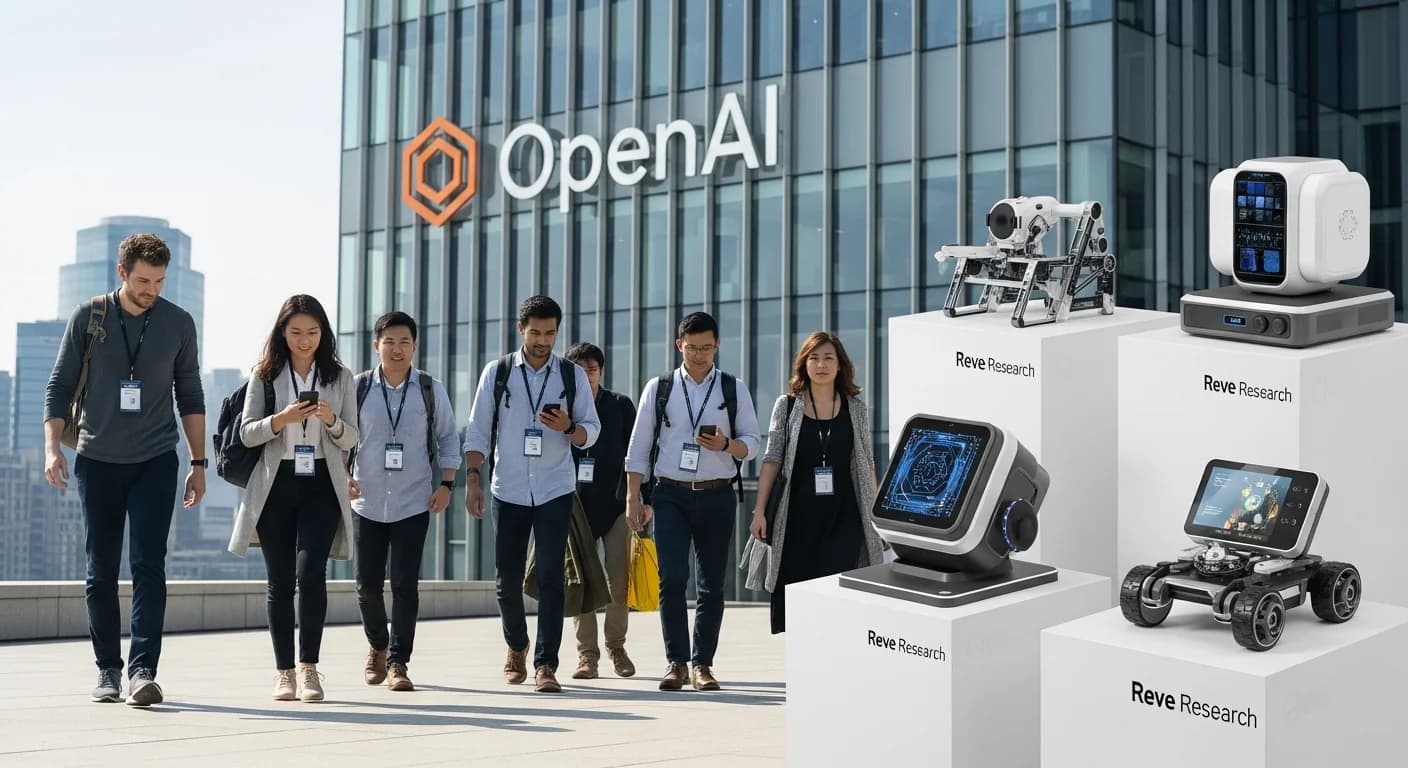
There is a deal inside this announcement, and it is not the shape a normal funding round takes. Reve said on July 27 that OpenAI is putting new money into the independent AI lab, and that members of its AI Research team will join OpenAI to help lead its multimodal research efforts. That is a bet on the voice and vision side of the frontier, which OpenAI has named a pillar of its AGI roadmap. Reve says it will keep operating independently and keep building products. Both halves of that sentence matter.
Strip the warm language and the structure is clear. OpenAI gets research talent in a field it is competing hard to win. Reve gets capital and a public vote of confidence from a strategic investor, plus a research team that is, in part, leaving. The post acknowledges none of that tension directly. It reads as a celebration, with continuity assurances stacked around the news.
A full acquisition would have moved the products too, and ended the story of an independent lab. A plain investment would have left the research team in place. This deal sits between the two: the investor takes research capability and leaves the product company standing. Independent labs have responded to this moment in different ways, from Sakana's run of consumer products to its bet that shipping fast beats waiting on a frontier wave. Reve is betting that keeping the company but parting with the research team is the move that finances the next phase.
Research goes one way, products the other
Reve's framing is that the split accelerates a broader product ambition. The company started in the visual realm and says the range of products it can build is expanding as frontier models get more capable. That is the official reason the research team moves: to help lead OpenAI's multimodal research. What the announcement does not say is who moves, how many people, or what happens to the research program they leave behind.
The continuity commitments fill the rest of the post. Existing products, including Reve.com, continue. Reve stays free to build with the best available models and to collaborate broadly across the AI ecosystem. For a product company with an outside investor that also sells models, that last line is the one to watch: it says Reve is not locking itself to OpenAI's stack just because OpenAI is now an investor. History offers a caution from the other side of the aisle, where Claude Fable 5's availability was yanked by conditions outside the lab. Model access is a strategic dependency wherever the models come from.
That line is not boilerplate. For a lab whose pitch is building products rather than training models for their own sake, the choice of models underneath the products is the strategic core. An investor that is also a model maker could, in different circumstances, nudge a portfolio company toward its own stack. Reve's announcement draws that line early. It is also a different call from the one its new investor makes internally: even at OpenAI, product claims ran ahead of what its own team was willing to say, a reminder that proximity to a model maker does not keep launch statements honest.
The meaning of independent
Independence needs careful reading here. Reve is explicit that it is not being absorbed, and nothing in the announcement suggests the product side is folding into OpenAI. But part of the research function that built the company's models now belongs to another organization. In an AI product lab, the line between the people who make the models and the people who ship the products is often blurry in practice. Reve is promising that for them, it is not. Meanwhile OpenAI gets an injection of people who have done multimodal work the way Reve did, a speed gain in the same race it is pushing from the product side with GPT-Live's push into fluid voice chat.
There is also the question of what OpenAI bought for its money. Not control, as announced, and not the product line. It bought the ability to steer part of its multimodal research with people who have done this work at an independent shop. For OpenAI, that is a speed gain in a crowded race. For Reve, the deal finances the next phase of building. Both sides can reasonably call that a win, and neither has to say out loud which half of the arrangement works better for them.
The post closes with thanks to investors, customers, and the team. The harder questions are left to the future: whether Reve's roadmap moves at the same speed without the researchers who built its models, and whether "free to build with the best available models" survives contact with an investor that sells competing models. Launch posts rarely answer those questions. The next releases will, and that is where the industry has generally moved from launch promises to measurable results.
Get the tech essentials in 3 minutes every morning
One email, every weekday, with what actually matters in AI and tech.