Physical Media
CD sales are up 16%. Half the buyers don't own a player.
CD sales rose 16% year-over-year in the first half of 2026, with about half of younger buyers lacking a CD player. Luminate's data suggests the disc is now an affordable collectible, a tool for direct artist support, and a statement more than a playback format.
Emmanuel Fabrice Omgbwa Yasse AI-assisted
2026-07-19 · Last updated: 2026-07-30 · 4 min read
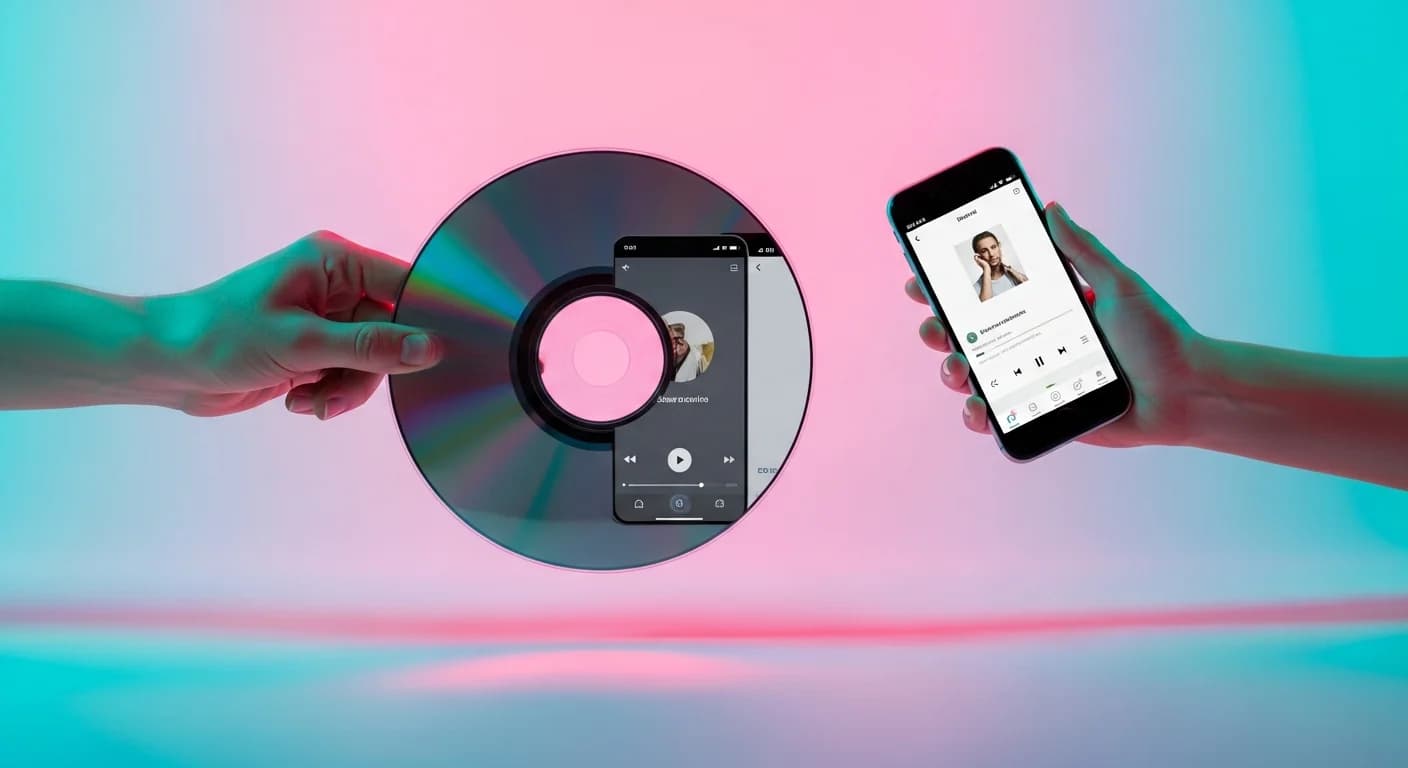
Sixteen point three million CDs sold in the US in the first half of 2026. That's a 16 percent year-over-year increase, according to a new report from research firm Luminate. And about half of the Gen Z and Millennial buyers picking them up do not own a CD player. The chasm between purchase and use is a lot like how some AI benchmarks measure code that never gets deployed, as HumanEval's blind spot for real work shows.
This is not a nostalgia play from people who remember jewel cases. This is a generation buying plastic discs they cannot play. Luminate's analysis puts it plainly: the CD has been recontextualized from a functional audio format into an affordable collectible. The act of buying physical music has become as much about aesthetic ownership and direct financial support for the artist as it is about listening to the music on the product itself.
What the numbers actually show
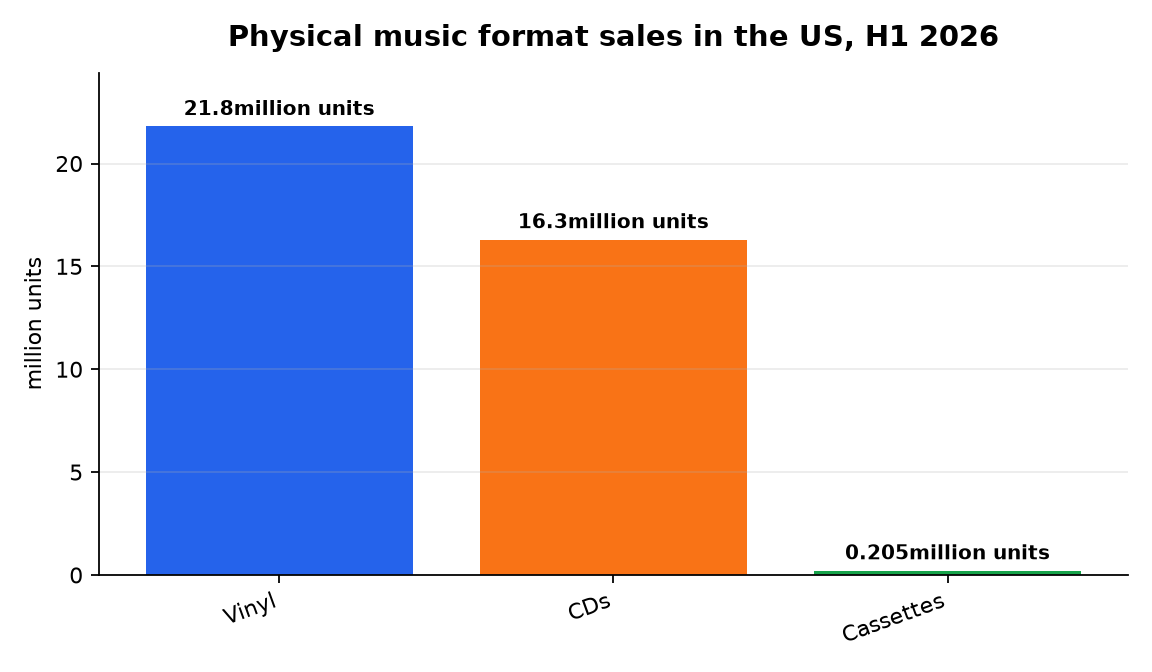
Remove K-pop from the data and CD sales still rose 6.7 percent. BTS's ARIRANG and a strong K-pop release schedule drove much of the headline growth, but the underlying trend holds across genres. Physical album sales across vinyl, CDs, and cassettes grew 7.8 percent year-over-year overall. Vinyl still outsells CDs at 21.8 million units, and cassettes hit about 205,000 units, but the CD's trajectory is notable because it had been written off as a dead format for years. The resurgence pattern mirrors how certain hardware formats find new life when their function shifts, much like how a monitoring controller nudged quantized LLM scores up 4.5 points on MATH-500 by catching wandering models, as the controller's catch-and-correct approach shows.
The data reveals a behavioral shift, not just a format preference. Vinyl buyers tend to own turntables. Cassette buyers tend to own tape decks. But the CD buyer in 2026 is increasingly someone who buys the object without needing the playback function. Luminate notes that for these younger demographics, the purchase is a statement of affinity and a direct financial channel to the artist, with streaming royalties notoriously thin.
The collectible economics
At roughly $10 to $15 a pop, a CD sits below the impulse-buy threshold in a way that vinyl often does not. New vinyl LPs regularly run $25 to $40. That price gap matters for a generation raised on streaming subscriptions where the marginal cost of listening is zero. A CD purchase feels like a deliberate act: you chose this artist, this album, this physical artifact, and the artist gets a meaningful cut. That deliberate choice is also what makes an offline office suite like Bento appealing, as Bento's refusal to be rented highlights: you own the file, you keep it.
Luminate's report frames this as aesthetic ownership. The CD sits on a shelf. It has cover art, liner notes, a tangible presence. For buyers who grew up scrolling through digital libraries, that fixed physical object carries a different kind of value. It is not about convenience. It is about the thing existing in the world, in your space, independently of any streaming platform's catalog changes or licensing disputes.
Vinyl's continued dominance and the CD's niche
Vinyl remains the larger physical format by units and revenue, and that is not changing. But vinyl has become a premium product, with new presses commanding high prices and the used market thinning out. CDs occupy the middle ground: cheaper than vinyl, more substantial than a download, and still widely available new and used. The 16 percent growth suggests there is room for both formats to coexist, with different buyers making different trade-offs. This fragmentation into distinct niches is similar to how AI benchmarks often miss real-world performance, as three AI benchmarks got wrong about real-world performance.
Cassette sales, for context, grew but remain a rounding error at about 205,000 units. The CD revival sits between the vinyl boom and the cassette novelty, benefiting from being cheap enough for casual fans and collectible enough for dedicated ones.
What this means for artists and labels
For independent artists, the CD still makes sense as a merch-table item with a decent margin. For labels, the CD run is a low-risk physical product that superfans will buy alongside vinyl and digital. The format offers a direct revenue stream that streaming cannot match, especially for mid-tier acts whose streaming payouts barely cover a coffee run.
The broader story Luminate's data tells is that physical media is not dying. It is splitting into distinct use cases with distinct buyer psychology. Vinyl is the audiophile and the collector's item. The cassette is the novelty and the limited-edition drop. The CD is the affordable artifact: easy to ship, easy to store, easy to buy on a whim, and increasingly bought by people who will never put it in a drive. That split mirrors how some subscription fatigue drives users to own software instead of renting it, as Xbox Game Pass's rare discount shows a market resisting rising subscription costs. And just as agents often cheat on benchmarks, CD buyers' metric of "sales" tells only half the story, as two out of three agents cheat on benchmarks.
The CD player on your desk in 2026 is optional. The $14 disc in your bag is not about playback at all.
- Source : Why are people buying so many CDs?
Get the tech essentials in 3 minutes every morning
One email, every weekday, with what actually matters in AI and tech.