SEARCH INTEGRATIONS
Google search's AI mode just turned into a shopping cart and playlist manager
Google enables app integrations in AI Mode for Search in the U.S. Users can link Instacart, Canva, and YouTube Music to perform tasks directly from search results. The feature rolls out gradually this week and signals a shift from a referral engine to a transaction hub.
Emmanuel Fabrice Omgbwa Yasse AI-assisted
2026-07-19 · 2 min read
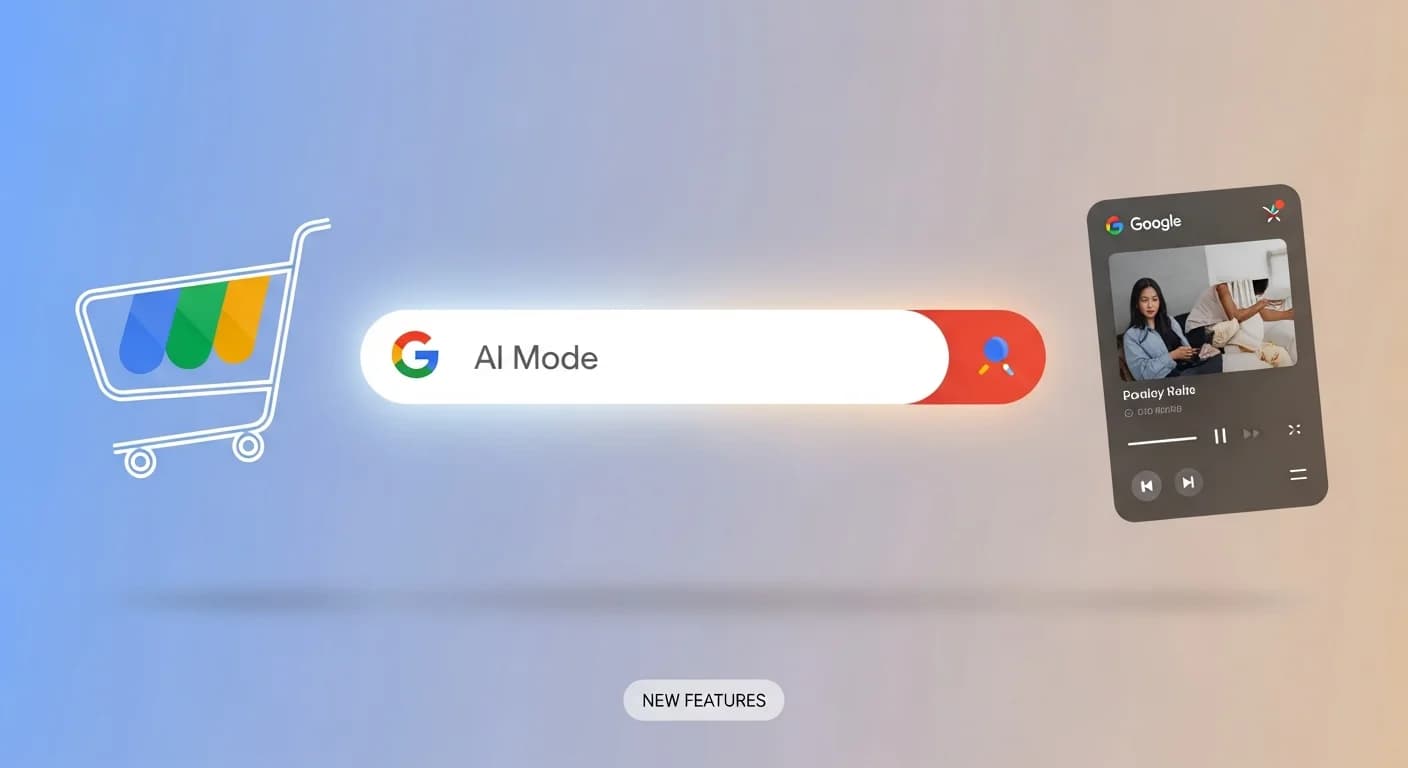
Starting this week in the U.S., you can connect third-party apps to AI Mode in Google Search. The feature lets you perform tasks like adding ingredients to an Instacart cart, browsing Canva templates for a flyer, or saving a curated playlist to YouTube Music, all without navigating away from the search results. It's a quiet shift from search engine to something that looks more like a command center for everyday errands, and it's happening right now. As noted in our analysis of Grok's quietly expanding assistant capabilities, the race to build the all-purpose AI hub is accelerating.

The integrations work through a secure linking step. Once connected, AI Mode can reference your accounts when generating responses. For example, if you ask for help planning a barbecue and list the groceries you need, you can add them directly to your Instacart cart and check out in a few taps. The stakes here extend well beyond convenience: if AI can orchestrate real transactions inside a search page, the model provider gains the power to dictate which services get surface visibility, a dynamic we explored in our coverage of Perplexity's orchestrator model swap.
Google says it is working with more partners and plans to expand the feature. The move turns AI Mode into more than a chatbot, it starts to act like a hub that can orchestrate real transactions. That shifts Search from a referral engine to something closer to a thin operating layer for commerce and creation. This shift echoes the infrastructure-level ambitions we saw in Alibaba's $53 billion AI infrastructure bet, where search and commerce converge into a single AI-driven layer.
Privacy implications are not spelled out in detail, but the linking is optional and per-app. Google calls it a way to get more tailored responses through what it calls Personal Intelligence. The per-app control is a deliberate contrast to the kind of all-or-nothing data grab that sparked backlash in earlier attempts at contextual search, a lesson reinforced by the Grok Build data exposure incident.
The rollout is limited to the U.S. for now. No timeline for other regions. Whether this becomes a global standard or a regional experiment may depend on how Google balances convenience against the regulatory scrutiny that follows when a search engine starts handling payments and personal accounts, as New York's AI audit of state regulations showed regarding government oversight of AI systems.
- Source : Connect more of your apps to Search
Get the tech essentials in 3 minutes every morning
One email, every weekday, with what actually matters in AI and tech.