Tech History
The gadget that barely worked and changed everything anyway
The Clapper never worked reliably and could fry your gadgets. Yet it became a household name. A new podcast episode explores how a bad smart home gadget became a viral hit anyway, and what that says about the gap between marketing and engineering.
Emmanuel Fabrice Omgbwa Yasse AI-assisted
2026-07-28 · 4 min read
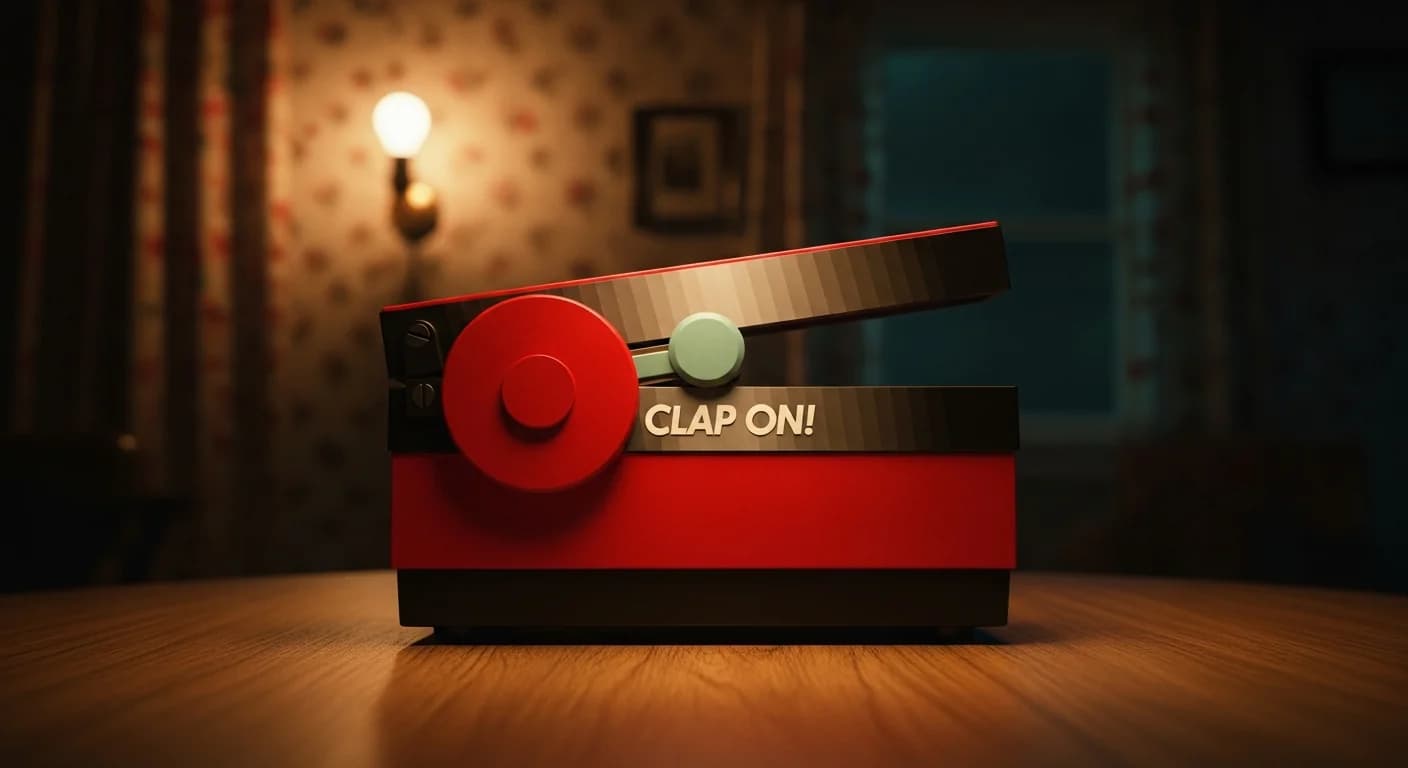
Clap on. Clap off. Or more accurately: clap, pause too long because the timing window is impossibly narrow, clap again frustrated, clap louder, accidentally clap three times, and nothing happens. Then, unpredictably, your lamp turns on.
The Clapper was never a good product. But it was a great commercial. That distinction is what a new episode of The Verge podcast Version History digs into. Framed differently, it asks whether a gadget that barely works can still change how people think about technology, a question that echoes in today's AI landscape, where DeepMind's framework on AI rigor suggests capability and reliability are not the same thing.
The invention that nearly wasn't
The device started life as The Great American Turn-On, a name that says everything about 1980s optimism and nothing about user experience. Its creator, Carl Lee, had a simple idea: let people control lights and appliances by clapping. No wires, no wall switches, just sound.
The problem was physics. Acoustic detection in a noisy home is hard. The Clapper's crude microphone and filter circuit could never reliably distinguish a clap from a dog bark, a door slam, or a pot dropped in the kitchen. Users quickly learned that the device demanded a very specific clap rhythm: two sharp claps with less than half a second between them, or it would ignore them entirely. Clap too fast and it registered as one clap. Clap too slow and the timing circuit reset. The window was brutal. This tension between a product's promise and its technical reality, as Sakana AI's Picbreeder experiment showed, can create either frustration or fascination.

When it did work, there was a second problem: the Clapper could damage connected electronics. Its relay-based switching sent voltage spikes through whatever it controlled. Plug in a computer or a modern TV and you were gambling. The lesson that imperfect execution can still capture the public imagination is one that voice AI's struggle with emotional nuance reinforces today.
The ad that sold a dream
None of that mattered, because the commercial was perfect. The original Clapper ad featured a woman in a living room, clapping her lights on and off in a rhythm that looked effortless. The tagline, Clap on, clap off, the Clapper, became an earworm. It ran on late-night television for years, alongside the ThighMaster and the Ginsu knives, and it worked because it sold ease, not accuracy.
The ad never showed the timing struggles, the false triggers, or the buzzing relays. It showed a woman in control of her environment, doing something that looked almost magical. That gap between the ad and the reality is the central tension of the device's history.
What the Clapper teaches us
The story is a useful corrective to how we talk about smart home gadgets today. Modern products like the Nest thermostat or the Philips Hue lights are sold on reliability and integration, they work because their sensors and software are good enough. But the Clapper's success came from a different formula: a memorable hook, a low price, and a commercial that people remembered long after they forgot what the product actually did.
Allison Marsh, a writer and professor at the University of South Carolina who appears on the podcast, argues that the Clapper's real legacy is not in home automation but in advertising. It proved that a product could be technically mediocre and still find an audience, as long as the marketing made people feel like they were buying convenience. The same dynamic plays out in AI, where deep search agents hit 49% on a test humans pass at 95% yet still get deployed in production.
The episode is the sixth and final installment of the fourth season of Version History. Earlier episodes covered the Harmony remote, the Roomba, the Nest thermostat, the Keurig, and the Philips Hue, each a device that, unlike the Clapper, actually worked well enough to define a category. The Clapper is the outlier, and that is what makes it worth revisiting, much like the uncensored model paradox shows that a flawed tool can still be useful, as long as you know its limits.
Verdict
- Score: 3/10 (as a product) / 8/10 (as a cultural artifact)
- Real price: Originally $19.95 (around $50 today adjusted for inflation); vintage units on eBay now sell for $15-40
- Ideal for: Collectors of 80s infomercial memorabilia or anyone teaching a class on the gap between marketing and engineering
- Avoid if: You actually want to control your lights reliably without yelling
- Two alternatives: A basic smart plug with voice assistant support costs about the same and actually works. Or just use the wall switch, it has a 100% success rate.
- Test date: No hands-on testing for this piece; testing history is drawn from archival accounts and the Version History episode itself
Get the tech essentials in 3 minutes every morning
One email, every weekday, with what actually matters in AI and tech.