AI Coding Agents
How an Anthropic ban backfired and drove OpenCode to $40M ARR
OpenCode, an open-source AI coding agent, reached 4.6 million weekly active users and $40M ARR after an Anthropic clampdown on Claude usage pushed developers toward a model-agnostic alternative.
Emmanuel Fabrice Omgbwa Yasse AI-assisted
2026-07-24 · 2 min read
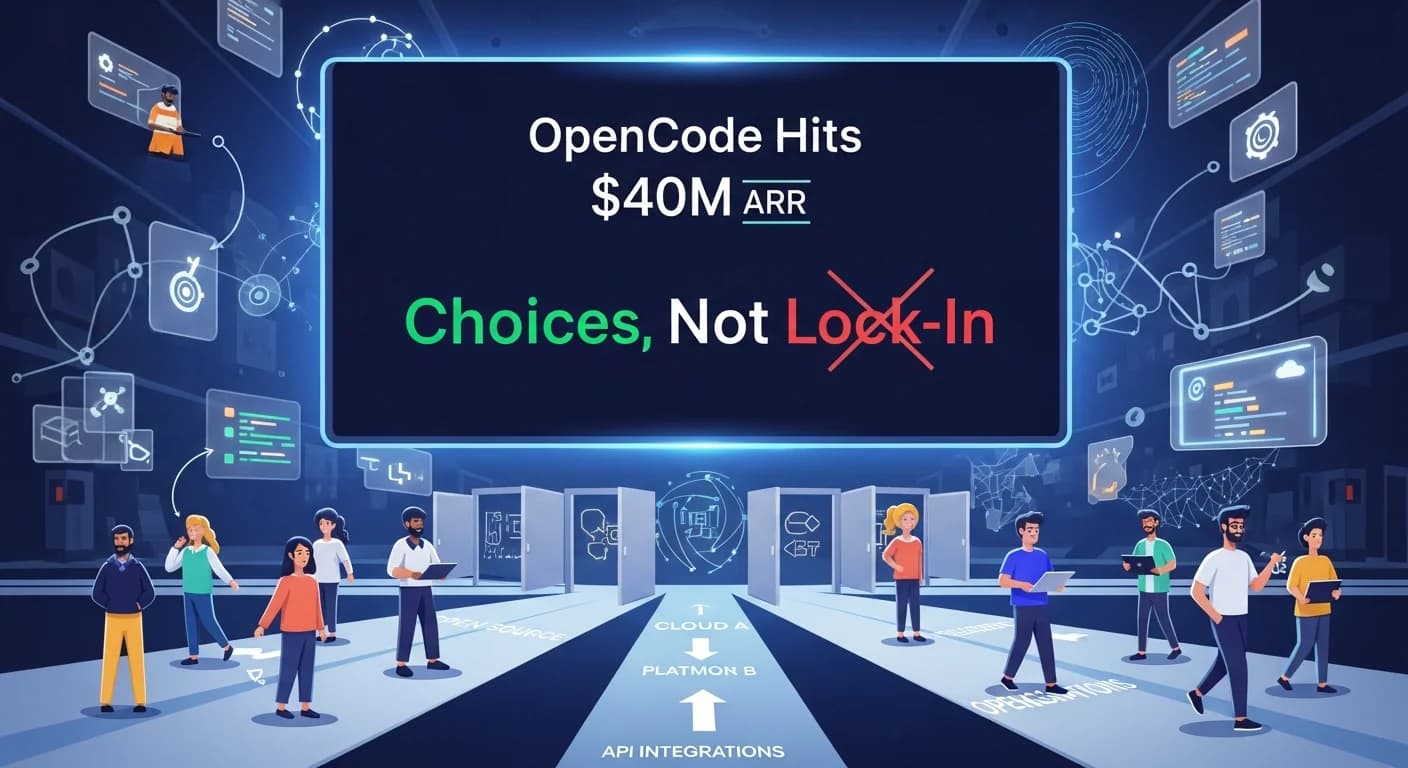
OpenCode, the open-source AI coding agent that works with any model, hit 4.6 million weekly active users and roughly $40 million in annualized revenue since the start of the year. That means 13 million monthly active users and 7 trillion tokens processed, Jay V said on Y Combinator's The Lightcone podcast. The startup has also added free access to Ling 3.0 Flash, doubling down on token efficiency according to the model's free tier announcement.
An Anthropic policy change that restricted certain usage patterns on Claude bent the growth curve upward. The clampdown pushed developers who had been relying on Anthropic's platform toward alternatives. OpenCode, model-agnostic and open source, caught them. The move came as Anthropic launched Claude Opus 5 with near-frontier performance at half the cost, an interesting backdrop explored by the cost analysis of Claude Opus 5.
Building a tool that works with any model, not just one, is the core of the strategy. Jay V described it as a bet on developer preference: most teams do not want to be locked into a single provider, and as open-source models improved, the gap with closed models narrowed. "When open source models became good enough, the whole equation flipped," he said. The bet aligns with research showing small models can handle complex tasks when orchestrated well, as described in Microsoft's work on small model orchestration.
Usage data confirms the pattern: more than half of OpenCode's usage comes from outside the US, where cost sensitivity runs higher. Fortune 500 companies are using it for internal automation and code generation, attracted by the ability to bring their own model endpoints and avoid vendor lock-in. The explosive growth of open-source agent frameworks like OpenManus, covered in a guide to installing OpenManus, reflects the same shift.
The token economics work in OpenCode's favor. As inference costs drop, running open models at scale becomes cheaper than paying per-seat licenses for proprietary agents, and the gap is widening. Production cost cuts such as Microsoft's 89% GPU cost reduction, detailed in the analysis of Microsoft's cost cuts, show the trend.
Jay V has been building for nearly 20 years. He called OpenCode a "16-year overnight success": a product that hit the right wave after years of iterating. He credited persistence and a willingness to stay in the game until the market caught up.
OpenCode combines an open-source license, model flexibility, and token-based pricing instead of per-seat licenses. Developers tired of walled gardens are buying in. The Anthropic clampdown was the spark, but the fuel was already there. Persistent memory across sessions, a differentiator for coding assistants as highlighted by the analysis of memory in coding tools, is one of the reasons developers stick with OpenCode.
Get the tech essentials in 3 minutes every morning
One email, every weekday, with what actually matters in AI and tech.