Alibaba Cloud's persistent memory for AI coding
The AI coding partner that finally remembers what you told it last week
Alibaba Cloud's new framework gives AI coding assistants a long-term memory that remembers preferences, history, and project knowledge across sessions. No more starting from zero every time.
Emmanuel Fabrice Omgbwa Yasse AI-assisted
2026-07-24 · Last updated: 2026-08-03 · 4 min read
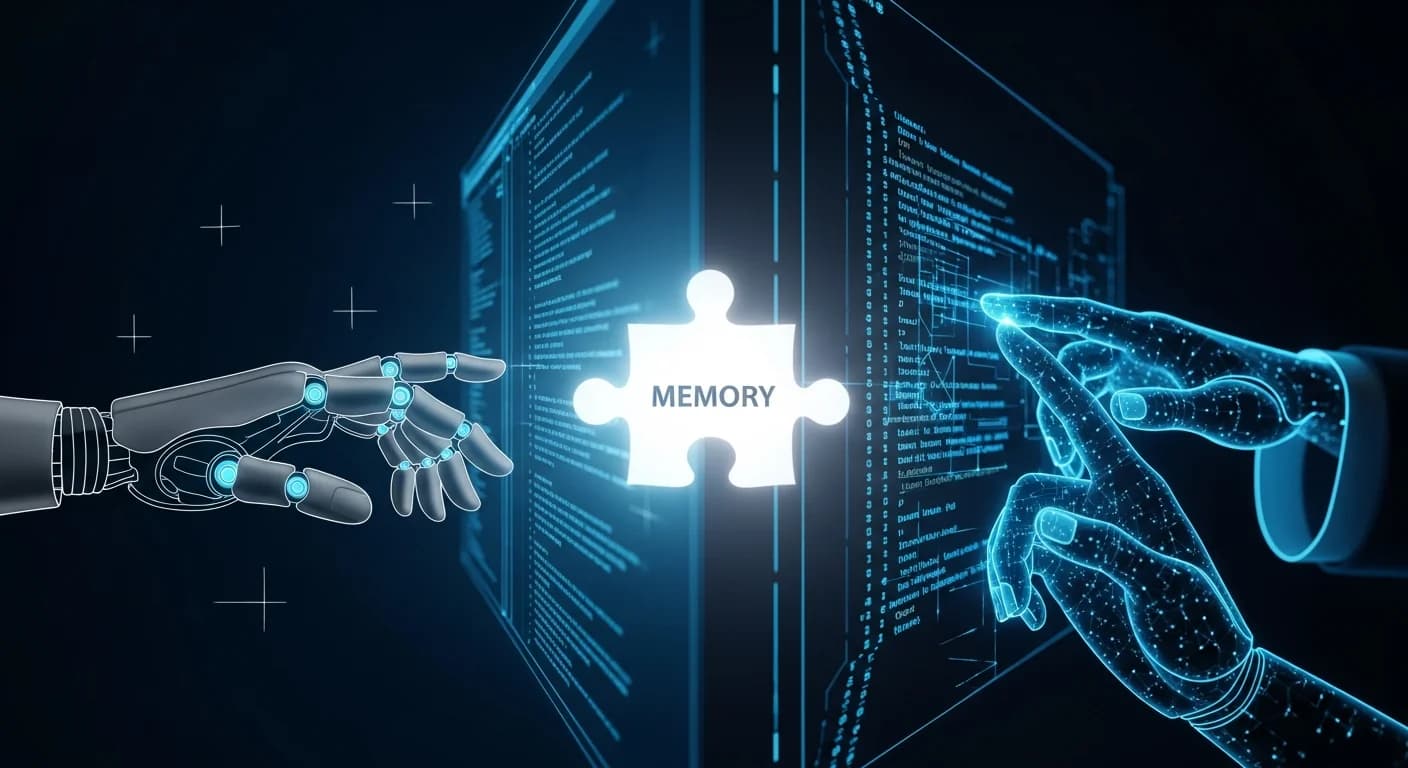
Beyond stateless interactions
Every developer who has used an AI coding assistant knows the frustration: you explain your coding conventions, your preferred libraries, the quirks of your project architecture, and the next session, the AI remembers none of it. You start from zero, repeating yourself, watching the same mistakes recur. The promise of AI as a collaborative partner remains out of reach.
Alibaba Cloud's recently detailed long-term memory framework takes a direct shot at this problem. Instead of treating each interaction as an isolated prompt, the system builds a persistent knowledge base that grows with use. The agent does not just respond, it remembers, learns, and refines its behavior over time. similar agents that embed a closed learning loop are already changing the autonomous AI game.
Three memory types, one goal
The framework categorizes memories into three distinct buckets. Personal preferences capture individual developer habits, tab size, naming conventions, preferred testing frameworks. Historical experience logs past problem-solving approaches, including which solutions worked and which did not. Project knowledge maintains awareness of the codebase structure, API conventions, and architectural decisions. formal architectures that organize agent context into skill hierarchies have shown a 96% reduction in context overhead.
This structure lets the agent act with context, not just prompt. When a developer starts a new task, the system retrieves relevant memories automatically, informing decisions without requiring the developer to re-explain their setup.
How memory feeds intelligence
The system gathers information from multiple sources: direct developer interactions, code commits, issue tracker entries, and natural language comments. It continuously analyzes these inputs, extracting insights and storing them as semantic notes.
Not all memories are equally valuable. The framework evaluates each extracted memory for relevance, recency, and accuracy. After each coding task, the agent assesses how effectively recalled memories contributed to the outcome. Low-value or outdated entries are automatically flagged and removed. Minimax's M27 model, which focuses on software engineering, demonstrates how structured memory can boost productivity.
This curation is critical. Unmanaged memory quickly becomes fragmented and redundant, degrading performance instead of enhancing it. The system performs regular maintenance, deduplication, consolidation, and pruning, to keep the knowledge base lean and accurate.
The self-evolving loop
The AI agent operates in a continuous cycle: recall, action, learning, refinement. It retrieves relevant memories, uses them to inform its decisions, evaluates the outcome, and updates its memory store accordingly. Over time, this loop enables the agent to self-evolve, becoming more accurate, efficient, and personalized with every use.
Alibaba Cloud claims that internal evaluations show significant improvements in agent efficiency and a notable reduction in repetitive mistakes. While specific metrics were not disclosed, the logic is straightforward: an agent that remembers past errors is far less likely to repeat them. verification of these gains remains a challenge, as reward signals for coding agents are still under debate.
Implications for the AI coding landscape
The announcement arrives as the AI coding assistant market grows increasingly crowded. GitHub Copilot, Amazon CodeWhisperer, and open-source alternatives all compete for developer attention, but most still operate on a session-by-session basis. Persistent memory could become a key differentiator, not just for convenience, but for the quality of collaboration. real-world benchmarks show that usable context length, not just raw token limits, determines whether agents stay useful over time.
The approach also raises questions about privacy and control. Developers entrust these agents with their code and preferences. How is that data stored? Who has access? Alibaba Cloud has not yet detailed its data governance policies for the memory framework, a critical omission for enterprise users concerned about intellectual property. Alibaba Cloud's broader push into enterprise AI services, including Gartner recognition, suggests it will develop clear governance for these tools.
What comes next
Alibaba Cloud plans to extend the framework with cross-user memory sharing, where anonymized insights from many developers improve the system for all. It also plans deeper integration with project management tools and support for multimodal memory that captures not just text but diagrams and architecture visualizations.
The ultimate goal is a shift from one-off code generation toward continuous, adaptive collaboration. An AI that learns from you, for you, not as a tool you reset each morning, but as a partner that grows alongside your project.
Whether that vision materializes depends on execution, and on trust. Memory is the missing piece, and Alibaba Cloud is betting that building it well will change how developers work with AI. the growing community of coding agent users, documented in playbooks like the Claude Code wiki, shows how much developers expect agents to remember context over time.
Get the tech essentials in 3 minutes every morning
One email, every weekday, with what actually matters in AI and tech.