European autonomy
Poland just bought into ElevenLabs. The message is not about the check size.
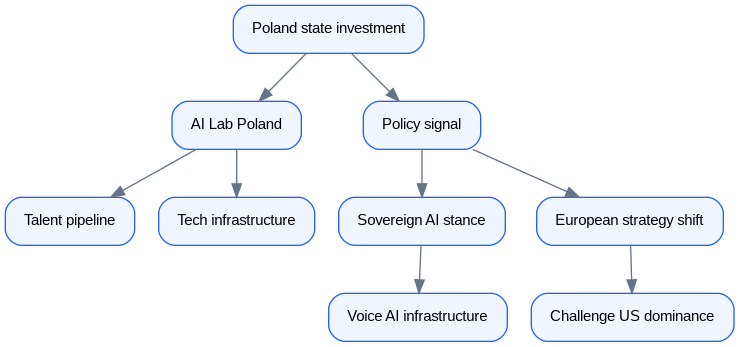
ElevenLabs has taken state capital from Poland. The investment, routed through Vinci and paired with a new research lab in Warsaw, is a bet on keeping European AI founder talent from drifting to the US. The check size matters less than the signal.
Emmanuel Fabrice Omgbwa Yasse AI-assisted
2026-07-26 · Last updated: 2026-08-03 · 3 min read
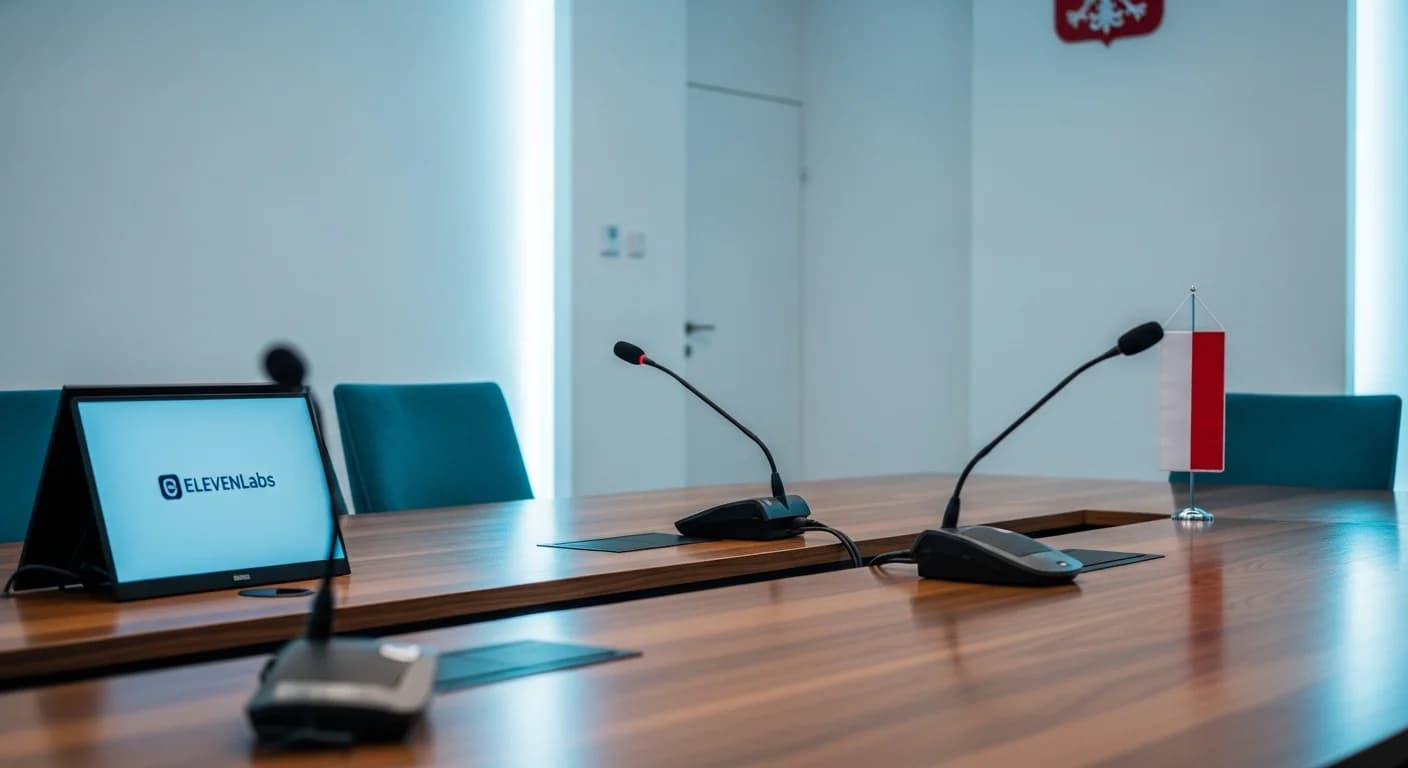
ElevenLabs raised hundreds of millions from Andreessen Horowitz, Sequoia, and ICONIQ. Now it has added a less typical investor: the Polish government, through Vinci, a fund part of the state-owned BGK Group. The amount was not disclosed, but the move is not principally about the check size. It is about what state capital in an AI startup signals in a moment when Europe is casting around for a technology strategy that does not just mean more regulation. See also Europe's regulatory moves.
A lab, not a logo
The announcement bundles the equity stake with the creation of AI Lab Poland, a joint initiative ElevenLabs describes as combining capital, technology, science, and talent. The stated goal is to help Polish AI companies grow with global ambition from the start, a line that reads as a direct acknowledgment of the brain drain that has historically pulled Polish technical founders toward London, Berlin, or Silicon Valley.
ElevenLabs co-founders Mati and Piotr Dąbkowski first met as teenagers in Warsaw. Both studied and worked abroad before building the company from Europe. In the announcement, Mati Staniszewski frames the investment as a way to deepen roots: "The more we travel, the more it feels like Poland is a place where the future is being built."
The Polish state is already working with ElevenLabs through partners including Centrum e-Zdrowia, the national e-health center; LOT Polish Airlines; InPost; and the University of Warsaw. Those relationships predate the investment and give it a more concrete foundation than many government-startup tie-ups.
Why state capital in ElevenLabs matters more than the sum
European governments have historically struggled to back tech companies at scale. Public funds tend to arrive via grants or small venture arms that rarely lead rounds. Vinci investing alongside Andreessen Horowitz and Sequoia changes the investor table composition for ElevenLabs, and for the Polish ecosystem that other startups will look at. For a broader look at how government cybersecurity bets are playing out, see Google's government-locked cyber variant.
The announcement does not specify whether the stake is a direct equity purchase or a structured instrument. But even a symbolic allocation from a sovereign entity is unusual in AI, where most strategic investors are sovereign wealth funds from the Gulf or Asia. Poland is not Norway or Singapore. Its willingness to write a check into a company valued at over a billion dollars is itself a message about sovereignty over voice AI infrastructure. Voice AI's limitations, even in understanding nuance, are documented in Voice AI's emotional blind spot.
The move follows a pattern of European governments seeking to anchor strategic technology within their borders. The UK government has partnered with ElevenLabs on voice AI for public services. Greece signed an MOU with the company for tourism and linguistic preservation. Poland’s stake is a step further: it makes the state a shareholder.
What Europe needs from moves like this
Europe has produced strong AI research and founding teams, but has consistently let scaleups drift toward US venture capital and US headquarters. Poland is one of the countries where the gap between engineering talent and local tech infrastructure is most visible. The ElevenLabs investment and lab are a concrete attempt to narrow that gap. The tension mirrors what we've seen in other strategies to build local AI infrastructure, as explored in the 7B model that changes the AI cost equation.
The lab’s success will depend on what it actually produces, research publications, model contributions, or talent pipelines, not on the press release. The ElevenLabs Summit hosted in Warsaw earlier this year drew 2,500 attendees to Teatr Wielki, signaling that the local energy is real. State capital is simply the mechanism to keep the momentum inside the country rather than exporting it. For a cautionary note on what happens when AI demand outstrips infrastructure, see Kimi's K3 demand crash.
Whether other European governments follow Poland’s lead remains an open question. But the signal is clear: the playbook of writing off European AI to US investors is being challenged, one state-backed stake at a time.
Get the tech essentials in 3 minutes every morning
One email, every weekday, with what actually matters in AI and tech.