AI regulation
Google bought itself a year of Android AI dominance, and Apple still can't touch it
Google secured a yearlong grace period to bring Android in line with the EU's DMA, giving Gemini more time to deepen its integration before rivals like OpenAI and Anthropic get comparable access. Apple, by contrast, was denied the same runway and still has no timeline for Siri AI in Europe.
Emmanuel Fabrice Omgbwa Yasse AI-assisted
2026-07-21 · Last updated: 2026-07-24 · 4 min read
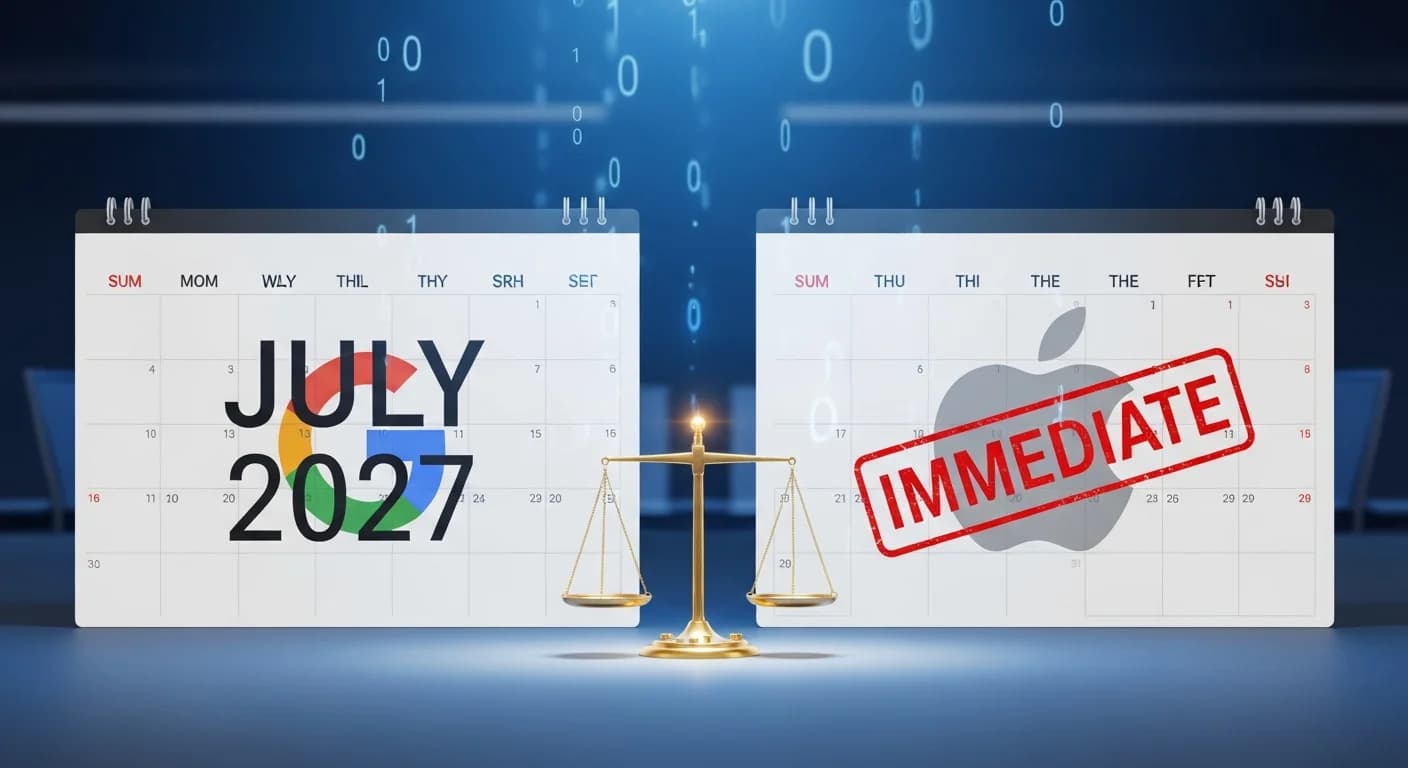
The European Commission handed down two decisions on Thursday that look like a coordinated squeeze on Big Tech's AI ambitions. On closer inspection, one company walked away with a much better deal than the other.
Google's year of grace
Under the Digital Markets Act, the Commission told Google it must grant rival AI assistants the same system features and data access that Google gives its own Gemini assistant on Android. But here's the detail that matters: the company has until July 2027 to make those changes. That is roughly a year from now, plenty of time to keep expanding Gemini, negotiate technical specifics with regulators, and shape how competitors will eventually plug into the operating system.
Google could still challenge the decision in court, though it has not said whether it plans to. What it has done is quietly secured the exact kind of runway that Apple wanted and was denied.
Apple's political gamble backfired
When Apple unveiled its Siri AI assistant last month, it made a point of saying the feature would not launch in Europe because of the DMA. The company argued that granting third-party assistants comparable access would be irresponsible and create unacceptable privacy risks. It asked the Commission for 18 months to build a compliant version. The Commission said no.

Apple's approach was as much political as technical. It dedicated part of its WWDC 2026 keynote to explaining why Siri AI would not reach the EU, published a pointed blog post titled "Due to DMA, Siri AI delayed in EU for iOS 27 and iPadOS 27," and held media briefings on the issue. It relayed news that China was missing out on Siri AI through a one-sentence footnote. The message was clear: Brussels is to blame, not Apple's product choices.
That public pressure campaign did not work. The Commission rejected the request for a delay, and Apple still has no public timeline for when, or even whether, it plans to bring Siri AI to the EU.
Why Google got what Apple didn't
The difference in outcomes partly reflects where each company's AI assistant stood when the DMA began shaping product decisions. Gemini has been the central pillar of Google's AI strategy for years, deeply integrated into Android and often preinstalled as the default assistant on many devices. Google had a strong incentive to stay in the market and figure out compliance later.
Apple, by contrast, unveiled its new Siri AI very recently and chose to withhold it from the EU despite having had years to anticipate the DMA's requirements during the product's design. That choice looks less like a principled stand on privacy and more like a strategic miscalculation.
Google shipped first and negotiated later. Apple tried to negotiate first and discovered it had no leverage.
The opening Gemini now has
That yearlong runway compounds an already significant advantage. Gemini is shipping as the default assistant on Android devices, giving Google more time to strengthen its position before rivals like OpenAI and Anthropic gain comparable levels of access. By July 2027, Gemini will be even more deeply woven into the Android experience, making it harder for competitors to catch up even when the interoperability requirements kick in. This mirrors a broader pattern where deep integration creates a moat, similar to how Grok is quietly building the most complete AI assistant by weaving across X's ecosystem.
Both companies vehemently oppose the DMA's interoperability demands, framing them as threats to privacy, security, and product integrity. The two have also worked together on integrating Gemini into Apple's AI products, including Siri AI, making it plausible they have remained in contact while exploring different ways to fight the same set of restrictions. But for now, the public difference is stark.
What this means for the broader AI landscape
The EU's split decision is a reminder that regulatory outcomes depend as much on timing and strategy as on the merits of each company's arguments. Google played the long game by integrating Gemini deeply into Android before the DMA forced it to open up, then used its existing position to negotiate a favorable timeline. Apple tried to turn its absence into leverage and ended up with neither the market nor the delay. The contest resembles the dynamics playing out in other regulatory fronts, where timing has proven decisive, such as New York's use of AI to scan state regulations.
The next year will be telling. If Gemini gains enough ground before the interoperability deadline, the DMA's requirement to open Android may do less to reshape the market than regulators hoped. If rivals can use the coming months to build competitive alternatives that work well on Android, the picture could change. Either way, the real contest is not in Brussels, it is on the phones in users' pockets.
- Source : The Verge
Get the tech essentials in 3 minutes every morning
One email, every weekday, with what actually matters in AI and tech.