Image generation
Alibaba's latest image model doesn't want to paint. It wants to print your newspaper.
Qwen-Image-3.0 skips the aesthetic polish arms race and targets something harder: generating legible text, dense layouts, and full infographics in one pass. Alibaba just made image generation useful again.
Emmanuel Fabrice Omgbwa Yasse AI-assisted
2026-07-23 · Last updated: 2026-07-24 · 3 min read
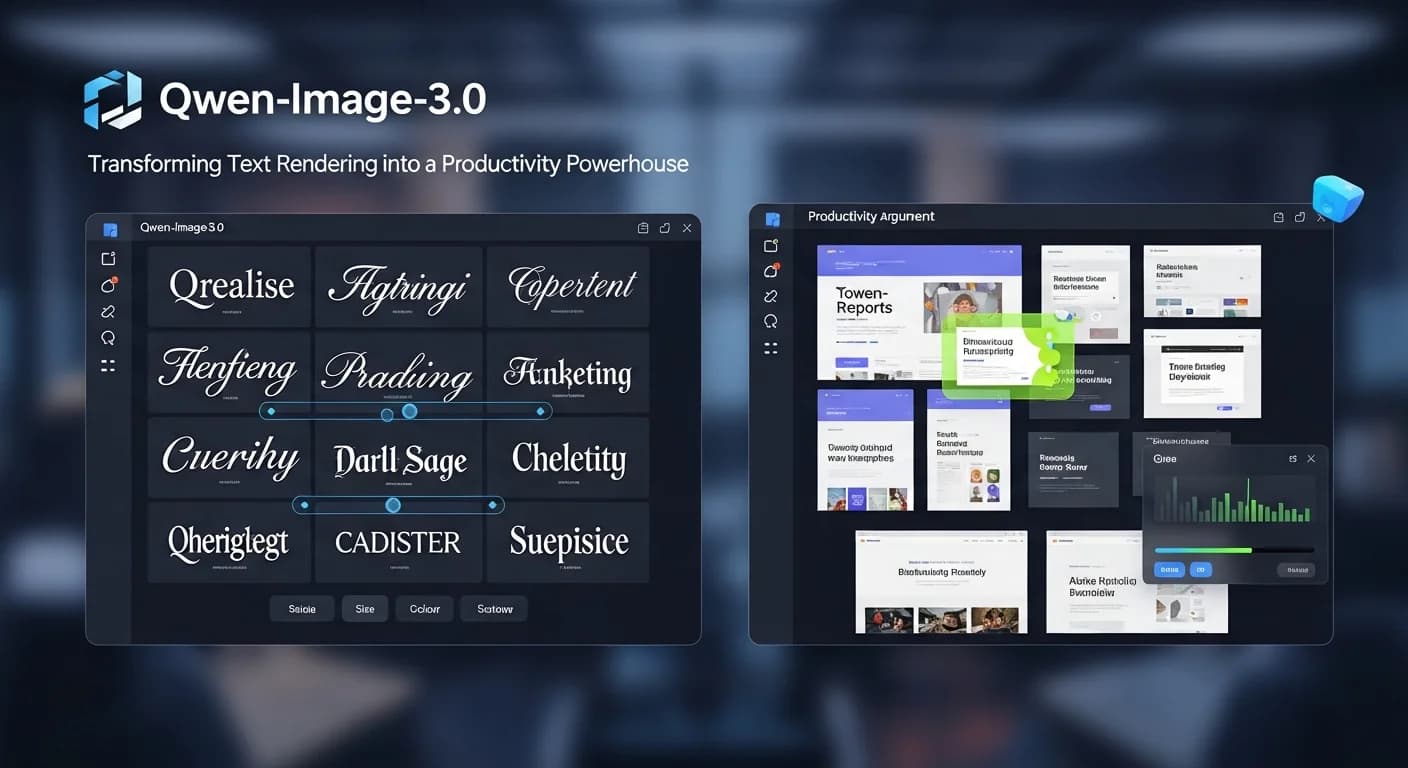
Most image generation models want to be artists. Alibaba's Qwen team wants its latest model to be a production line.
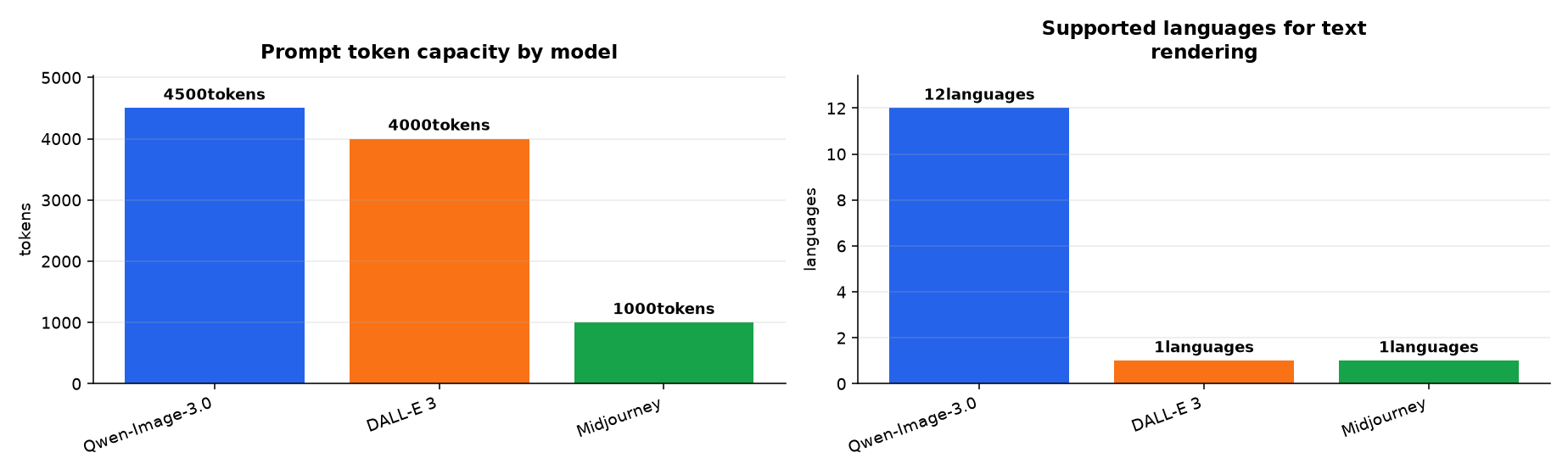
Qwen-Image-3.0, announced July 21, is the third generation in the Qwen image series, and its positioning is a quiet departure from the field's direction. Where DALL-E and Midjourney chase visual polish and stylistic range, Qwen-Image-3.0 chases density, precision, and utility. The model accepts prompts up to 4,500 tokens, renders text as small as 10 pixels, and outputs complex layouts like newspapers, exam papers, and multipanel infographics in a single generation, not stitched together from separate outputs.
The demo blog post, written by the Qwen team, provides extensive examples. One of the most striking is a 3x3 grid of infographics covering topics from tunnel safety to group theory to medical diagrams, all generated in a single pass from a 3,700-token prompt. Each cell is a self-contained infographic with its own text, formulas, and layout. The model also demonstrates what the team calls "picture-in-picture" depth: a single prompt generates a VSCode window containing a Qwen Chat interface, which in turn contains a WeChat screen showing a pour-over coffee poster, with each layer preserving its own style and text.
The emphasis on text rendering is deliberate. The model claims to render text as small as 10 pixels legibly, and the provided examples include a full page from an algebraic geometry paper with dense LaTeX formulas, subscripts and superscripts, and theorem numbering. Another example shows a newspaper spread with multiple columns and headlines. A before-and-after editing demo adds realistic handwritten annotations to a textbook page, with underlines, arrows, and margin notes in natural-looking cursive.
The editing pipeline itself has been expanded. Qwen-Image-3.0 can restore damaged traditional paintings, replace elements in existing compositions, and generate complex infographics by layering over a real photograph. The team shows a damaged eagle-combat ink painting restored to its original form, with mold spots removed and brushwork matched to the original artist's style.
Language support is another claimed differentiator. The model natively renders text in 12 languages, with demo examples in Japanese, Korean, and Spanish. It can also simulate mainstream UI interfaces, including web pages, livestream rooms, and game screens, and the post includes a generated weather forecast for Hangzhou retrieved from the web, a livestream room with Qi Baishi and Van Gogh introducing the product, and a financial infographic overlaid on a real stock chart.
Qwen-Image-3.0 is available through Qwen Studio, the company's unified platform for chat, image, video, and document processing, and via its API. The blog post frames the release as a natural evolution from the first generation's "Precision" and the second generation's "Precision, Variety, Completeness, Beauty, and Authenticity" to the third generation's single keyword: "Real", spelled out in Chinese as 实, meaning practical, solid, and grounded.
The model is not positioning itself as a competitor to Midjourney's art direction or DALL-E's stylistic versatility. It is targeting production workflows where text accuracy, layout complexity, and information density matter more than visual flair. That includes newspaper layout, exam creation, academic diagrams, e-commerce posters, and UI prototyping. Whether the model can deliver on those promises at scale, and whether the market for text-heavy image generation is large enough to justify the investment, remains to be seen. But the choice is deliberate, and it makes Qwen-Image-3.0 one of the more interesting image generation releases this year precisely because it is not trying to win on aesthetics. See also Alibaba's broader push into multimodal AI, and how other models handle text-heavy layouts in Microsoft's approach to visualization. For a deeper look at Alibaba's earlier text-rendering work, check the Qwen-Image-2.0-RL report. And for comparison with an agent that handles dense data directly, see Kimi Sheets.
Get the tech essentials in 3 minutes every morning
One email, every weekday, with what actually matters in AI and tech.