Health tech: Apple Intelligence on the wrist
Apple Watch Series 12's accuracy claims rest on Apple's own studies
The Series 12 brings five-second heart rate sampling, a 0-10 readiness score, and a $119 lab panel sold through the Health app. Its headline accuracy claims come from Apple's own studies against unnamed rivals.
Emmanuel Fabrice Omgbwa Yasse AI-assisted
2026-09-26 · 5 min read
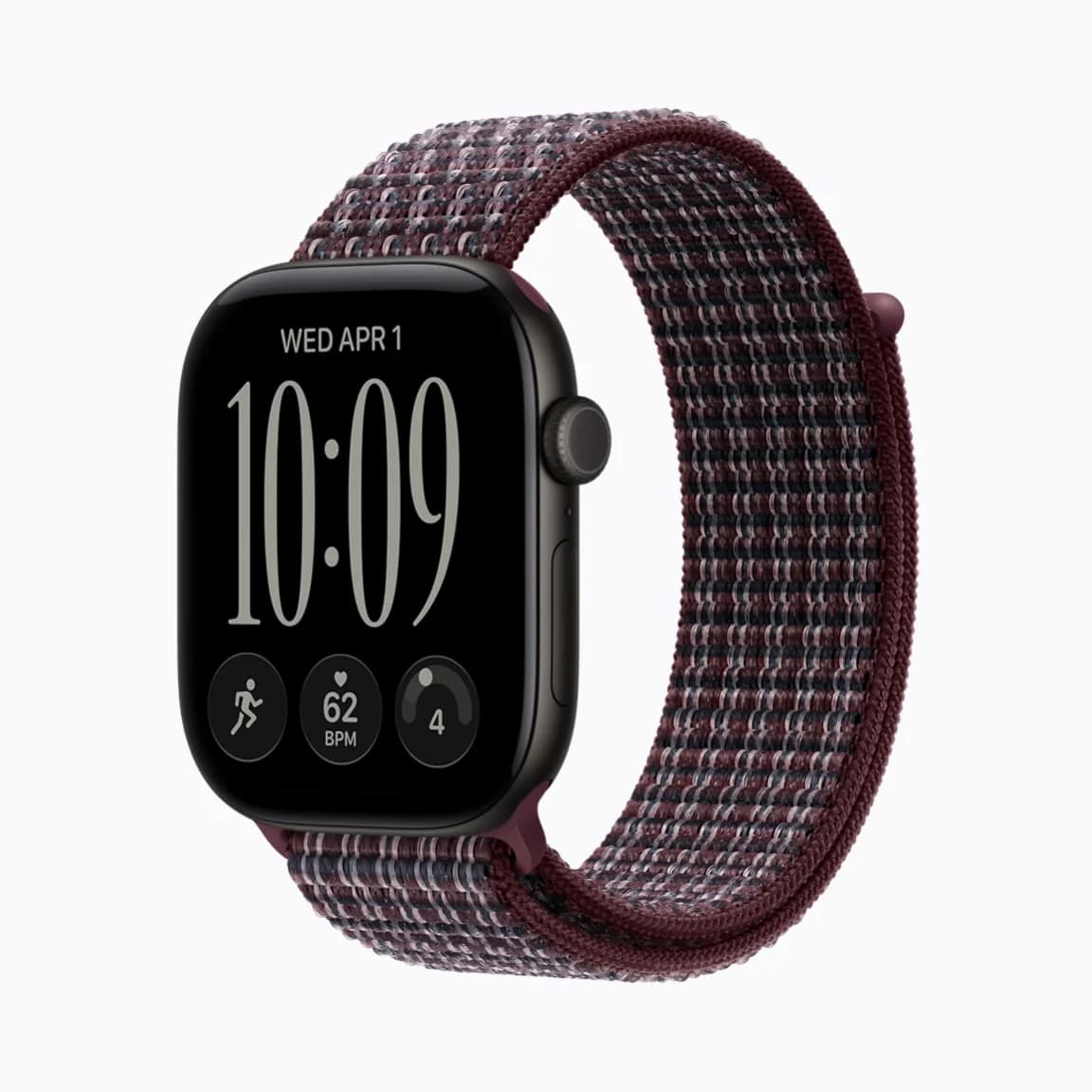
Apple's newest smartwatch arrives with a claim that is easy to print and hard to verify. Apple Watch Series 12, announced September 9 and on sale September 18 from $399, offers what Apple calls "the most accurate heart rate sensing in a wearable."
Both claims rest on studies Apple ran against watches Apple does not name. The launch is a health-sensing refresh wrapped in comparisons the company controls. See also the wider push into AI wearables.
What "most accurate in a wearable" measures
The heart rate claim comes from an Apple-conducted study of more than 1,000 participants in July and August 2026, measured against "commercially available bestselling wearables" as of June 2026. Apple says its watch came out ahead, but names no rival and states no margin.
Step counting follows the same pattern: a 1,000-step test validated with video counting, compared with unnamed industry-leading smartwatches available as of July 2026. Underneath, larger green LEDs let the optical sensor sample heart rate every five seconds all day, and HRV is now measured up to 24 times more often.
Audio Intelligence keeps the audio out of the recording
The privacy here leans on Secure Exclave, a hardware-isolated compartment in the S11 chip that processes audio apart from the rest of the system, then deletes it. Apple says the features create no recordings and that raw audio stays out of reach of the operating system, apps, the user, and Apple.
What persists is derived text. A double press of the Digital Crown pulls the previous 15 seconds of a conversation into Live Rewind as a snippet, and Siri Recap writes a title and key points into the new Siri app. Apple says both are end-to-end encrypted and unreadable by Apple, and describes no outside audit of Secure Exclave.
People nearby get a chime and a full-display animation when Live Rewind runs, even with the watch muted. Apple says the features do not identify or attribute speakers, and that Recap produces a summary, not a transcript, and excludes financial and government identifiers. The release does not say whether anyone else in the conversation is asked first.
Two caveats shape who can use this. Server-side features carry daily usage limits, and Apple says expanded access will be available "for a fee in the future." Live Rewind and Siri Recap arrive in beta in late 2026, in English, and not in the EU at first.
The readiness score has one author
Readiness compresses recent activity, training load, vitals, and sleep into a single 0-10 number with one of four labels: Recover, Pace Yourself, Ready, or Go For It. It refreshes as new data arrives and shows which factors moved the score.
Apple built the algorithm with data from its own Heart and Movement Study, plus exercise scientists and physicians at Apple. The release describes no external validation and no published weighting, and it files the feature under wellness: the Vitals app is "for wellness purposes only and not for medical use." See also why a flawless method can still reach the wrong answer.
Health Age and the $119 lab panel
A redesigned Health app arrives later this year, U.S. English first, with an Insights tab and a Longevity tab whose Health Age compares a user's metrics against their age. Movement evaluations use vision-based AI models on the iPhone.
The commercial layer sits underneath. Apple is selling a lab panel of more than 50 biomarkers for $119 inside the Health app, drawn at roughly 2,000 Quest Diagnostics locations in the U.S. That pushes the watch past hardware sales into paid health services sold through an app Apple itself owns. See also Apple's turn to $6.99 subscriptions.
Siri AI reaches Europe later, and the battery math is modest
Most of the intelligence here is software, and it reaches older watches first. watchOS 27 lands Monday, September 14, for Series 9 and later, Apple Watch SE 3, and Ultra 2 and later. Siri AI ships in beta in English, with five more languages in October, and Apple states it will not initially be available in the EU on watchOS. See also how EU AI rules keep changing what ships in Europe.
Battery math stays modest. Everyday use holds at up to 24 hours, an outdoor workout stretches to 10 hours, 25 percent more than the previous model, and 15 minutes of charging buys up to 12 hours, 50 percent more. The release claims no new regulatory clearance: the ECG app and sleep apnea notifications it lists are existing features carried forward.
| Metric | Apple Watch Series 12 |
|---|---|
| Everyday battery | Up to 24 hours |
| Outdoor workout battery | Up to 10 hours, 25 percent more than the previous model |
| 15-minute charge | Up to 12 hours of use, 50 percent more than the previous model |
| HRV sampling | Up to 24 times more often |
| Starting price | $399 (U.S.), or $11.99 a month on a 24-month Klarna lease |
That leaves the upgrade case resting on sensing hardware. Apple says Ceramic Shield 2 on the aluminum case is 60 percent tougher than the Ion-X glass on Series 11. Owners of a Series 9 or later get the new intelligence features free on September 14, so everyone else is weighing five-second heart rate sampling against $399.
Kaiann Drance, Apple's vice president of Worldwide Apple Watch Product Marketing, calls Series 12 "the most advanced health and fitness companion we've ever created." The accuracy claims behind that phrase live in an Apple study, on an Apple page, naming no rivals. That does not make them wrong. It means they will stay hard to check until someone outside Cupertino runs the same test.
Get the tech essentials in 3 minutes every morning
One email, every weekday, with what actually matters in AI and tech.