CREATIVE TOOLS
Google Vids just turned your selfie into a full production studio
Google Vids adds Gemini Omni for text-to-video generation and personal avatars that let you star in videos without a camera. Every clip gets an invisible SynthID watermark. The tools target subscribers and business customers, raising questions about adoption and trust.
Emmanuel Fabrice Omgbwa Yasse AI-assisted
2026-07-22 · Last updated: 2026-07-24 · 2 min read
Google Vids has stopped pretending it is just a timeline you open after you shoot. With the two updates rolling out today, it wants to be the camera, the studio, and the actor. The product manager Justin Luk framed the release around making video creation simpler, but the real story is how fast the line between recording and generating is blurring. A year ago, you needed a camera and an editing timeline. Now you need a prompt and a selfie. See also: how other tools are hiding their costs.
Gemini Omni lets you generate video clips from text prompts and image references. You can also edit existing footage by describing what you want: change the background, fix the lighting, add an effect. The model handles iterative edits, so you do not restart from scratch each time you tweak something. That kind of iterative flexibility matters more as generative tools move from toys to production staples, as noted in the Midjourney prompt guide.
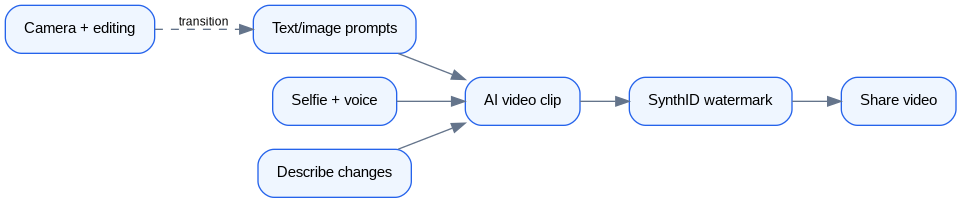
The bigger shift is personal avatars. Upload a selfie and a voice recording, type a script, and Vids renders a digital version of you delivering the message. No camera, no microphone needed. The feature is restricted to users 18 or older in certain regions, and each avatar is tied to a single Google Account. The trust question is whether people will accept an AI clone speaking for them, a dynamic also being tested in voice AI for Indian languages.
Every AI-generated clip gets an invisible SynthID digital watermark. Google is betting that transparency will let users feel confident sharing AI-made content, rather than worrying about being called out for it. Whether watermarks alone are enough to build trust remains an open question, as explored in Voxtral's open-source transcription approach.
The updates are available to Google AI Pro and Ultra subscribers and Google Workspace business customers. That puts them behind a paywall, which limits the splash but might drive usage among teams that already pay for Google's productivity suite. The move echoes how other platforms are gating advanced AI features behind subscriptions, as in Grok's multi-modal assistant strategy.
That is convenient. It also means the stock of convincing AI video will grow fast, and SynthID or not, viewers will have to decide what they trust.
Get the tech essentials in 3 minutes every morning
One email, every weekday, with what actually matters in AI and tech.