Xbox backward compatibility: disc-to-digital
Xbox 360 games come to PC in 2027, as Microsoft weighs an exit
A leaked document confirms Xbox 360 games are heading to PC, Helix, and handhelds with a gradual 2027-2028 rollout, plus a disc-to-digital program that binds digital licenses to physical discs. The timing collides with talk of a possible Xbox divestiture.
Emmanuel Fabrice Omgbwa Yasse AI-assisted
2026-08-10 · 3 min read
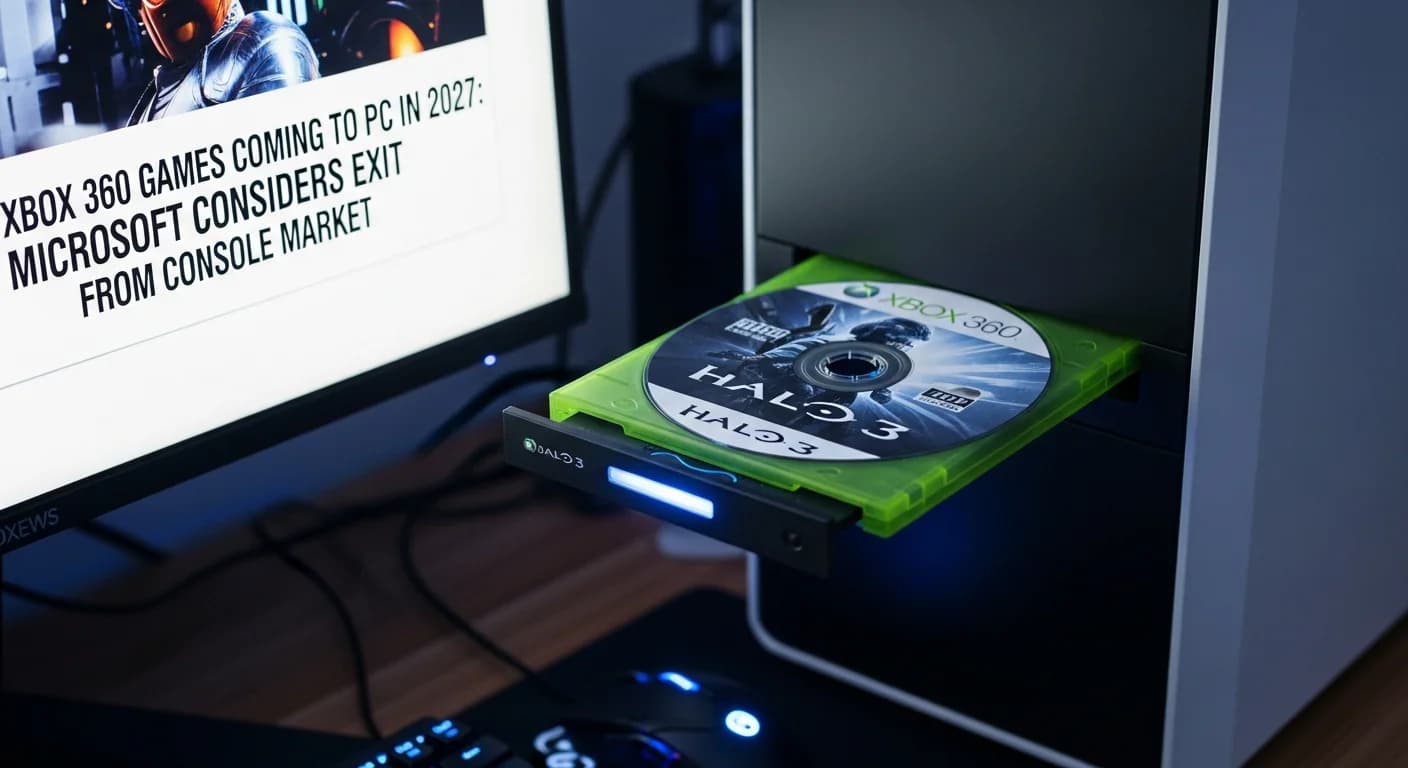
Microsoft is preparing to bring Xbox 360 games to PC, its next-generation Helix console, and handheld devices, according to a leaked developer document seen by The Verge. The same document details a disc-to-digital program whose public beta has already slipped.
The document, sent to developers recently, says 360 titles will run on Project Helix, "Xbox PCs," and handhelds. Developers opt into backward compatibility and keep control over pricing and whether a game lands on Game Pass, which recently saw a rare three-month Ultimate discount. The rollout is "gradual," scheduled between 2027 and 2028 "across next-gen devices." The original Xbox catalog moves sooner: its full PC launch lands October 2026, after a four-game program announced in July. Microsoft has already said Helix will play PC games, so the 360 catalog becomes part of a library that travels between screens the way Steam libraries already do.
The disc-to-digital catch: trade the disc, lose the game
The leak buries its sharpest edge in the disc-to-digital fine print. Put an Xbox One or Series disc into a console with a disc drive and you get a digital license bound to both the disc and your account. The license follows you across Xbox devices. It also follows the disc: once the disc "changes hands," the license transfers to the new owner, and the original owner no longer has access to the digital copy it granted.
The design keeps the used market alive, and the cost is easy to miss. Selling or trading a disc surrenders the digital convenience it carried, and the buyer inherits it. The program also settles a structural question as consoles move toward a disc-less future. Sony has already declared game discs dead, and this license system reads like Microsoft's groundwork for the same endgame. A public beta was set for July with general availability in August, but the beta was delayed, and whether August still holds is unclear, The Verge reports.
A 2027 rollout inside a divestiture debate
The timing is the uncomfortable part. The 360 catalog lands on next-gen hardware in 2027 and 2028, in a division Microsoft's own CEO has called unhealthy. Asha Sharma told Fortune that Xbox is "not healthy" and that Microsoft "simply spread ourselves too thin." The July reset that followed included 3,200 layoffs and the sale of four studios, and Sharma has not been in the role six months. NYU professor Joost van Dreunen, speaking to The Verge, said a wholesale divestiture of Xbox "remains on the table" and looks likelier given rising hardware costs and Microsoft's focus on AI. The financial logic is blunt: every dollar spent on consoles is a dollar not spent on the datacenters behind Azure and OpenAI. Series X and S sales have stagnated, and Project Helix will demand more R&D money at exactly the moment Microsoft is racing Google, Amazon, and Meta to build AI infrastructure, where keeping newly bought GPUs busy is its own unsolved problem.
Nothing in the leaked document resolves that tension. It describes a library strategy that reads like a long-term hardware commitment, announced while the case for a smaller or sold Xbox gets louder.
Why the library play holds up either way
Read one way, backward compatibility is the Steam move: a catalog that follows you across PC, console, and handhelds. Read another way, it hedges the divestiture. A portable, hardware-independent library keeps its value whether Microsoft keeps gaming or sells it. Developers carry the cost, with control over price and Game Pass placement, and disc-to-digital converts physical purchases into a tracked digital ledger a buyer could audit. If Xbox stays, it ships with a library locked to accounts. If parts go, the catalog and the installed base are the assets a buyer would be paying for. Publishers keep making the same bet on old catalogs, from Halo: Campaign Evolved to Ubisoft's Rayman remake.
None of this makes 2027 feel any closer. Microsoft is building the future of a platform that may not be its own by the time the rollout completes, and players are being asked to trade physical certainty for digital convenience in the meantime. The leak is a roadmap. Whether the company that printed it is still running the route is the part nobody can confirm.
Get the tech essentials in 3 minutes every morning
One email, every weekday, with what actually matters in AI and tech.