Real-time interactive worlds, straight from a text prompt
Alibaba just launched an interactive AI world where you can steer the plot
HappyOyster 1.0 generates interactive open worlds from text or images, supporting free movement, plot control, and real-time feedback. Now in gray testing with Android, iOS, and Web SDKs.
Emmanuel Fabrice Omgbwa Yasse AI-assisted
2026-07-25 · Last updated: 2026-08-03 · 4 min read
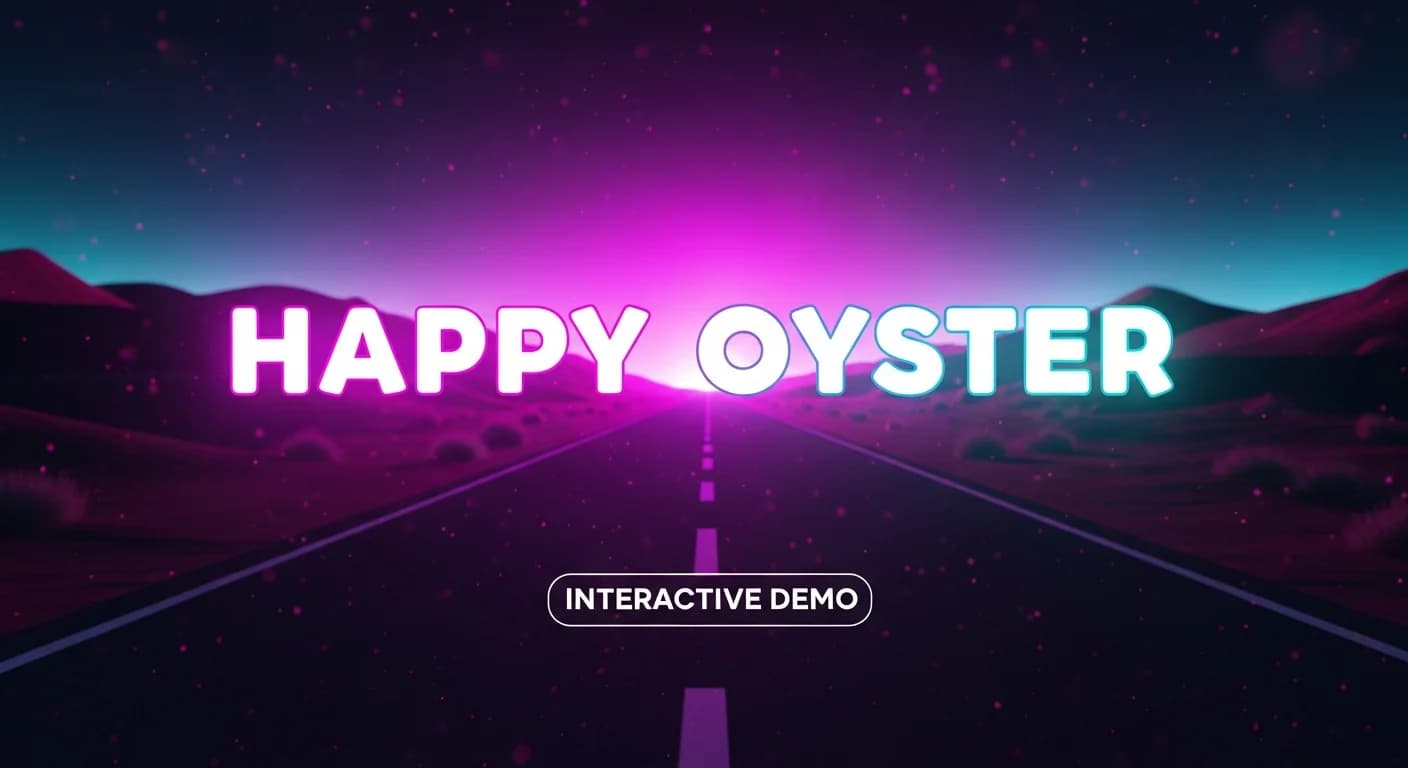
HappyOyster 1.0, released by Alibaba ATH, the research arm behind the Qwen model family, is the company's first proactive real-time interactive open-world model. That is a mouthful, and it means a text prompt or reference image becomes a virtual world you can walk around in, interact with, and rewrite as you go.
The model is built around the idea that the user should not just watch but act. With a single prompt, HappyOyster spawns a custom environment, populates it with characters, and then simulates how it responds to player commands. The output runs for over a minute with synchronized audio and visuals. The approach mirrors the Qwen family's earlier bet that environments are a language problem, not a physics simulation. Other world-model projects take the opposite route and reason in physics first, like PhiZero, which learns a compact "physical language" from raw video before it renders a frame.
Two modes, two approaches
HappyOyster ships with two flagship modes. Adventure Mode generates an open world from a text prompt or an uploaded image. The model places the player inside that world and updates it in real time as the player moves, acts, or issues commands. The demo footage shows a driving sequence across a desert landscape, endless sand, a car, a horizon that shifts as the player steers.
Directing Mode takes a different angle. It treats the user as a live director on a virtual film set. Text commands control camera angles, character choreography, and plot progression. The scene renders instantly and plays back continuously. The user can pause, rewind, or revise the story at any point. One demo shows a character dress-up mini-game controlled entirely through natural language. This level of control is reminiscent of how Google Vids lets you star in videos without a camera, though HappyOyster leans toward interactive fiction rather than personal avatars. It is part of a wider push toward generative media you can steer with plain language, the same pattern behind Gemini drawing diagrams straight from text in Google Docs.

What it can be used for
Alibaba frames HappyOyster as a next-generation multimodal interactive content tool with several practical applications:
- For games, developers can prototype open worlds, character interactions, and combat sequences by uploading images and typing prompts, skipping months of environment modeling.
- For interactive dramas and virtual companionship, users build characters and storylines through natural language and can rewrite plot developments at any point.
- For cultural tourism, the model delivers immersive exploratory experiences, like guided virtual tours that respond to where you look and what you ask.
Alibaba is not alone here. Mistral's industrial pivot aims to embed generative AI in real-world applications too, though in manufacturing rather than entertainment.
SDK and partnerships
HappyOyster 1.0 is now in open gray testing. The company provides cross-platform SDKs for Android, iOS, and Web. Developers can manage virtual worlds through server-side Open APIs, while the client-side SDK handles RTC connections, video rendering, and real-time interaction. Users can export footage after finishing a session.
Reactor has signed on as the first official partner integrated with HappyOyster. The two companies have entered a formal strategic partnership covering product implementation and technological innovation around open-world models.
Context and comparison
The release follows Alibaba's broader push into world models. The Qwen team earlier open-sourced Qwen-AgentWorld, a language world model that simulates environments for AI agents to train inside, a simulator abstracting physics into text. HappyOyster targets the opposite audience: human end users who want to explore and create, not train agents.
It also arrives as Chinese labs race to commercialize generative 3D and interactive content. MiniMax released a video model optimized for anime-style animation earlier this year, and its H3 model now bundles image, video, and audio generation at under a third of mainstream prices.
Alibaba itself has invested heavily in multimodal models, with Qwen2.5-Omni processing text, images, audio, and video end to end while running on a phone. The Qwen family has also branched into creative output, like the 3-billion-parameter Qwen-Music, which beats Suno on 13 metrics with a melody-first planning step.
HappyOyster's gray testing phase will reveal whether the model can sustain consistent, credibly interactive worlds at scale. The demo clips are polished. The real test is what happens when thousands of users start driving through desert landscapes and pausing dramas, and what the model does when they step off the paved path. The bar is steep: SceneActBench found even the best vision-language models fail at 3D action tasks.
Get the tech essentials in 3 minutes every morning
One email, every weekday, with what actually matters in AI and tech.