Data Infrastructure
Your AI agents are starving for clean data. Alibaba just automated the kitchen.
Alibaba Cloud launches DataBridge Agent to automate multi-source data collection, parsing and structuring for AI workflows. The tool tackles the growing disconnect between powerful models and messy enterprise data, acting as the chef your AI agents need.
Emmanuel Fabrice Omgbwa Yasse AI-assisted
2026-07-26 · Last updated: 2026-08-03 · 4 min read
There is a dirty secret the LLM benchmarks do not talk about. Every model needs training data, RAG pipelines need source documents, and agents need something to act on. But the people running these systems spend more of their time writing ETL scripts than tuning parameters. Alibaba Cloud's ApsaraDB team just released a product that speaks directly to that imbalance. The data preparation bottleneck is not new, but it is getting worse as model deployment scales, a pattern explored in analysis of modern AI pipelines.
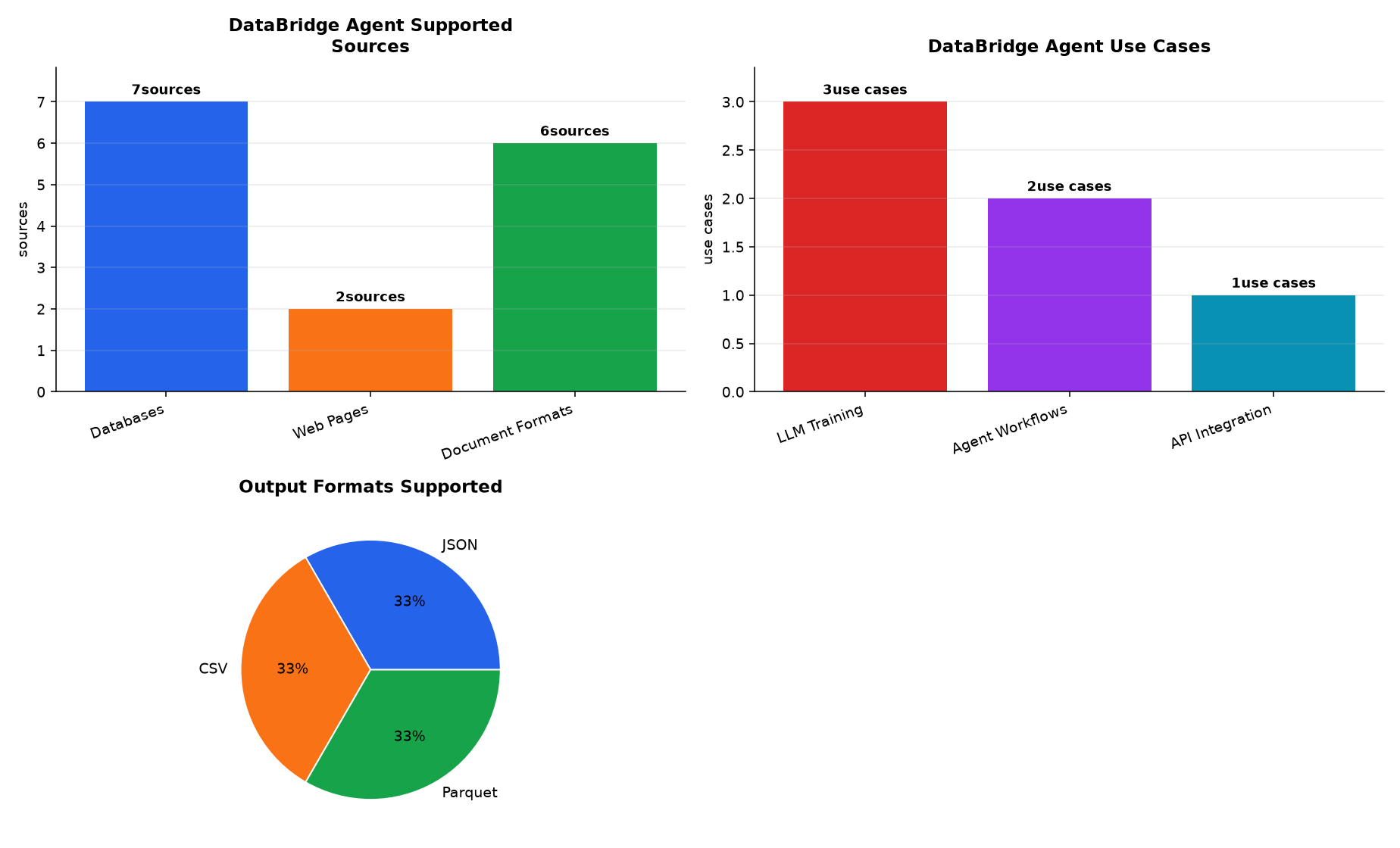
DataBridge Agent, now generally available, is an intelligent agent for multi-source data collection, parsing and structuring. It connects to databases (MySQL, Oracle, PostgreSQL, PolarDB, SQL Server, AnalyticDB), web pages (static HTML and dynamic pages via API impersonation), and document formats (PDF, Word, Excel, PPT, Markdown, even OCR-scanned documents). The output is standard JSON, CSV or Parquet, ready for LLM training, BI analysis, or agent workflows.
The core pitch is straightforward: throw raw data in, get structured data out. But the problem it solves is anything but trivial. The gap between raw data and AI-ready data is where most agent projects fail, as documented in research on agent working memory.
The data bottleneck nobody budgets for
Spend any time inside a data team and the complaints sound the same. Data lives in silos, some in Oracle, some in Excel files passed around on WeChat, some buried in PDFs with merged cells and misaligned columns. A data scientist might spend two weeks just figuring out what they have before writing a single training loop. Format transforms eat another chunk: CSV here, JSON there, Parquet somewhere else. And then there is the web scraping treadmill, scripts break when the page structure changes, protections get tighter, and suddenly you are maintaining scrapers instead of building models. This is exactly the kind of multi-step data chore that agent frameworks are designed to streamline, as seen with PraisonAI's fast-instantiating approach.
DataBridge Agent collapses this into a configuration step. The built-in DPI engine auto-detects fields, table headers, and hierarchical relationships. Users can define custom mapping rules to match their business conventions. The agent handles the transform layer so the team does not have to. Reducing the burden on data teams is also a goal of tools like Kimi Work's cron engine.
Where it fits in the AI stack
Alibaba is positioning DataBridge Agent as a data preprocessing layer for three distinct use cases:
- LLM training, clean, consistent training data from heterogeneous sources, structured and deduplicated before it reaches the model.
- Agent workflows, real-time data ingestion so retrieval-augmented generation and autonomous agents always work from current inputs rather than stale snapshots.
- API integration, a standard output format that existing applications can consume without changing their schema.
The product also handles cross-environment data movement, on-premises to cloud, private cloud to public cloud, or between different cloud regions, with VPC peering, leased lines, or internet connectivity, plus IP whitelisting and access controls on top. That matters for enterprises with compliance obligations around data residency. These data movement and skill orchestration challenges are why platforms like Nacos Skill Sync exist.
Not the first, but the timing is right
Alibaba is not inventing a new category. Several open-source projects and SaaS tools already do pieces of this: Airbyte for connectors, Unstructured for document parsing, LlamaIndex for RAG pipelines. What makes DataBridge Agent different is the bundling. A single agent that handles web scraping, database extraction, document OCR, format conversion, and secure delivery, without writing adapter code, is rare in practice, even if it sounds obvious on paper.
The timing reflects a broader shift. As more teams adopt smaller specialized models for production rather than relying on a single giant API, the data pipeline becomes the bottleneck. The work of building a domain-specific dataset, pulling from a CRM database, scraping competitor pricing pages, extracting tables from regulatory PDFs, is exactly the kind of tedious multi-step task that an agent is good at. The irony is not lost: you need an AI agent to prepare data for other AI agents. This mirrors the trend of agent specialization seen in Sakana AI's Fugu multi-agent system.
The real test will be how well the DPI engine handles edge cases that break most document parsers: PDF tables with missing borders, scanned invoices with handwritten annotations, web pages that load content dynamically after three API calls and a captcha. Alibaba's documentation promises support for all of these, but the quality of the structured output determines whether the tool is genuinely useful or just another connector library with a fancier UI.
For now, the product fills a real gap. Model intelligence has outpaced data infrastructure, and the gap is only widening. DataBridge Agent does not claim to close it entirely, but it puts a dent in the part that hurts the most: the endless, invisible labor of turning raw, messy data into something a model can actually use.
Get the tech essentials in 3 minutes every morning
One email, every weekday, with what actually matters in AI and tech.