European AI
ElevenLabs brought its AI summit to Warsaw. The message is bigger than voice tech.
ElevenLabs hosted its third summit in Warsaw at the National Opera, drawing 2,500 attendees including Polish leaders and European founders. The event marked a homecoming for the AI voice startup's founders and signaled Poland's growing role in AI innovation.
Emmanuel Fabrice Omgbwa Yasse AI-assisted
2026-07-25 · 3 min read
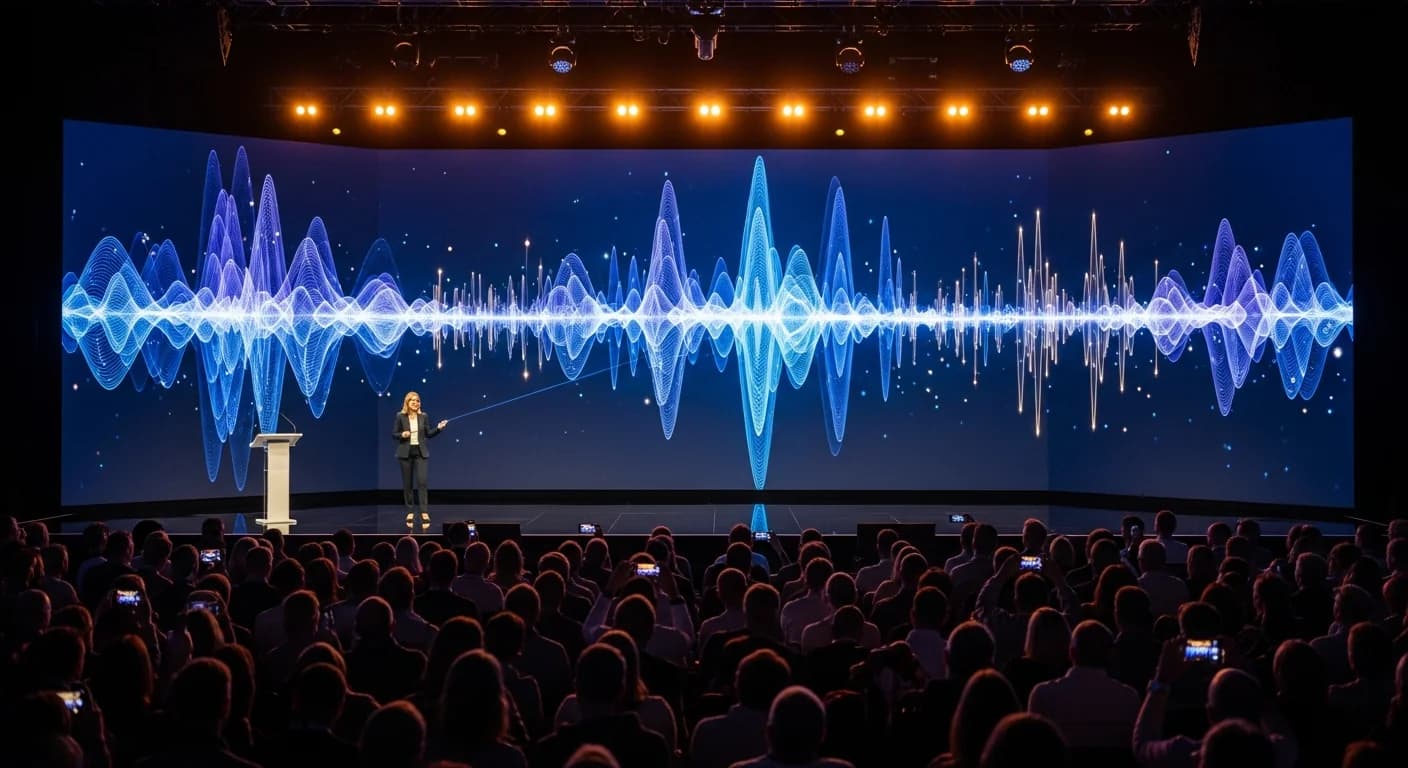
ElevenLabs held its third company summit today at Teatr Wielki, the National Opera in Warsaw. Around 2,500 founders, developers, researchers, and government officials showed up. The venue was deliberate: a building where art and engineering meet, hosting a company that builds AI voice tools.
Warsaw is not San Francisco, London, or Paris. ElevenLabs could have picked any European capital. It chose Poland. That matters for reasons beyond location.
Poland's AI moment
Poland is now a trillion-dollar economy, on the cusp of G20 membership, and home to engineers building globally important tech companies. For most of modern history, countries in Central and Eastern Europe adapted technologies built elsewhere. AI is different. Polish researchers and companies have a chance to shape a major technological shift in real time. France's parallel AI platform for journalists suggests governments across Europe are waking up to this dynamic.

Staniszewski and co-founder Piotr Dabkowski grew up in Warsaw's suburbs, met at Kopernik 33rd high school at age fifteen, and built their first voice model in the city. Polish angel investors and Maciek Gnutek at Credo provided early funding. Now, four years later, the company serves organizations like LOT Polish Airlines, Allegro, Polsat, CD Projekt, and the national health IT center, Centrum e-Zdrowia.
The summit's speaker lineup reflected both Polish and European tech clout. Polish President Karol Nawrocki, an early adopter of ElevenLabs' technology, opened the event. Deputy PM Władysław Kosiniak-Kamysz shared reflections on innovation and security. Former president Lech Wałęsa and Warsaw Mayor Rafał Trzaskowski supported the event. From the private sector, executives from Polsat Plus Group, LOT Polish Airlines, InPost, and PKO Bank discussed AI deployment strategies, alongside European founders like Bolt CEO Markus Villig and creative voices like director Darren Aronofsky. Investors from a16z, Sequoia, and ICONIQ also attended, looking at the Polish ecosystem.
Not just a demo day
ElevenLabs also used the summit to show progress toward what Staniszewski calls "AI that communicates at human level." Company leads demonstrated advances in voice synthesis and language barrier removal. But the summit's value is broader: it positions ElevenLabs as a European AI champion building infrastructure for Polish and other European organizations, not just for Silicon Valley. The economics of this kind of AI deployment are shifting fast, as new benchmark data shows the cost gap between frontier models is widening just as performance converges.
The company has also been expanding beyond consumer voice cloning into enterprise and government work. Last year, ElevenLabs signed an MOU with the Greek government to improve public services, promote tourism, and preserve Greek linguistic heritage through voice AI. That deal shows how voice technology can become a tool for cultural sovereignty as much as for efficiency.
What the Warsaw summit says about European AI
European AI conferences tend to cluster in London, Paris, and Berlin. Holding one in Warsaw is a bet that the center of gravity is shifting east. Poland produces a disproportionate number of AI engineers relative to its economy. The country's math and computer science education remains strong, and a growing number of Polish-founded AI startups are reaching global scale. This echoes a broader trend: smaller, more efficient models from outside the usual hubs are changing the AI cost equation globally.
ElevenLabs itself is the most prominent example. But the summit's attendance by investors from a16z and Sequoia suggests the message is landing: Polish tech is no longer just a sourcing market for cheap engineering talent. It is a place to find founding teams and companies worth backing. YC's recent student credit bundle shows the global race to capture early-stage AI builders, and Poland is increasingly in the running.
Staniszewski summarized the vibe as surreal. Four years from a room in Warsaw to hosting thousands at the National Opera. It is a good story, and the implied argument is hard to dispute: if you want to see where AI is going, you cannot just watch the coastal hubs. You might need to go to Warsaw.
Get the tech essentials in 3 minutes every morning
One email, every weekday, with what actually matters in AI and tech.