Creator Economy
X's new creator payouts hinge on what X decides is 'original'
X is shutting down its creator revenue-sharing program and launching Original Content Rewards on September 8. The new system pays on qualified impressions from Premium subscribers, but only for posts X decides are original.
Emmanuel Fabrice Omgbwa Yasse AI-assisted
2026-08-13 · 4 min read
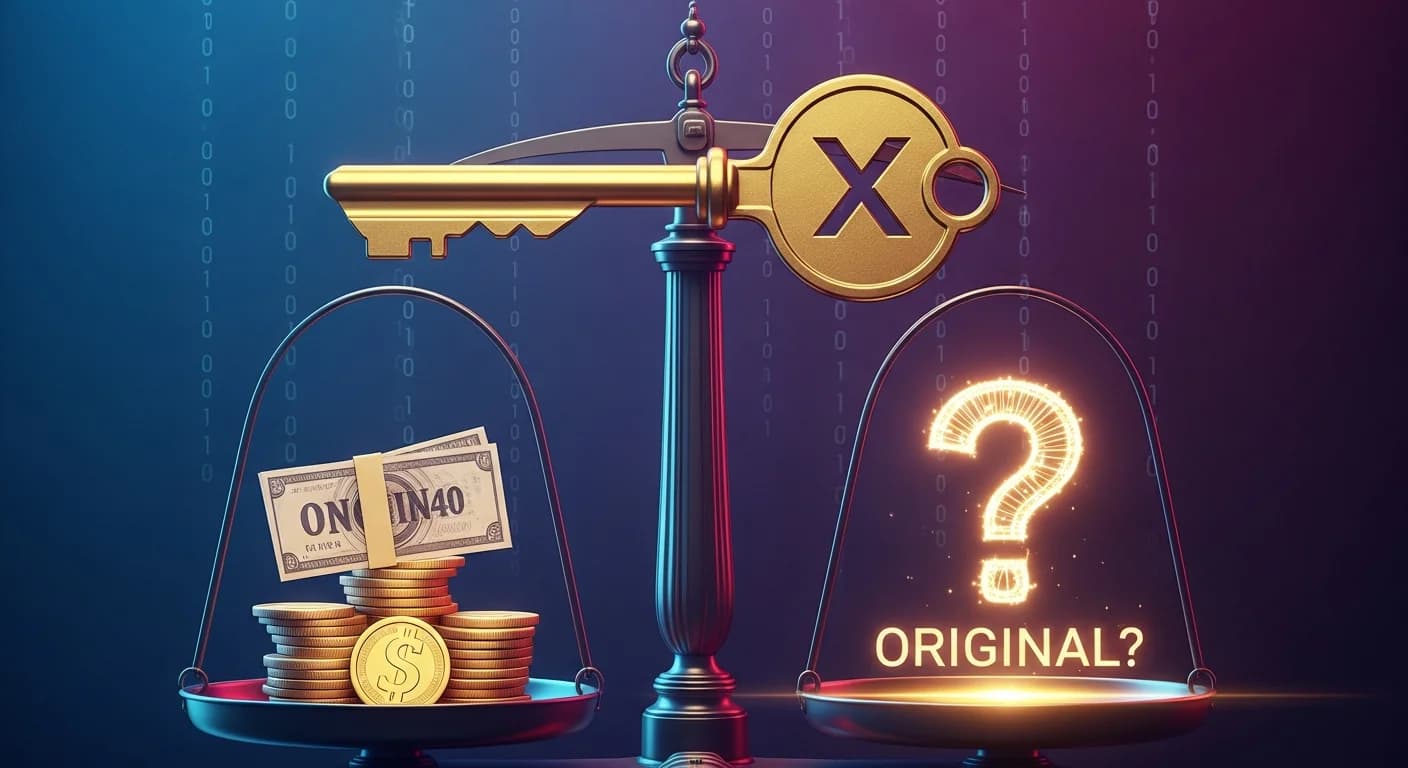
X is ending its creator revenue-sharing program and replacing it with a payout system called Original Content Rewards on September 8, according to a report from The Verge. Participants in the current program keep earning under the old rules through September 7.
The new system raises the bar to get in. Creators need at least 500 verified followers and at least 500,000 Home Timeline impressions from verified users in the last 90 days, plus other requirements the announcement does not list. Once inside, earnings rest on "qualified impressions": unique impressions from Premium subscribers on the Home Timeline feed, where at least 50 percent of the post is visible.
The eligibility numbers already bias the program toward accounts with existing reach. Five hundred verified followers is a modest ask. Five hundred thousand impressions from verified users in 90 days is a different matter, and it applies before anyone reaches the originality test.
The program's name hides its hardest question
Original content, under X's definition, means original reporting or analysis, videos and photos taken by the user, and graphics or illustrations made by the creator, memes included. Commentary and reactions still count, the company says, as long as they "add something meaningful."
That clause is where the plan starts to bend. "Add something meaningful" is not a rule a machine can enforce, and X comes close to admitting it. The company says the goal is to move creators away from exploiting loopholes and clickbait, and that simply repurposing other people's posts or replying to posts would not be a viable income source under the new model. The company's own wording hedges: repurposed content would not pay "theoretically." It is the kind of enforcement gap that also shows up in Google's mandatory AI ad labels.
The Verge's report on the announcement also quotes Allegra Jacchia, a senior product manager for creators, saying the program was designed to "reward the creators who bring original ideas, expertise, creativity, and unique perspectives to X, not those who have become best at gaming the system." The quote is the plan in miniature. X wants to pay for judgment calls, and judgment calls are exactly what a payments pipeline is worst at.
Read closely, the announcement is also an admission about the program it replaces. If the stated goal is to stop rewarding people who game the system, the previous model rewarded them, at least in part. X does not say that in so many words; it does not have to.
Creators are left to guess at the economics
The announcement does not say what a qualified impression pays, nor how X will verify that a video was taken by the user or that a graphic was made by the poster. Those checks determine the payout, and the announcement does not describe how they will work. The absence is telling for a program that makes originality its test, and it stands out against platforms that put the number on the page, such as Pippa's $0.005-per-image artist payments.
The timing makes the uncertainty worse. The revenue-sharing model that current payouts run on disappears September 7, and creators who built a routine around it have that long to adjust. The old program had already been revised repeatedly during Musk's ownership, so the rules were never fully settled. This version resets them again.
The definitional fog matters because the money is real and the judge is the platform. X decides what "original" means and which impressions count, and the criteria include a phrase with no hard edge. That arrangement invites disputes, and the disputes will land on whoever is making the call inside X. The whole design puts a content moderator's judgment at the center of a payments system.
The open question is whether the program survives contact with its own ambition. X says it wants fewer loophole experts and more original work. Whether the people who post photos they took, memes they made, and commentary that adds something meaningful find the September 8 version worth their time depends on details X has not published. The bet that original work out-earns recycled volume is the same one AI-generated journalism has already put to the test. In the meantime, the safest reading of "theoretically" is that X knows enforcement is the part that is actually hard.
Get the tech essentials in 3 minutes every morning
One email, every weekday, with what actually matters in AI and tech.