Tech policy
A plastic e-reader case just broke the logic of gun-blocking software
Luke Blackford's 'Gundle' case for the Xteink X4 e-reader looks like a gun but does nothing. Yet it falls directly into the detection gray area that New York and California legislators are trying to mandate against.
Emmanuel Fabrice Omgbwa Yasse AI-assisted
2026-08-02 · Last updated: 2026-08-03 · 5 min read
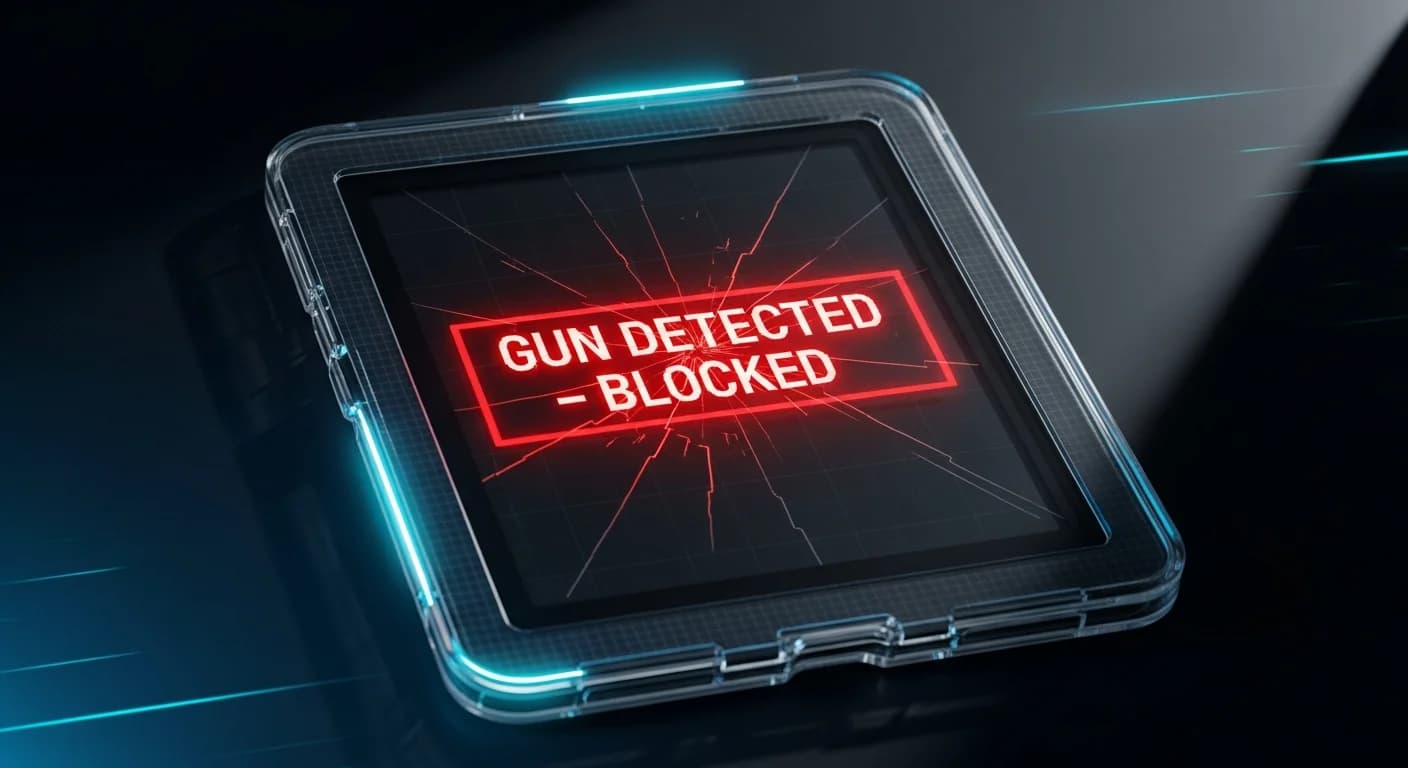
A prop that exposes a policy gap
Louisville-based maker Luke Blackford, known as Luke The Maker, designed a 3D-printed case for the minimalist Xteink X4 e-reader that looks exactly like a handgun. The shell sits on the e-reader's exterior with a cutout for buttons. Squeezing the trigger does nothing. He calls it the Gundle.
Blackford posted the design online after printing it in under 24 hours. He told The Verge he didn't want it to spread too widely, and he still hasn't taken it out in public. "I didn't want it to be so publicly available," he said. "I just didn't want tons of them out there."
The Gundle is a joke. But it lands at the center of a real fight over how to regulate 3D printing. New York and California are pushing legislation that would require all new 3D printers to include gun-blocking software. The idea is to scan every print job and stop any file that looks like a firearm or firearm part. Blackford's harmless case falls directly into the detection gray area that these laws are built around. This tension is mirrored in broader debates about AI regulation, where similar challenges of defining harm arise, as seen in the global AI regulation consensus.
How gun-blocking software is supposed to work
The proposed mandates leave implementation details to expert panels, but the technical approaches fall into two broad camps. The first relies on a hash database: known gun designs are fingerprinted, and the printer checks every file against that list before printing. The problem, as Cliff Braun of the Electronic Frontier Foundation told The Verge, is that this system is trivially easy to bypass. Changing a single line of the digital model alters the hash, making the weapon invisible to the scanner.
The second approach uses AI to analyze the geometry of a file and decide if it resembles a gun. This is more prone to mistakes. Solomon Diamond, an associate professor of engineering at Dartmouth College, explained that "basing blocking tech on visual resemblance is where the false positive concerns arise because a prop and a real functional firearm resemble one another." He added that "visual resemblance might be fooled by the gun-shaped e-reader case." The difficulty of implementing such AI-based screening echoes the policy debates around open-weight models, which have sparked a rare coalition of 41 organizations to argue for openness.
Why visual resemblance creates an unavoidable dilemma
Any system that uses visual cues faces a binary choice: either it sets a high threshold and lets many real guns through, or it sets a low threshold and blocks many harmless objects. The Gundle is a textbook false positive. It looks like a handgun, but it is an e-reader case. An AI trained on visual features would almost certainly flag it, even though it poses no threat.
"The intent of the law is not to block prints like this, but I think this print is a really good example of why that's hard," Braun said. Diamond pointed to a third option called geometric identification, which could theoretically achieve zero false positives by requiring an exact geometric match rather than a visual resemblance. But this technology is still new and not widely deployed in consumer printers. Investments in AI safety and policy, such as Anthropic's $40 million commitment, highlight the growing attention to these technical challenges.
Collateral damage to makers and free expression
Blackford's case is a prop, not a weapon. But the legal framework being built around 3D printing does not distinguish between the two. If the AI-based system becomes mandatory, anyone printing a cosplay prop, a toy, or a social commentary piece like the Gundle could find their job blocked. Braun warned that "if you're going to try and block all of those wonderfully creative humans, you're going to make it very hard to print props or make social commentary."
There is also the question of safety. Realistic-looking fake guns have already led to deadly misunderstandings with police, as seen in the Tamir Rice shooting. Blackford said if he ever took it out, he would print it in a different color. But a detection algorithm doesn't care about color. It only sees shape. The unintended consequences of a rigid regulatory approach are also visible in other tech domains, such as the FCC's actions against DJI clones.
An unwinnable tradeoff: security vs openness
The New York law, signed by Governor Kathy Hochul, has already passed. California's version has cleared the state assembly. Both leave the technical standards to panels of experts. But the experts are left with a dilemma: accept high false negatives (real guns slip through) or high false positives (creative projects get blocked). Diamond told The Verge that a hash system can be fooled, and a visual system will block things like the Gundle. Geometric identification might thread the needle, but it is not ready for mass deployment.
Blackford is philosophical about the future. He said that if such laws ever reach Kentucky, he would use a VPN or find another workaround. "Some companies are going to be putting those locks in place, but I think open-source software is always going to prevail." His confidence reflects a deeper tension: the same openness that makes 3D printing a creative tool also makes it impossible to fully control. Legislators can mandate scanning software onto every printer sold in their state, but they cannot stop someone from downloading an open-source slicer and printing whatever they want.
The Gundle may be a gag, but it exposes something real. A law that cannot distinguish between an e-reader case and a handgun is a law that cannot work as intended. The policy is being written now, and the first object to test it is a piece of plastic that does nothing. As governments worldwide grapple with these tradeoffs, France's €2.5B AI plan shows how national sovereignty concerns drive regulatory choices.
Get the tech essentials in 3 minutes every morning
One email, every weekday, with what actually matters in AI and tech.