Supply chain geopolitics
Apple's $30 billion Broadcom bet is a political hedge, not a chip order
Apple's new multiyear agreement with Broadcom, worth over $30 billion, funds a $1.5 billion expansion in Fort Collins, Colorado, for advanced RF components. The deal reflects onshoring as geopolitical hedge, not a technical breakthrough, and sets a precedent that few competitors can match.
Emmanuel Fabrice Omgbwa Yasse AI-assisted
2026-07-26 · Last updated: 2026-08-03 · 4 min read
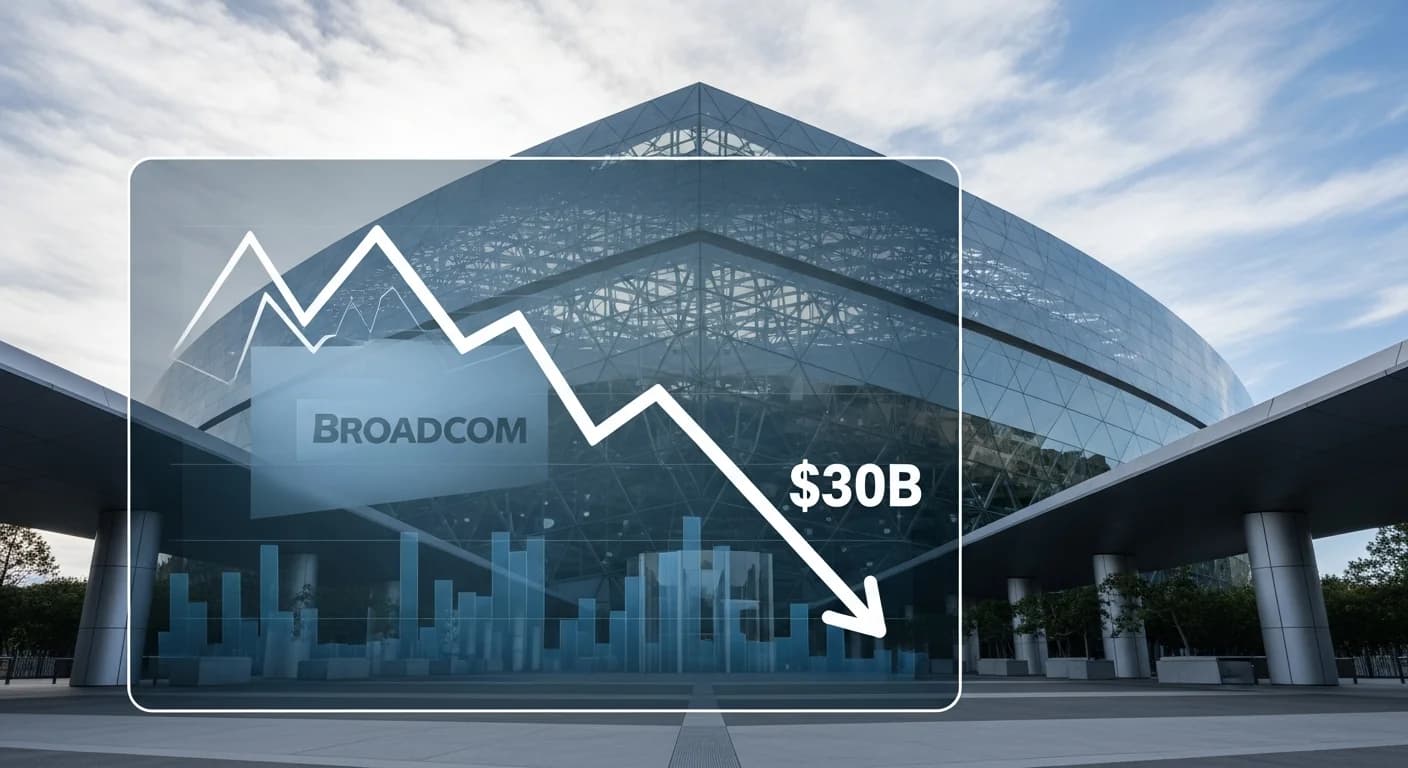
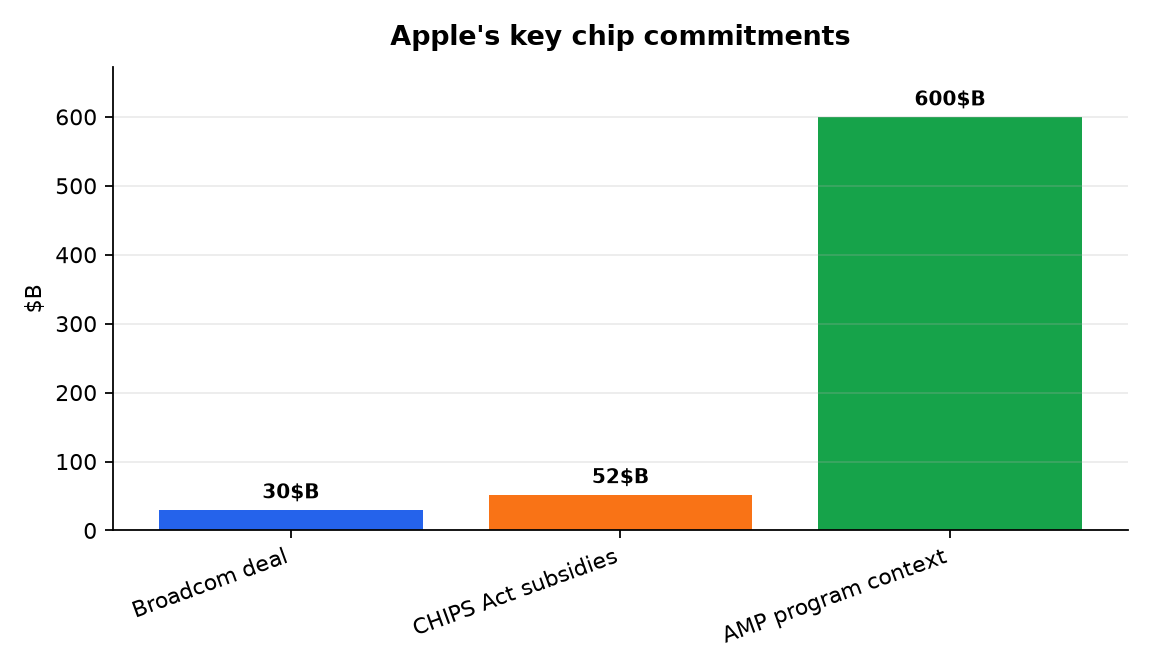
Apple and Broadcom announced a new multiyear agreement to produce more than 15 billion U.S.-made chips, with a $1.5 billion capital expenditure in Broadcom's Fort Collins, Colorado facility. The deal is expected to exceed $30 billion in total value, making it the largest commitment in Apple's American Manufacturing Program. But the real story is not the number, or even the components themselves. It is the signal Apple is sending about the fragility of its supply chain and the lengths it is willing to go to secure it.
Geopolitical pressure, not technical necessity, is driving this decision. As export controls tighten and supply chain shocks linger, Apple is building a buffer where it can. For context on how quickly the landscape shifts, see how China's Kimi K3 rewired AI economics.
The Fort Collins bet
The Fort Collins facility will produce advanced radio frequency components, including FBAR filters, and wireless connectivity technologies. Broadcom has operated in Fort Collins since 2001, when it acquired the former HP semiconductor division, and has long been one of Apple's key suppliers for RF chips that manage cellular and Wi-Fi signals in iPhones and other devices.
Apple's AMP program, announced last year, was designed to accelerate U.S. manufacturing through long-term procurement guarantees. Those guarantees let suppliers justify the upfront cost of building or expanding U.S. fabrication plants, which usually run into the billions and take years to come online. This deal is the program's first major test, and the dollar figure suggests Apple is serious.
Why now
The timing matters. The Biden administration pushed hard for domestic chip production, and the CHIPS Act, passed in 2022, allocated $52 billion in subsidies to incentivize companies like Apple to bring fabrication back. Apple's announcement specifically thanked the president and his administration for supporting the project, a rare public acknowledgment that policy, not just economics, is driving these decisions. For a deeper look at how government investment reshapes tech supply chains, see how Anthropic approaches codebase security.
Even without subsidies, the calculus has shifted. Covid-era supply chain shocks, heightened tensions between Washington and Beijing, and export controls on advanced semiconductors have made the old model of leaning heavily on Asian foundries look riskier by the year. Apple's own supply chain spans dozens of countries, and a disruption at a single Taiwanese packaging plant can delay a product launch by months.
The limits of onshoring
Apple's $600 billion four-year commitment to the U.S. economy includes this deal, but it is not large enough to make the company self-sufficient. The 15 billion chips in this deal are RF components and wireless modules, not the main processors that power the iPhone and Mac. Those remain with TSMC, whose Arizona fab is still ramping up and has faced repeated delays.
What Apple is doing with Broadcom is building a buffer for the components most vulnerable to geopolitical pressure, not a wholesale replacement of its Asian supply chain. FBAR filters and wireless connectivity chips are essential for modern devices but relatively easier to manufacture onshore than logic processors. That makes them a pragmatic first target for onshoring, not a breakthrough. For more on how hardware shifts affect broader industry dynamics, consider Sakana AI's bet on open models as a swarm.
What it means for the rest of the industry
Other smartphone and hardware makers are watching. Apple's move sets a precedent: if the world's most valuable company can justify a $30 billion commitment to U.S.-based RF chip production, the economics may eventually work for others too. But Apple's scale is unique. Its procurement alone can keep a facility like Fort Collins running at high utilization, something smaller players cannot replicate easily. For a parallel example of how scale changes strategic calculations, see China's deep-sea rocket launch and batch production.
For now, the Fort Collins expansion will support hundreds of jobs. The real impact will be downstream, in supply chain jobs that follow when a major fab comes online: logistics, materials, testing, and packaging. Apple and Broadcom have declined to provide a timeline for when production will begin at the expanded facility, though the existing site is already operational. The $1.5 billion investment suggests the expansion will take at least 12 to 18 months to reach full capacity.
Get the tech essentials in 3 minutes every morning
One email, every weekday, with what actually matters in AI and tech.