Agentic AI
Samsung's newest foldables pitch the agent, not the hinge
Samsung's eighth-generation foldables, the Galaxy Z Fold8 Ultra, Fold8 and Flip8, launched July 22 with agentic AI as their lead story. The hardware legacy is real; the launch material sells the agent, not the hinge.
Emmanuel Fabrice Omgbwa Yasse AI-assisted
2026-08-11 · 4 min read
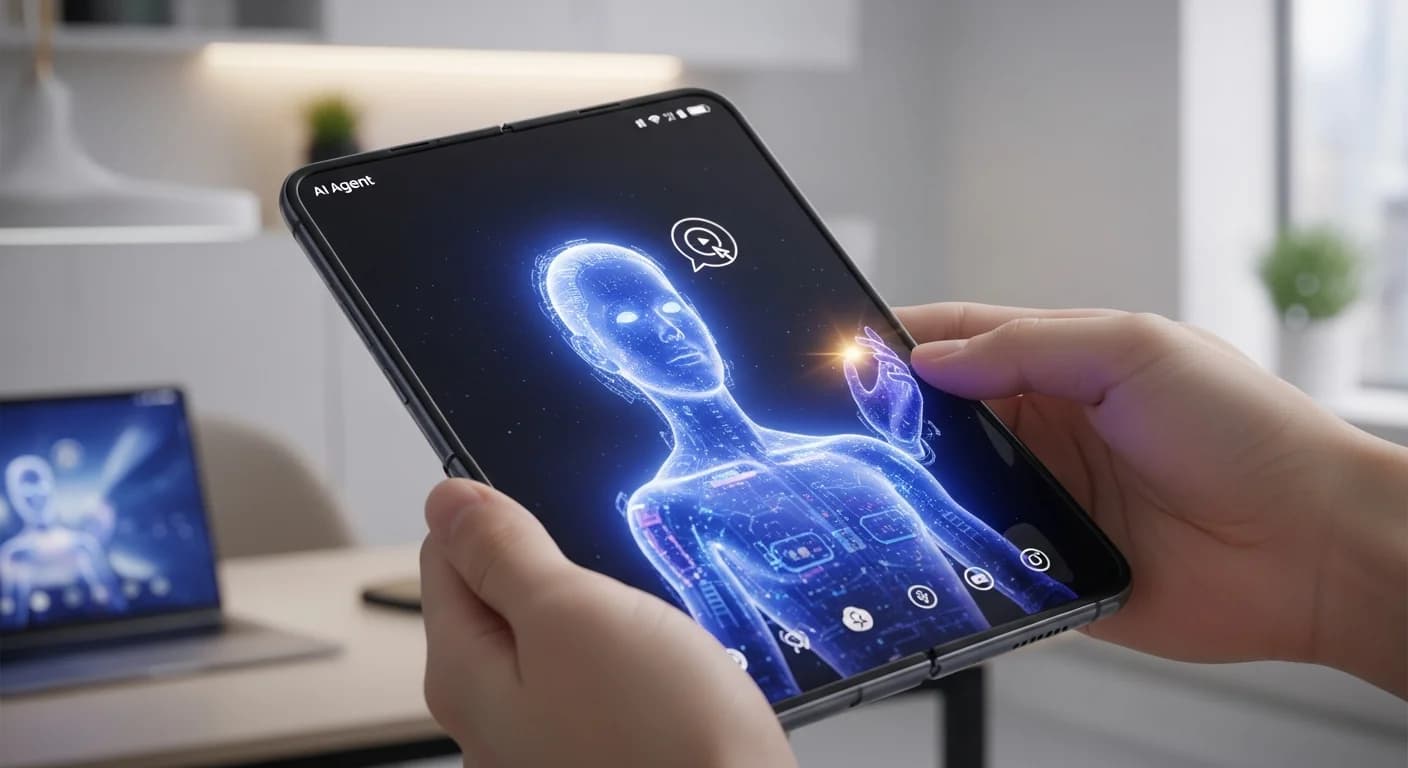
Eight generations in, the foldable is no longer the risky part of Samsung's lineup, and the launch messaging says it out loud. On July 22 at Galaxy Unpacked 2026, Samsung unveiled the Galaxy Z Fold8 Ultra, Galaxy Z Fold8 and Galaxy Z Flip8, the eighth generation of the Z series. The material published with the announcement barely re-explains the hinge. It leads with the agent instead.
Samsung Newsroom released four videos under the banner "Unfolding New Experiences With the Galaxy Z Series," and the framing is consistent across them: AI now handles the everyday work, editing photos and videos, planning trips, creating and enjoying content. Samsung's own claim is that combining agentic AI with the foldable form factor delivers a more immersive and intuitive experience. The hardware is the stage. The agent is the show.
Seven generations of hardware, then the pitch moves on
The engineering record is real, and Samsung keeps it on the record. In an interview published alongside the launch, Sunghoon Moon, executive vice president and senior executive of the Mobile R&D Office, Hardware, traced how the Z series reached this point. Across seven generations, Samsung helped establish the foldable category through display technology, hinge engineering and materials innovation, all guided by how people actually use the devices.
That history is exactly why the latest launch can stop talking about hardware. The folding screen is no longer the argument; it is the given. Samsung's press material for the new line carries the tagline "Foldables, Perfected for Every Way of Living." When your own copy says the product is perfected, the selling point has to come from somewhere else. Here, it comes from the agent. Samsung is hardly alone in treating the AI layer as the reason to buy new hardware Google has leaned on the same argument for the Pixel 11.
What agentic AI is supposed to carry
The new message rests on a specific set of promises. Photo and video editing, trip planning, making and enjoying content: those are the uses Samsung names, and they are tasks, not features. That distinction matters. A chatbot waits for a prompt; an agent is expected to take a task and run with it, which is exactly the quality Samsung is borrowing by calling this AI agentic. The label carries regulatory attention too France's CNIL has opened a formal look at agentic AI.
On a foldable, the agent gets a second screen to work with, the most direct reading of Samsung's "more immersive" claim: more room to edit, to compare, to watch the AI do its job. And Samsung has been pointing this direction for weeks. Its own editorial from earlier this month is titled "AI Doesn't Need To Outthink You. It Needs To Understand You." The Z series is where that philosophy gets a folding canvas.
The four videos are a positioning signal in their own right. The series name, "Unfolding New Experiences," puts the emphasis on what the device does for you, not on what the device is. In Samsung's telling, AI is already woven into daily life; the new Z series simply meets it there.
What the launch material leaves open
For all the agent talk, the material around this launch does not spell out how the agentic features are delivered, whether they run on the device or lean on cloud models, what the devices cost, or when they ship. An AI phone is no longer unusual on a shelf, so the burden of proof falls on behavior: does the agent actually change how someone edits a video or plans a trip, or is it the same assistant with a bigger resume? The skeptical answer gets support from workplace data suggesting AI tools often add work instead of removing it.
That is the honest question this generation has to answer. The foldable's next chapter rests on software that acts on its own, and the announcement frames the claim better than it proves it. That is normal for launch week. The videos exist to make the promise feel concrete, and the engineering interview exists to remind buyers that the foundation is still Samsung's.
Seven generations of hinges and displays got Samsung to the point where the hardware barely needs defending. The eighth generation changes the conversation: the agent is the product now. Whether buyers accept that trade is the part Samsung cannot control with an announcement.
- Source : Samsung's newest foldables pitch the agent, not the hinge — 2026-07-31
Get the tech essentials in 3 minutes every morning
One email, every weekday, with what actually matters in AI and tech.