Hardware bloatware
LG is using Windows Update to turn its monitors into ad machines
LG is using Windows Update to silently install adware on its monitors. Gamers Nexus found pop-up ads on 31 of 32 bootups, with no user consent and no way to opt out.
Emmanuel Fabrice Omgbwa Yasse AI-assisted
2026-07-23 · Last updated: 2026-07-30 · 4 min read
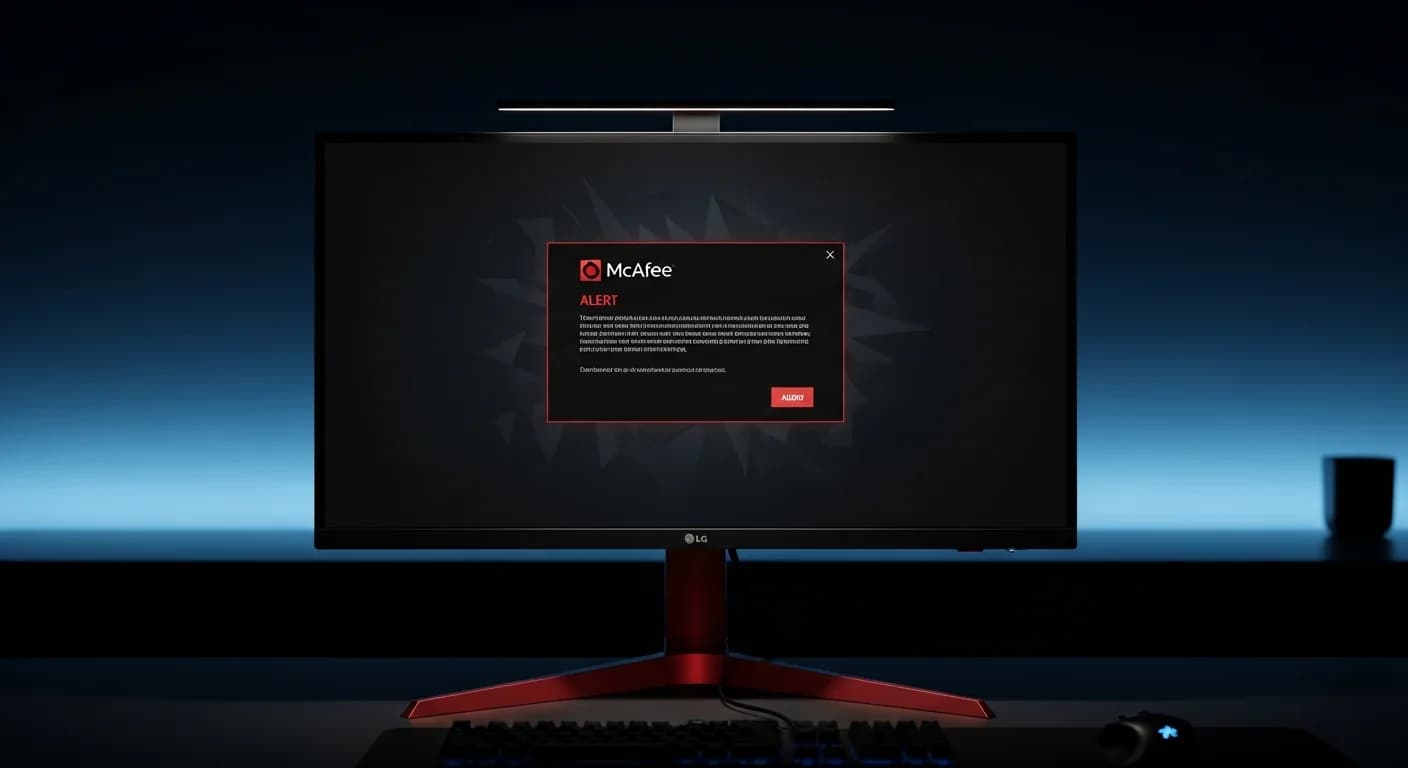
Buying a premium monitor should mean getting a great display, not an ad delivery system. But that is exactly what LG UltraGear owners have been dealing with, as documented in a new investigation from Gamers Nexus. LG is using Windows Update, a supposedly trusted update mechanism, to auto-install unwanted software. It is a feature built for convenience that is being exploited to push ads. And as the debate around AI infrastructure shows, when convenience and corporate incentives collide, users often lose. Who controls your hardware's software layer is a question more people should be asking.
The problem is the LG Monitor App Installer. It installs silently through Windows Update the moment you plug in an LG UltraGear monitor. No permission prompt. No notification. No opt-in. Then it pops up ads for McAfee and LG's own software in the bottom right corner of your screen. This is a trusted update pipeline turned into an ad delivery system. Platforms that let one thing run everything can be turned against the user.
Gamers Nexus tested this on 32 bootups. The ad appeared 31 times. User complaints on Reddit go back to 2024, but this is the first rigorous public test to confirm the scale. The near-perfect recurrence rate suggests the app is optimized to maximize ad impressions above all else.
Microsoft's Windows Store lets developers pair a Hardware Support App with a device's metadata. It auto-installs when the device is connected. Microsoft's own documentation warns: "The automatic installation feature does not provide a notification to the user when the app is installed. Some users may find this experience confusing and frustrating, and give your app a bad rating." LG ignored that warning. The contrast is clear. When given the choice between convenience and user control, some companies choose better.
LG's app requires permission to "use all system resources" and "access your Internet connection." The privacy policy mentions collecting device data, internet activity, and geolocation. All without consent. This lack of control mirrors the trade-offs seen in AI security models that sacrifice safety for performance.
This is not the first time a hardware maker has abused this mechanism. As The Verge's Tom Warren has noted, Dell also auto-installs its Alienware Command Center app when an Alienware monitor is connected. But adding notification spam on top of the auto-install is a new low. The escalation from bloatware to active ad delivery shows how these mechanisms can be gradually weaponized.
Gamers Nexus tested whether the app serves any useful purpose. It found that the LG Monitor App Installer does not include any special monitor controls. It simply points users to LG's other apps and to McAfee antivirus. It exists primarily as an ad delivery vehicle. This is a textbook case of a failure not in the core hardware, but in the software harness that surrounds it. The monitor itself is fine; the parasitic app layer is the problem.
For users on Windows 11 Pro, blocking the auto-install requires applying a group policy setting. Home edition users can try disabling automatic downloads of manufacturer apps under Advanced system settings, though it is unclear whether LG has found ways around this workaround. The difference in protection between Pro and Home users is a reminder that platform control matters at every tier.
The recent investigation into Windows 11 search finally cutting ads after three years of complaints shows that Microsoft can clean up its own ad problem when pressured. The question is whether the company will hold hardware partners to the same standard. Microsoft's track record with third-party enforcement is mixed, as seen in the broader challenges of getting platforms to regulate their own ecosystems. If Microsoft grants LG a similar implicit grace period, users could be stuck with adware for years.
Meanwhile, cyber threat groups are increasingly targeting unpatched vulnerabilities in connected devices, and the security community has warned about the risks of unchecked auto-installation mechanisms in everything from medical devices to industrial sensors. A system that silently installs adware on a monitor may seem minor by comparison, but it demonstrates the same pattern: a feature designed for convenience that becomes a vector for unwanted, and potentially harmful, software. The approach taken by security teams that build dedicated, high-performance detection is a fitting lesson here: no single mechanism, not even Windows Update, should be trusted without oversight.
Get the tech essentials in 3 minutes every morning
One email, every weekday, with what actually matters in AI and tech.