Rainbow Six Siege / Anti-Cheat
Siege's biggest anti-cheat push since launch demands Secure Boot, TPM, 2FA
Siege's cheat reports are at a recent low, yet the top ranks still draw cheaters. Ubisoft's answer at the fourth Community Checkpoint: R6 Shieldguard hardware enforcement, kernel-level anti-cheat, mandatory 2FA for Legend Division, plus Year 11 Season 3's Dokkaebi rework and gun nerfs.
Emmanuel Fabrice Omgbwa Yasse AI-assisted
2026-08-10 · 5 min read
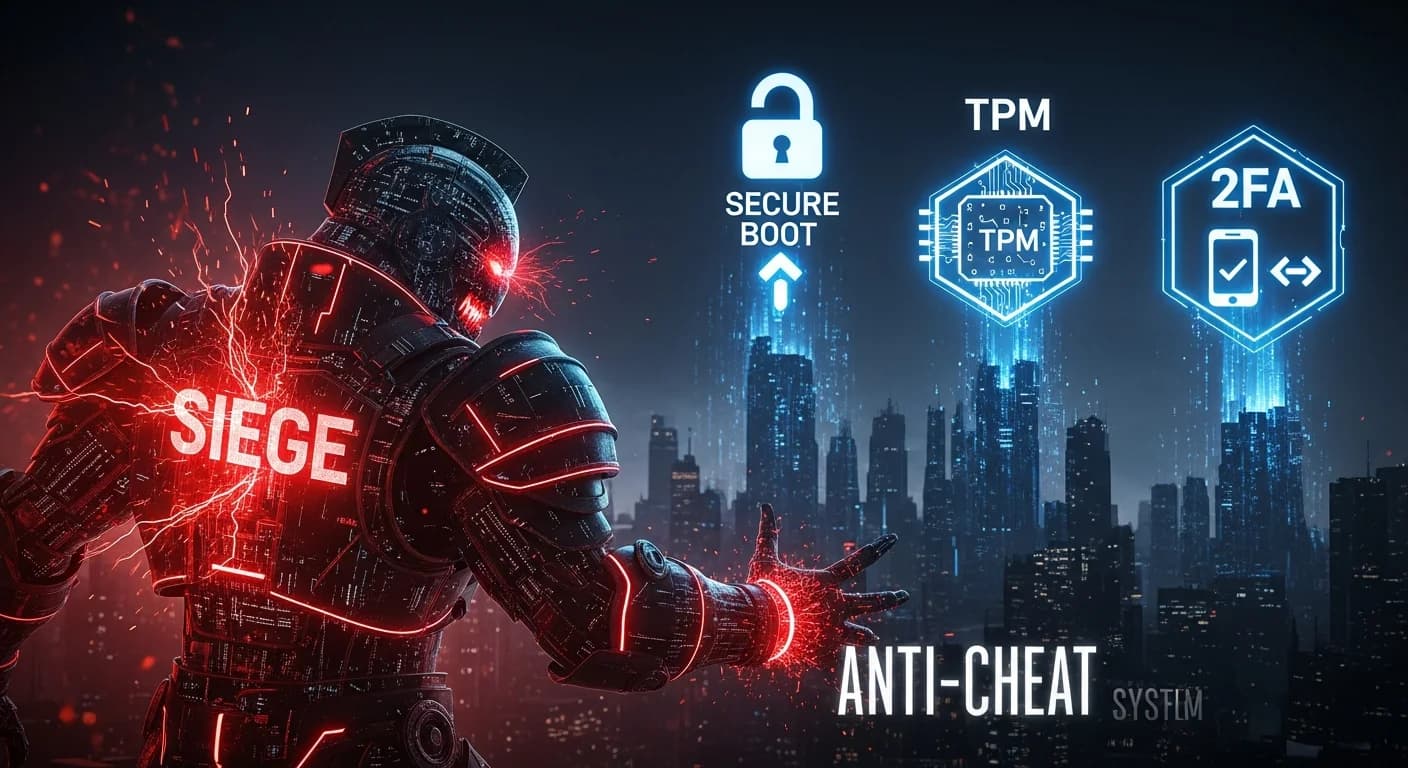
Cheating reports across Siege are at their lowest point in recent seasons, with the top of the ladder the exception. At the fourth Community Checkpoint, a stream built around Player Protection, Ubisoft outlined what the developers call the most significant anti-cheat update since launch: the R6 Shieldguard Secure Platform, a kernel-level anti-cheat shared across Ubisoft titles, and a 2FA requirement for the upcoming Legend Division.
Legend Division becomes a hardware-verified rank
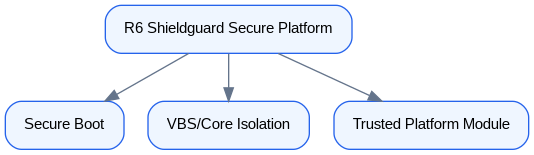
The centerpiece is the R6 Shieldguard Secure Platform, built on three pillars. Secure Boot checks the legitimacy of every stage of the PC's startup chain, from firmware and OS to drivers, so cheats become easier to spot before the game even launches. VBS/Core Isolation (HVCI) runs Windows' most sensitive processes in an isolated virtual environment, out of reach from the rest of the system. The Trusted Platform Module is the enforcement layer: it cryptographically confirms the other two are genuinely active.
Players will need to switch on Core Isolation in Windows Security, and some will need a firmware upgrade for Secure Boot and TPM to work properly. The improvements aim at Diamond ranks and above, where reports still concentrate. In the upcoming Legend Division, two-step verification through an authenticator app will be required to protect accounts; everyone who turns it on receives an Alpha Pack. App-based two-factor authentication is later planned to roll out to the rest of Siege's divisions.
Separately, a dedicated team inside Ubisoft Security is building a shared, kernel-level anti-cheat solution for all Ubisoft games, and Siege is one of the first to carry it. The scope covers the company's live-service roster, which currently includes The Division 2's dust storm event. Players will be notified once they launch the game in Year 11 Season 3. Kernel-level anti-cheat is not new for Siege, the devs noted. Manual bans still require the team to review evidence and confirm enough proof. A clip shared by players or content creators never triggers a manual ban on its own; backend data is reviewed as well.
Smurfing and boosting are now explicitly sanctionable
The core rules were updated last week to keep up with a growing community and evolving competitive playlists. Sanctions scale with severity, frequency, and intent. The behaviors the devs spelled out at the checkpoint:
| Behavior | What gets you sanctioned |
|---|---|
| Cheating | Any software or hardware that grants an unfair advantage, even if not in active use. Includes spoofing, which disguises a device's identity. |
| Smurfing | Using alternate accounts to bypass bans or dominate lower-skilled lobbies. |
| Boosting | Playing with cheaters, matchmaking against specific accounts to manipulate rank, or using external services to influence rank. |
| Negative communication | Bullying, harassment, threats, or hateful language. |
| Botting | Bots, scripts, or automatic systems that mimic player behavior to farm progression. |
| Account abuse | Using a shared or borrowed account, or providing false account information. |
| Circumvention | Bypassing any anti-cheat detection systems or account bans. |
Most of this is familiar, but two entries deserve a second read. Smurfing: alternate accounts used to bypass bans or dominate lower-skilled lobbies. Boosting: playing with cheaters, matchmaking against specific accounts to manipulate rank, or using external services to influence rank. Both are now written into the rules as explicit offenses.
Recoil macros, Mousetrap, and bans that arrive late
On console, cheating still leans heavily on spoofing: players disguise a device's identity to get mouse and keyboard inputs into controller pools. Siege's established Mousetrap system detects and sanctions that, and the devs asked players to file reports in the correct category to make the tool sharper. Recoil macros get their own counter. A new detection model targets the programs and scripts behind them. It is deliberately cautious, issuing account bans only after several confirmed instances, and goes live on PC later this month. A console version is in development.
Two longer-range efforts are underway. The team is building a program that can analyze past matches, so cheaters can be caught and sanctioned retroactively. It is also analyzing AI-assisted cheating on console, with anti-cheat measures expected to evolve against it.
Dokkaebi loses her Impact EMP, DMRs lose their teeth
Balancing is a trickier read right now. The meta is trending toward power Operators, and the devs are trying to trim strength without flattening what makes each Operator appealing. Dokkaebi is the clearest case in Year 11 Season 3. Her Impact EMP becomes a Breach Charge, and her Jageo Payload stops being an instant problem for Defenders. It is now an active upload that can be interrupted before the call goes through. Defenders can stop it by standing in a Mute Signal Disrupter's radius, or by eliminating Dokkaebi before the call lands. Tubarão can freeze the upload with a Zoto Canister. IQ can see the targeted Defender's phone, and Solis' SPEC-IO sensor detects her tablet while it uploads.
The guns take hits too. The SMG-12 loses damage and magazine size. Both DMRs, the MK14 and the AR-15.50, drop back under 60 damage, so most targets need an extra shot; they also gain recoil and lose the muzzle brake attachment. The season introduces a new Operator whose shield-countering abilities were glimpsed at the Six Invitational. The full reveal and the rest of the balancing notes land at the Esports World Cup on August 15.
The toxicity track runs separately. Voice chat protection gets updates before the end of the year, a mandatory Code of Conduct arrives with Year 11 Season 4, reporting follow-up becomes clearer, and Year 12 adds features that recognize good behavior. The anti-cheat push lands in a busy stretch for the publisher, which is also chasing a record-breaking Assassin's Creed Black Flag Resynced and preparing Rayman Legends Retold. Add the mandatory 2FA and the hardware checks, and the direction is clear: Ubisoft is making the top of the ladder harder to reach without proving who you are. That is where the cheaters still are.
- Source : Siege's biggest anti-cheat push since launch demands Secure Boot, TPM, 2FA — 2026-08-07
Get the tech essentials in 3 minutes every morning
One email, every weekday, with what actually matters in AI and tech.